Trade Routes of the Biblical World
— Caravans, Ports, and the Highways of the Gospel
Written for every brother and sister who has opened a Bible map and wondered what those routes actually meant. God placed Israel at the crossroads of the world — and every road had a purpose.
I. The Promised Land at the Crossroads
Open an ancient Near East map and you immediately see a geographical fact: Palestine is a bridge.
To the north lies the Anatolian Plateau (modern Turkey); to the east, Mesopotamia (modern Iraq); to the south, Egypt; to the west, the Mediterranean Sea. Almost all overland trade between these three great civilisations had to pass through Palestine's narrow corridor. This was the vital chokepoint of the ancient world.
What did this mean? Whether they liked it or not, the people of Israel lived along the unavoidable route of international caravans and imperial armies. The outside world kept flowing in — goods, ideas, cultures, armies. God placed His people in this position not so they could hide away, but so they could become a witness to the nations: "for my house will be called a house of prayer for all peoples." (Isa 56:7)
II. Two Great North–South Arteries
The ancient Near East had two main north–south trunk roads that carried civilisational trade and traffic for thousands of years.
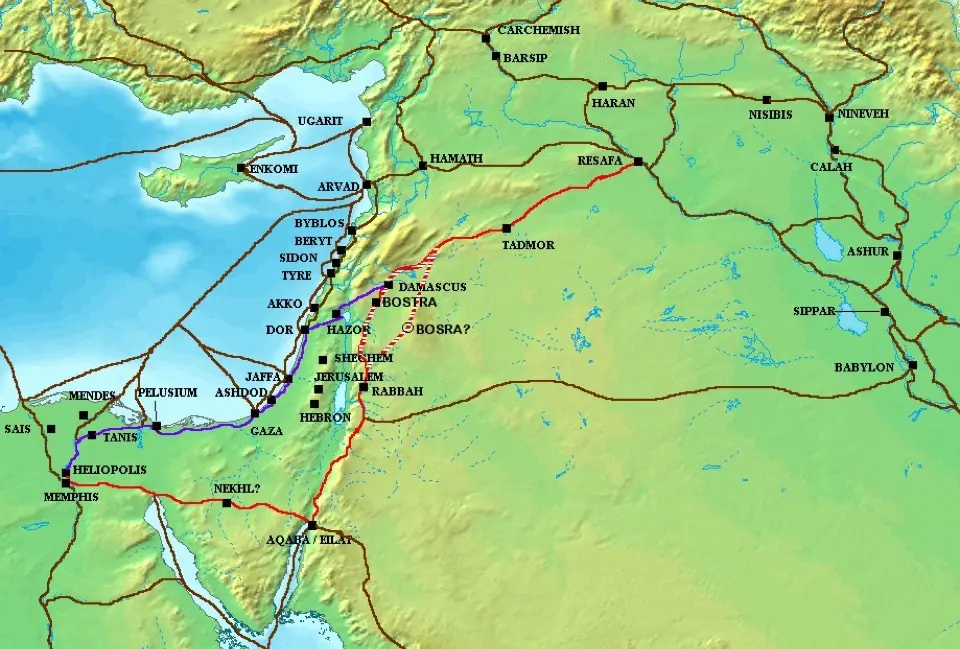
The main trade routes of the ancient Levant, on an English-language map showing the pattern around 1300 BC. Purple marks the coastal Via Maris, red the King’s Highway east of the Jordan, and brown other trade routes. Source: Ancient Levant routes.png, Briangotts, CC BY-SA 3.0.

The International Coastal Highway (Via Maris)
Also known as the "Way of the Philistines" or the "Way of the Sea," this was the most important commercial route connecting Egypt and Mesopotamia. It began in the Egyptian delta, ran north along the Mediterranean coast through Gaza and Ashdod — Philistine cities — passed through Megiddo (a strategic pass guarding a valley, and the place behind the name "Armageddon" in Revelation 16:16), continued north through Hazor, entered Syria, and finally reached Mesopotamia.
Isaiah 9:1 speaks of "the way of the sea, beyond the Jordan, Galilee of the nations" — a region deeply penetrated by international culture, lying exactly where the great highway ran. Matthew quotes this passage to describe Jesus settling in Capernaum in Galilee: "the people who sat in darkness saw a great light." (Matt 4:16) Jesus chose to begin His ministry at the intersection of the international highway — the gospel was always for all peoples from the very beginning.
At the Exodus, God deliberately led Israel away from this road: "Lest perhaps the people change their minds when they see war, and they return to Egypt." (Exod 13:17) This road was lined with Egyptian military outposts and Philistine city-states — far too dangerous for a people only just freed from slavery. God led them the way of the wilderness instead.
The King's Highway
The other great artery ran along the eastern bank of the Jordan River, from Damascus southward through Bashan, Gilead, Moab, and Edom to the Gulf of Aqaba (the northern tip of the Red Sea). It was called the "King's Highway" (Num 20:17) because powerful kingdoms and cities lined its entire length.
After the Exodus, Israel sought to travel this road through Edom and Moab, but both nations refused passage (Num 20:18–21). The route later became a vital commercial link between the Arabian Peninsula and Syria. The Nabataeans — whose capital was the famous city of Petra — accumulated tremendous wealth along this road through the spice trade.
III. East–West Trade and the Incense Road
Beyond the two north–south arteries, several east–west trade routes linked the Arabian Peninsula and the Indian Ocean coast to the Mediterranean world.
The Incense Road
From Yemen and Oman, camel caravans laden with frankincense, myrrh, cinnamon, gold, and precious stones travelled north along the western edge of the Arabian Peninsula, through modern Saudi Arabia and Jordan, across the Negev desert of southern Israel, and eventually reached the port of Gaza or other Mediterranean harbours, from which goods were shipped throughout the Roman Empire.
This road left a deep imprint on Scripture. Genesis 37:25 records that Joseph's brothers "lifted up their eyes and looked, and saw a caravan of Ishmaelites coming from Gilead, with their camels bearing spices and balm and myrrh, going to carry it down to Egypt" — Joseph was sold to a trading party on this very Incense Road.
The visit of the Queen of Sheba also followed this route. She came from the southern tip of the Arabian Peninsula (modern Yemen) with "a very great caravan, with camels that bore spices, very much gold, and precious stones" to Jerusalem to visit Solomon (1 Kgs 10:1–2). Isaiah's prophecy declared: "The multitude of camels will cover you, the dromedaries of Midian and Ephah. All from Sheba will come. They will bring gold and frankincense." (Isa 60:6) — the gold and frankincense the Magi brought at Christ's birth echoed this ancient Incense Road.
Solomon's Maritime Trade
Solomon controlled not only the overland routes but also opened sea lanes. He built a fleet at Ezion-geber on the Gulf of Aqaba. "They came to Ophir, and brought gold from there, four hundred and twenty talents, and they brought it to King Solomon." (1 Kgs 9:28) The precise location of Ophir remains debated (possibly India, Somalia, or Yemen), but the fleet's existence shows that Solomon's Israel was already connected to the Indian Ocean trade network.
His fleet returned once every three years "bringing gold, silver, ivory, apes, and peacocks." (1 Kgs 10:22) — that cargo list is itself an international trade map.
IV. Tyre and Sidon — Ancient Commercial Empires
Tyre and Sidon, repeatedly mentioned in Scripture, were Phoenician port cities on the coast of modern Lebanon. The Phoenicians were the pre-eminent sailors and merchants of the ancient Mediterranean world.
Ezekiel 27 paints a vivid picture of Tyre's trade network in a sweeping lament-song, naming the nations and goods that flowed through its harbour: silver, iron, tin, and lead from Tarshish; slaves and bronze vessels from Javan (Greece); wine and white wool from Damascus; lambs, rams, and goats from Arabia; spices, precious stones, and gold from Sheba and Raamah. The commerce of the entire Mediterranean and Near East converged at Tyre's docks.
When Solomon built the Temple, he imported cedar from Lebanon and skilled craftsmen from King Hiram of Tyre (1 Kgs 5:1–12). Jesus himself visited "the borders of Tyre and Sidon" (Mark 7:24) — not a remote backwater, but a thriving international commercial metropolis.
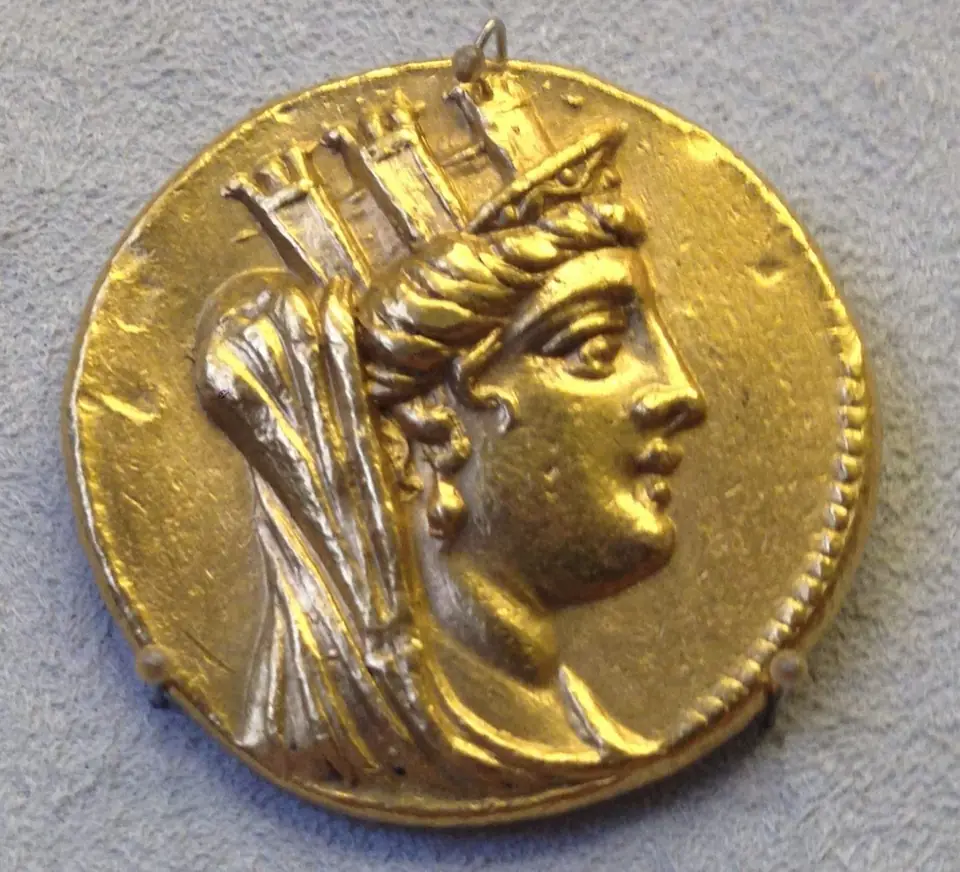
A silver double shekel minted at Tyre in 104–103 BC, held in Berlin’s Bode Museum. Tyrian silver was of high purity and circulated widely; such coins were still common in Palestine in New Testament times. Source: Tyre-DoubleShekel 104-103BCE BodeMuseumBerlin RomanDecker…, RomanDeckert, CC BY-SA 4.0. See this exhibit in the Bible Museum

V. Roman Roads — The Highways of the Gospel
If the trade routes of the Old Testament era were dusty tracks worn down by camels, the roads built by the Roman Empire were the motorways of the ancient world.
Rome constructed more than 80,000 kilometres of paved roads (viae publicae) across the Empire — wide enough for two chariots to pass side by side. The surface was laid in multiple layers of compacted gravel and stone slabs, with drainage ditches on both sides and milestones at regular intervals. This road network was built primarily for military purposes, but it also enabled merchants, travellers, and — most importantly — the apostles to move quickly and safely throughout the Empire.
Paul's three missionary journeys depended almost entirely on this Roman road system:
- First Journey (Acts 13–14) — setting out from Antioch in Syria, through Cyprus, to Pisidian Antioch, Iconium, Lystra, and Derbe in Asia Minor, following Roman provincial roads.
- Second Journey (Acts 15:36–18:22) — overland through Asia Minor, then crossing by sea to Philippi in Macedonia (a Roman colony with excellent road connections), along the Via Egnatia west to Thessalonica and Berea, then south to Athens and Corinth.
- Third Journey (Acts 18:23–21:17) — again through Asia Minor to Ephesus (then the provincial capital and commercial hub of the province of Asia), where Paul stayed for three years.
Paul's final journey was by sea — from Caesarea to Rome, encountering storm and shipwreck along the way (Acts 27). Even that harrowing voyage followed the established Mediterranean shipping lanes. The gospel travelled from Jerusalem to Rome not by wilderness tracks but along the Empire's main arteries.
"All roads lead to Rome" — and the reverse was equally true: from Rome, the gospel could travel along those same roads to every corner of the Empire. God arranged for the Romans to complete the road network before Christ was born, just as He arranged for Greek to become the common language before the gospel broke forth — the infrastructure was always ready ahead of time.
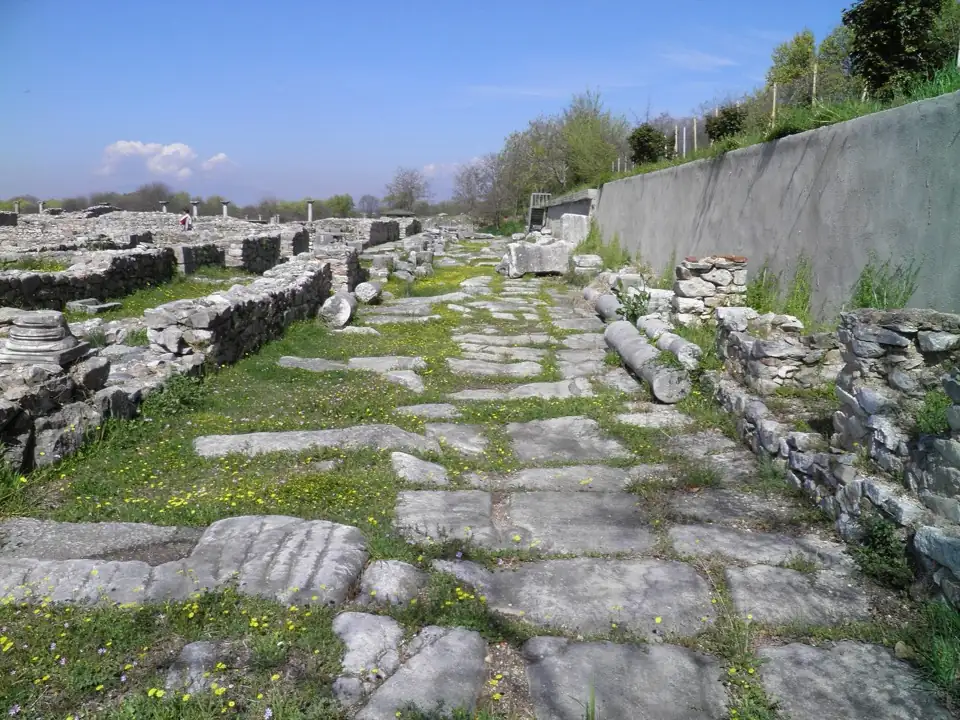
A surviving stretch of the Roman road known as the Via Egnatia at Philippi. Paul travelled this road when he left Philippi for Thessalonica (Acts 17:1). See animated routes of Paul’s journeys in Bible Geography: Open Paul’s missionary routes →. Source: The Via Egnatia, Philippi (7272908636).jpg, Carole Raddato, CC BY-SA 2.0. See this exhibit in the Bible Museum

VI. From Trade Routes to Gospel Routes
Looking back at these routes through Scripture, a pattern emerges:
God uses the roads that already exist to carry His message.
The Incense Road brought Joseph to Egypt — God used a commercial highway to save a family. The Via Maris made Galilee a crossroads of cultures — Jesus began His ministry there. The Roman roads enabled Paul to traverse the Mediterranean world in little more than a decade — the gospel flowed along the veins of the Empire into every city.
Today the "roads" look different — the internet, social media, international air travel — but God's strategy has not changed. He still uses the connections this world has already built to send the gospel into every corner. The tracks worn down by camel caravans are now fibre-optic cables carrying digital signals. The medium has changed; the message has not.
And you — you are on that road.
💬 If this article has stirred any thoughts or questions in you, you are warmly invited to ask Pastor Bond:
- "Was it really God's intentional design to place His people along the major trade routes?"
- "Did the people of the Bible actually travel these commercial roads?"
- "What does this mean for how I trust God's hand in placing me where I am?"