The Four Hundred Silent Years
— What Happened Between Malachi and Matthew?
Written for every brother and sister who has ever wondered, "What exactly lies between the Old Testament and the New Testament?" God's silence is not his absence: he was working behind the scenes, preparing everything.
I. The Voice of the Prophets Fell Silent
The last book of the Old Testament is Malachi. Through the prophet, God gave his promise: "Behold, I will send my messenger, and he will prepare the way before me" (Mal. 3:1), and that Elijah would be sent before the coming of the great and terrible day of the LORD (Mal. 4:5–6). With those words, the prophetic voice went silent.
For roughly four hundred years, there was no prophet, no "Thus says the LORD," no new scripture.
For a people accustomed to hearing God speak directly, this was an extraordinarily long wait. Yet this "silence" was no blank page. Politically, the world was turned upside down. Culturally, civilizations collided. In matters of faith, deep fractures formed. Nearly every piece of background we meet in the New Testament — the rivalry between Pharisees and Sadducees, Jewish resentment of Rome, the people's burning expectation of the Messiah, the mature synagogue system, the common use of the Greek language — all of it took shape during these four hundred years.
You cannot truly read the first page of the Gospels until you understand this history.
II. The Persian Period (c. 539–332 BC)
When the Old Testament closes, the Jewish people are living under Persian rule. The Persian king Cyrus allowed the Jews to return from Babylon and rebuild the Temple (Ezra 1:1–4). Persia was a comparatively tolerant empire: the Persians let subject peoples keep their own religion and customs, so long as taxes were paid and revolt was avoided.
The Second Temple was completed in 516 BC. Ezra brought the Book of the Law back to the land, and Nehemiah rebuilt the walls of Jerusalem. The Jewish community lived in relative stability under Persian rule for about two hundred years.
During this period, an important shift took place in Jewish religious life: the synagogue (Hebrew בֵּית כְּנֶסֶת, beit knesset, "house of assembly") gradually took shape as an institution. When the Temple was destroyed during the Exile and sacrifice was impossible, Jews gathered wherever they were to read Scripture, pray, and receive teaching. After the return, synagogues did not disappear — they multiplied. By the time of Jesus, every Jewish town had one. This is why, when Jesus began his ministry, he was "teaching in their synagogues" (Matt. 4:23), and why Paul, on arriving in any city, went first to the synagogue (Acts 17:1–2). The synagogue system matured during the silent years.
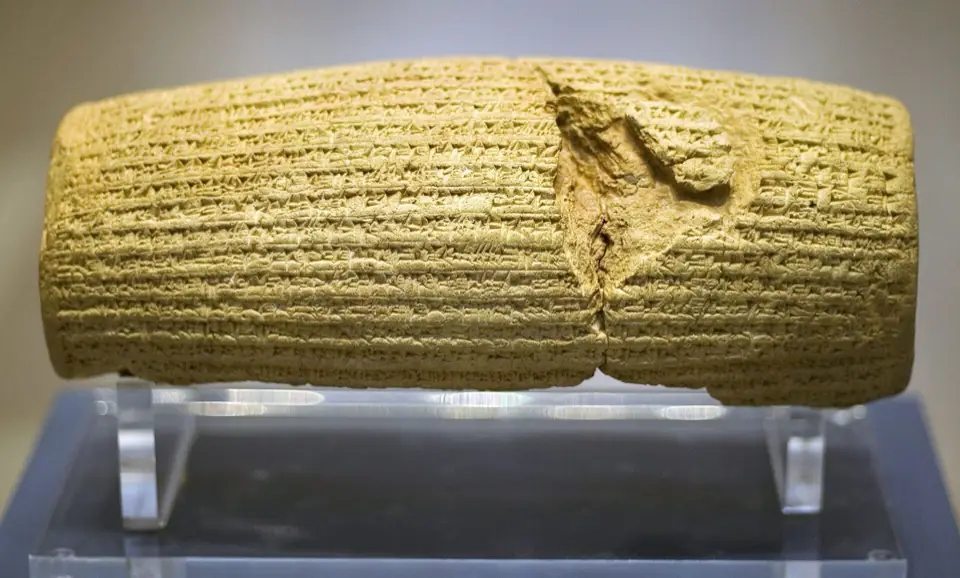
The clay cylinder inscribed after Cyrus captured Babylon is held in the British Museum. It records his returning some displaced inhabitants and divine images to their places and restoring temples. It does not name the Jews, but reflects the kind of imperial policy seen in Ezra 1, where Cyrus permits the people of Judah to return to Jerusalem and rebuild the Temple. Source: Cyrus Cylinder front.jpg, Prioryman, CC BY-SA 3.0. See this exhibit in the Bible Museum

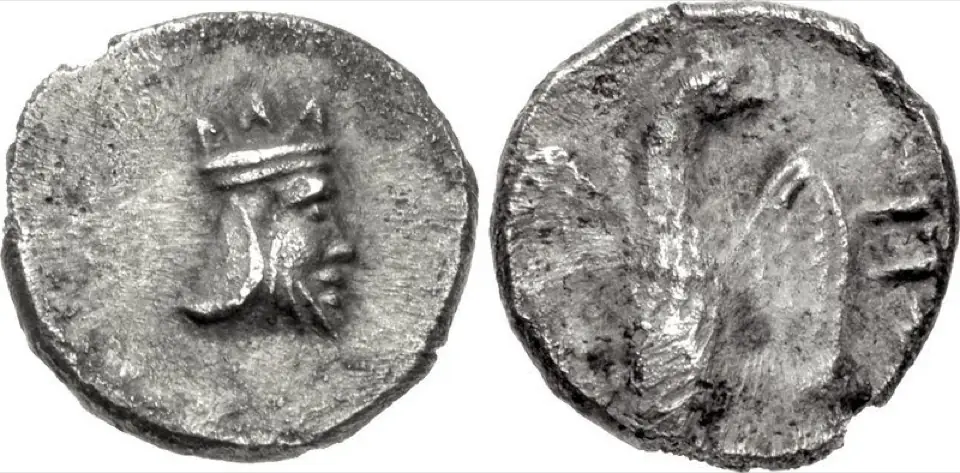
A small silver coin minted in the Persian province of Judah, c. 375–332 BC. The obverse shows the crowned Persian king; the reverse has a falcon or hawk beside the provincial name “Yehud”. After their return, the Jewish people lived as just such a small province within the Persian Empire. Source: JUDAEA, Persian Period. Anonymous. Circa 375-332 BCE.jpg, LouisAragon (uploader), CC BY-SA 2.5. See this exhibit in the Bible Museum

III. The Greek Period (c. 332–167 BC)
Alexander's Lightning Conquest
In 332 BC, Alexander the Great of Macedon defeated the Persian Empire and swept across a vast territory stretching from Greece to India with breathtaking speed. He passed through Palestine in 332 BC, and according to the Jewish historian Josephus, Alexander treated Jerusalem well and left the Temple unharmed.
Alexander lived only thirty-two years (dying in 323 BC), but he left a profound cultural legacy: Hellenization. The Greek language, philosophy, athletics, art, and way of life spread throughout the entire Near East in the wake of his conquests.
The impact of Hellenization on the Jews cut both ways. On the one hand, Greek (koinē) became the common language of the Mediterranean world: the New Testament was written in this language, and the Old Testament was translated into Greek during this era — the Septuagint (LXX) — making the Hebrew Scriptures accessible to non-Jews. On the other hand, Greek culture clashed fiercely with Jewish faith, and Jewish society split sharply: some embraced Greek ways, others resisted them with their lives.
The conflicts were concrete and everyday. The Greeks built a gymnasium in Jerusalem where athletes competed in the nude — a profound offense to Jews for whom bodily modesty was sacred. More disturbing still, some young Jewish men, eager to participate in athletic competitions and enter Greek social circles, even underwent surgery to conceal the mark of circumcision (1 Maccabees 1:15). Jewish aristocrats gave their children Greek names, held Greek-style drinking parties (symposia) at their banquets, and reinterpreted the Law of Moses through the lens of Greek philosophy. Faith's foundations were not demolished by a single earthquake but eroded day by day through small compromises in ordinary life.
At the same time, large numbers of Jews scattered throughout the Mediterranean world during this period — from Alexandria to Antioch, from Asia Minor to Rome. These Diaspora Jews established synagogues in every city, creating a network of faith spread across the empire. Two hundred years later, the Apostle Paul's missionary routes followed this network almost exactly: arriving in each city, he went first to the synagogue (Acts 17:1–2), preaching to Diaspora Jews and to "God-fearers" — Gentiles drawn to Judaism. God used the scattering of his people to lay a bridge across which the gospel would travel to every nation.
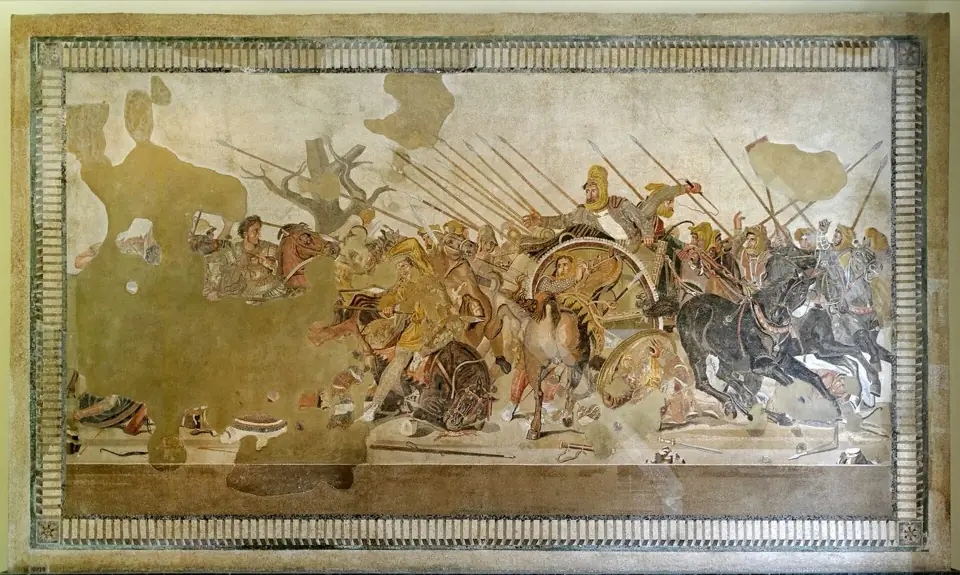
This floor mosaic from Pompeii, c. 100 BC, is held in the National Archaeological Museum in Naples. Alexander, on the left, charges towards the Persian king Darius III in his chariot at the Battle of Issus (333 BC). Source: Battle of Issus mosaic, public domain. See this exhibit in the Bible Museum

The Tug-of-War Between Two Successor Kingdoms
After Alexander died, his empire was divided among his generals. Palestine was caught between two rival successor dynasties:
- The Ptolemies (based in Egypt): controlled Palestine for about a hundred years (301–198 BC) and were relatively tolerant of the Jews. The Septuagint was translated in Alexandria under Ptolemaic rule.
- The Seleucids (based in Syria): seized control of Palestine in 198 BC. At first they were also moderate, but then came a man who changed everything.
Daniel 11 describes the struggle between these two dynasties with astonishing precision — the "king of the South" refers to the Ptolemies, the "king of the North" to the Seleucids.
IV. Antiochus IV — The Darkest Hour for Faith
In 175 BC, the Seleucid king Antiochus IV came to the throne. He called himself Epiphanes ("God Manifest," implying he was the appearance of a deity); the Jews mockingly renamed him Epimanes ("the Madman").
Antiochus determined to enforce Hellenization completely and eradicate Jewish faith. His policies included:
- Banning Sabbath observance and circumcision, with death as the penalty
- Burning scrolls of the Law, with death for anyone found possessing them
- Erecting an altar to Zeus in the Temple and sacrificing pigs on it — what Daniel calls "the abomination that makes desolate" (Dan. 11:31; Jesus also invokes this image in Matt. 24:15)
- Forcing Jews to eat pork and participate in pagan sacrifices
This was the most severe trial Jewish faith had faced since the Babylonian exile. Many Jews died as martyrs under the persecution. Second Maccabees tells of a mother who watched her seven sons killed one by one, yet kept urging the youngest to remain faithful to God unto death. She believed God would raise the dead to life. This firm hope in resurrection, forged in the fires of persecution during the intertestamental years, became ever more central to Jewish faith.
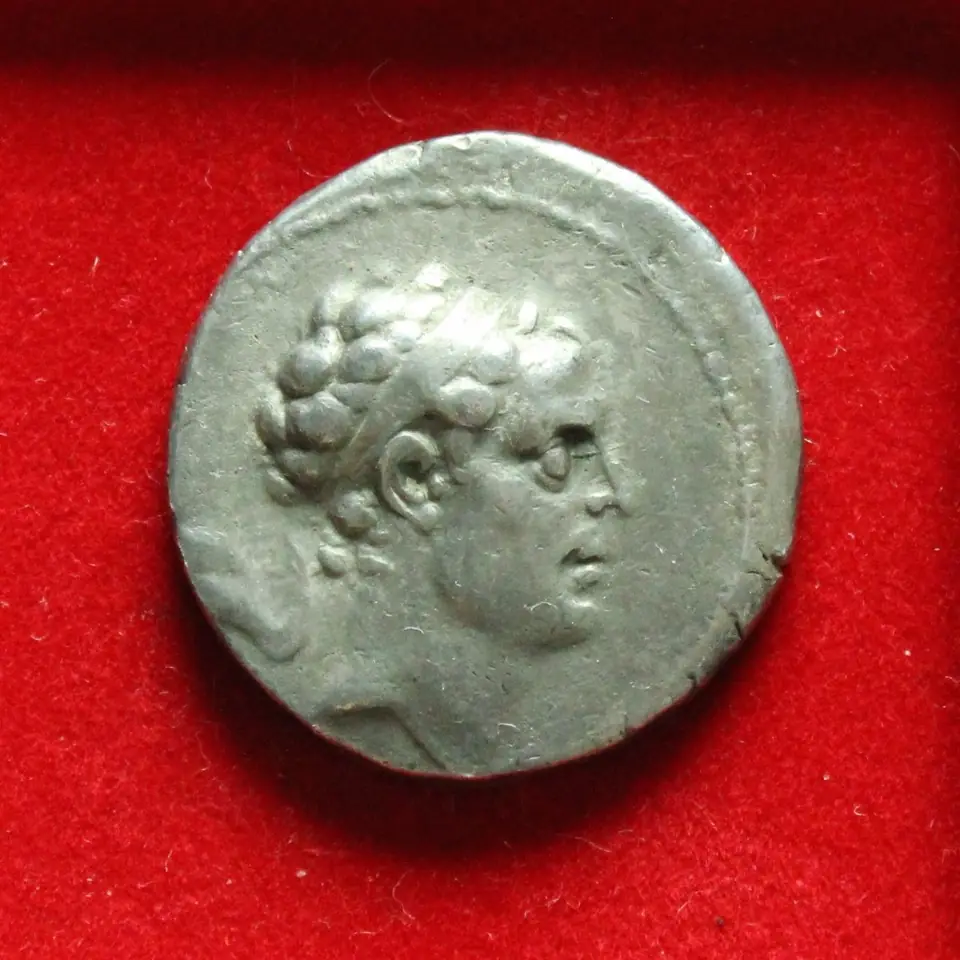
A silver coin minted during Antiochus IV’s reign (175–164 BC), with his diademed portrait on the obverse. Source: Antiochos IV Epiphanes tetradrachm.jpg, Samu0450, CC BY-SA 4.0. See this exhibit in the Bible Museum

V. The Maccabean Revolt and the Hasmonean Dynasty (167–63 BC)
In 167 BC, a Jewish priest named Mattathias, in the village of Modein, refused to sacrifice to an idol, struck down the Seleucid officer who gave the order, and fled into the hills with his five sons to launch a revolt. His son Judas — nicknamed "Maccabee" (מַכַּבִּי, meaning "the Hammer") — became the soul of the uprising.
The war was brutal. Jewish rebels used guerrilla tactics against a professional army, and through their knowledge of the mountain terrain and a faith-driven refusal to give up, they drove back the Seleucid forces again and again. In 164 BC, Judas Maccabeus recaptured Jerusalem, cleansed the desecrated Temple, and rededicated it — the origin of the festival of Hanukkah.
The Maccabean family (also called the Hasmoneans) fought on and eventually established an independent Jewish kingdom — the first time the Jewish people had enjoyed political independence since the Babylonian exile. The Hasmonean dynasty lasted about a hundred years.
Yet the kingdom won by such passionate faith soon became corrupt. Later Hasmonean rulers served simultaneously as king and high priest — though they were neither from the house of David nor legitimate descendants of Zadok — and this provoked serious theological controversy. Royal infighting intensified until, in the end, two rival claimants to the throne made a fatal mistake: they invited the Romans to "mediate."
VI. The Romans Arrive (After 63 BC)
In 63 BC, the Roman general Pompey marched into Jerusalem and forced his way into the Holy of Holies. Jewish independence was finished. From that point on, Palestine became a Roman client state.
The Romans installed an Idumean named Herod as king of the Jews (crowned in 37 BC). Herod was not Jewish, yet he ruled over Jews; he lavishly expanded the Temple to win Jewish favor, while simultaneously building pagan temples to please Rome. He was shrewd, brutal, and deeply suspicious. When Matthew's Gospel records that he heard of the birth of "the King of the Jews," he ordered the massacre of every boy in Bethlehem two years old and under (Matt. 2:16).
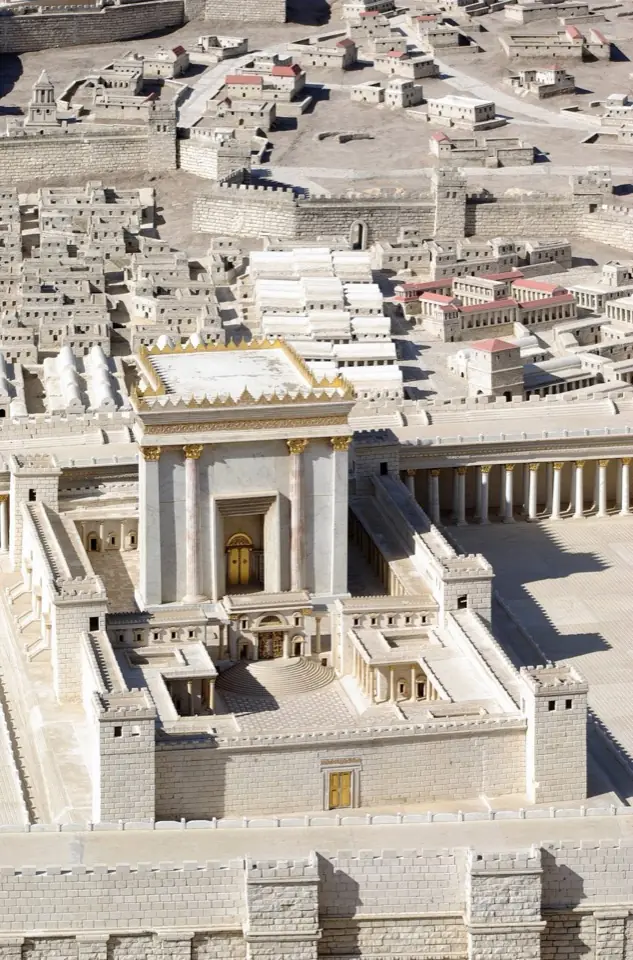
The Israel Museum’s 1:50 model reconstructs Jerusalem as it appeared in AD 66. At its centre is the Temple enlarged by Herod. Source: Jerusalem Modell BW 3.JPG, Berthold Werner, public domain. See this exhibit in the Bible Museum

The Perfect Conditions Prepared Without Intending To
Roman rule brought heavy taxation and political oppression, but it also unwittingly prepared ideal conditions for the spread of the gospel:
- The Roman roads (Via Romana): a network of roads reaching every corner of the empire, allowing Paul to travel across Asia Minor and Greece within a matter of years
- The Pax Romana (Roman Peace): a period of relative stability throughout the empire, making travel and trade safer than they had ever been
- A common language: the entire Mediterranean world shared Greek, so the gospel could be understood across every people group without translation
- Roman citizenship: Paul, as a Roman citizen, could appeal to Caesar (Acts 25:11), and so the gospel traveled from Jerusalem all the way to Rome
VII. Faith Fractures and Hope Boils Over
Four centuries of political upheaval profoundly reshaped the religious landscape of the Jewish people. By the time Jesus was born, Jewish society had divided into the distinct groups we encounter throughout the Gospels:
Four Groups
The Pharisees: gradually taking shape during the Maccabean period, they emphasized strict observance of both the written Law and the oral tradition, and they affirmed the resurrection of the dead, angels, and the soul. They were the most influential group among ordinary people.
The Sadducees: drawn mainly from the priestly aristocracy, they accepted only the authority of the five books of Moses and denied the resurrection and the existence of angels. They cooperated with Roman authorities and controlled the affairs of the Temple.
The Essenes: thoroughly disillusioned with the Temple establishment, they withdrew to the desert to form their own communities (the Dead Sea Scrolls almost certainly came from this group) and waited for God himself to intervene and purify everything.
The Zealots: they advocated the violent overthrow of Roman rule and the establishment of an independent Jewish state.
The Hope of the Messiah
Yet all these groups, divided as they were over politics and theological detail, shared one increasingly intense longing: the Messiah was coming.
Four hundred years of foreign domination — Persians, Greeks, and Romans ruling in turn — had kindled in the Jewish people an unprecedented hunger for the messianic promises of the Old Testament prophets. The anointed one from the line of David, the one who would rescue Israel — when would he finally come?
Luke's Gospel captures the atmosphere of that waiting. Simeon was "righteous and devout, looking for the consolation of Israel" (Luke 2:25); the prophetess Anna "served God with fasting and prayer night and day ... and spoke of him to all who were waiting for the redemption of Jerusalem" (Luke 2:37–38). And there was John the Baptist: "the people were in expectation," wondering in their hearts whether John himself might be the Christ (Luke 3:15).
Hope had reached a boiling point.
VIII. "When the Fullness of Time Had Come"
Paul captures all of this preparation in one concentrated sentence in Galatians:
"But when the fullness of the time had come, God sent out his Son." (Gal. 4:4)
"The fullness of time" — not some random day, but the moment when every condition had converged.
Every Empire Was His Instrument
Looking back across those four hundred years: the Persians restored the Jewish homeland and Temple; Alexander spread Greek so that the whole world could read from one language; the Seleucid persecution forged Jews willing to die for their faith; the Maccabean revolt demonstrated that every human kingdom will ultimately decay; the Roman Empire laid down the roads, maintained the peace, and unified the law.
Every empire believed it was writing its own history. But from God's vantage point, each of them was his instrument — each one laying the groundwork for that night in Bethlehem.
When everything was in place — not one moment too early, not one moment too late — an angel appeared before a young woman in Nazareth and said: "You shall conceive and give birth to a son, and shall name him Jesus." (Luke 1:31)
The voice of the prophets had been silent for four hundred years. But now God was not sending another prophet. He was coming himself.
Closing Reflection: The Lesson of the Silence
If you are walking through a season when God seems silent — prayers that seem to go unanswered, a future that won't come into focus, a wait with no end in sight — perhaps these four hundred years can offer you some comfort.
God's silence is not God's absence. In the four centuries when the prophets had stopped speaking, God did not stop working for a single day. He was moving the pieces of empire, laying roads, preparing a language, shaping a people, waiting for the moment when the time would be full.
Your waiting is no different. You may not see what God is doing right now — but one day you will look back and find that he was never absent. Those days that felt like blank space were, in truth, his deepest preparation.
💬 After reading this article, if you have any thoughts or questions, you are welcome to bring them to Pastor Bond:
- "If God was silent for four hundred years, does that mean he stopped caring?"
- "In the years without a prophet, what kept believers holding on?"
- "I'm going through a season where God seems to have stopped speaking — what comfort does this give me?"