Pharisees, Sadducees, and Zealots
— Jewish Factions and Social Groups in the Time of Jesus
Written for every brother and sister who has gotten confused by these names while reading the Gospels. When you understand the kind of society Jesus was facing, his words become twice as powerful.
I. Why Should We Know These Factions?
Read the Gospels and you cannot miss how often these names appear:
The Pharisees and scribes said, "Why do your disciples disobey the tradition of the elders?" (Matt 15:2) The Sadducees came to Jesus and said, "Teacher, Moses said, 'If a man dies, having no children...'" (Matt 22:23–24) Among the Twelve Apostles was one called "Simon who was called the Zealot" (Luke 6:15)
These were not random passersby. They were organized, principled, and powerful factions within Jewish society in Jesus' day. Each had a completely different answer to the question "How should God's people live?" — and when Jesus arrived, he defied the expectations of every single one.
Without knowing these factions, many passages of Scripture read like "Jesus arguing with a crowd of nameless villains." Once you know them, you will see that every word Jesus spoke was responding to a real social tension.
II. Background: What Happened Between the Testaments?
Between the last book of the Old Testament (Malachi) and the first book of the New Testament (Matthew) lies a gap of roughly four hundred years.
During those four centuries, the Jewish people experienced upheaval after upheaval:
- After the Persian Empire fell (around 330 BC), Alexander the Great conquered the Near East, and Greek culture flooded every corner of Jewish life — language, philosophy, athletics, religion — with unstoppable force
- After Alexander died, his generals divided the empire; Judea passed first to the Ptolemaic dynasty (Egypt), then to the Seleucid dynasty (Syria)
- In 167 BC, the Seleucid king Antiochus IV did something that shook the Jewish soul to its core: he set up an altar to Zeus in the Jerusalem Temple and sacrificed a pig on it (the "abomination of desolation" prophesied in Daniel — Dan 11:31), and forced the Jews to abandon the Law
- This ignited the Maccabean Revolt (167–160 BC), in which the priest Mattathias and his five sons led an armed resistance; they eventually recaptured the Temple and rededicated it — an event Jews still celebrate as Hanukkah (John 10:22; Jesus himself was in Jerusalem for that very festival)
- The Maccabean family established the Hasmonean dynasty (140–63 BC), giving the Jewish people a brief period of independence
- But the dynasty quickly descended into internal power struggles, and in 63 BC the Roman general Pompey intervened; Judea became a Roman subject territory from that point on
It was precisely during these turbulent centuries that Jewish society fractured into several major factions, each attempting to answer the same question: We are God's chosen people — yet we are ruled by pagans. What do we do?
Their answers could not have been more different.
III. The Pharisees
Name meaning: Probably from the Hebrew פְּרוּשִׁים (perushim), meaning "those who are separated" Core conviction: Maintain holiness by strictly observing the Law and the oral traditions, and wait for God to bring deliverance Appearances in the New Testament: Around 100 times — the most frequently mentioned Jewish faction in the Gospels
Where did they come from?
The roots of the Pharisees reach back to the Maccabean era.
When Antiochus IV tried to force the Hellenization of the Jews, a group of devout Jews risked their lives to keep the Law. They were called the Hasidim (חֲסִידִים, "the pious ones"). During the Maccabean revolt they were its most steadfast supporters. But when the Hasmonean family grew increasingly worldly after independence — priests doubling as kings, relatives slaughtering one another — this pious movement broke with the rulers and "separated" themselves from political power, channeling their energy into living out the Law in everyday life.
By Jesus' time the Pharisees had been developing for over two hundred years. The Jewish historian Josephus estimated their numbers at around six thousand, yet their influence among ordinary people was enormous.
What did they believe?
Several core convictions set the Pharisees sharply apart from the Sadducees:
- They accepted the authority of the entire Hebrew Scriptures (Torah, Prophets, and Writings)
- They believed in the Oral Law (later compiled as the Mishnah and Talmud) as carrying equal authority with the written Torah: they held that on Sinai God gave Moses not only the written Law but also a vast body of oral commentary, passed down through the generations
- They believed in the resurrection of the dead, the existence of angels, and the immortality of the soul (Acts 23:8 — "For the Sadducees say that there is no resurrection, nor angel, nor spirit; but the Pharisees confess all of these.")
- They held a middle position between divine sovereignty and human free will: Josephus says they balanced "fate" and "freedom"
- They expected the coming of the Messiah to restore the nation of Israel
What were they doing?
The Pharisees' most distinctive feature was their drive to extend the Law into every corner of daily life.
The Torah said, "Keep the Sabbath." The Pharisees enumerated 39 categories of forbidden labor on the Sabbath (later expanded into hundreds of sub-rules). The Torah said, "You shall not boil a young goat in its mother's milk" (Exod 23:19); they developed an elaborate system of separating meat and dairy. The Torah said, "You shall be to me a kingdom of priests" — so the Pharisees set out to make every ordinary Jew's dinner table as ritually pure as the altar in the Temple.
That intention was not evil in itself: they genuinely wanted the entire nation to live holy lives. The problem was that as the rules multiplied, the focus shifted from God to the rules themselves.
How did Jesus view them?
Jesus' attitude toward the Pharisees was nuanced — far from a simple, wholesale rejection.
On one hand, he rebuked them sharply for their hypocrisy:
"Woe to you, scribes and Pharisees, hypocrites! For you tithe mint, dill, and cumin, and have left undone the weightier matters of the law: justice, mercy, and faith." (Matt 23:23)
"You clean the outside of the cup and of the platter, but within they are full of extortion and unrighteousness." (Matt 23:25)
On the other hand, he also said:
"The scribes and the Pharisees sat on Moses' seat. All things therefore whatever they tell you to observe, observe and do, but don't do their works; for they say, and don't do." (Matt 23:2–3)
Jesus acknowledged that the Pharisees held a legitimate teaching office. His criticism was not of the Law itself, but of the gap between knowing and doing — outward piety concealing inner pride.
It is also worth noting that the New Testament includes Pharisees with genuine faith:
- Nicodemus: came to Jesus at night and later helped bury him (John 3:1–2; 19:39)
- Gamaliel: the wise council member who urged his colleagues to handle the apostles with caution (Acts 5:34–39)
- Paul: "I am a Pharisee, a son of Pharisees" (Acts 23:6); after his conversion he did not disown his Pharisee identity but declared that Christ had fulfilled the righteousness the Law had always pursued
The story of the Pharisees reminds us: religious zeal and truly knowing God can be two very different things. A person can tithe precisely down to every sprig of mint and still be blind to a brother in need of mercy. Jesus did not come to abolish the Law; he came to restore its soul — love for God, love for neighbor.
IV. The Sadducees
Name origin: Probably derived from the high priest Zadok, appointed by Solomon (1 Kgs 2:35), whose descendants held the high priesthood for generations Core conviction: Accept only the authority of the Five Books of Moses, cooperate with Rome, and keep the Temple system running Appearances in the New Testament: Around 14 times — far fewer than the Pharisees, but always at critical moments
Who were they?
If the Pharisees represented a popular piety movement, the Sadducees were the priestly aristocracy.
They were composed mainly of the high-priestly family, senior Temple clergy, and the Jewish upper class. They controlled a large bloc of seats in the Sanhedrin (the supreme Jewish religious court), managed the Temple treasury and its sacrificial operations, and maintained a cooperative economic relationship with the Roman rulers.
In a sentence: the Pharisees drew their power from the people; the Sadducees drew theirs from the institution.
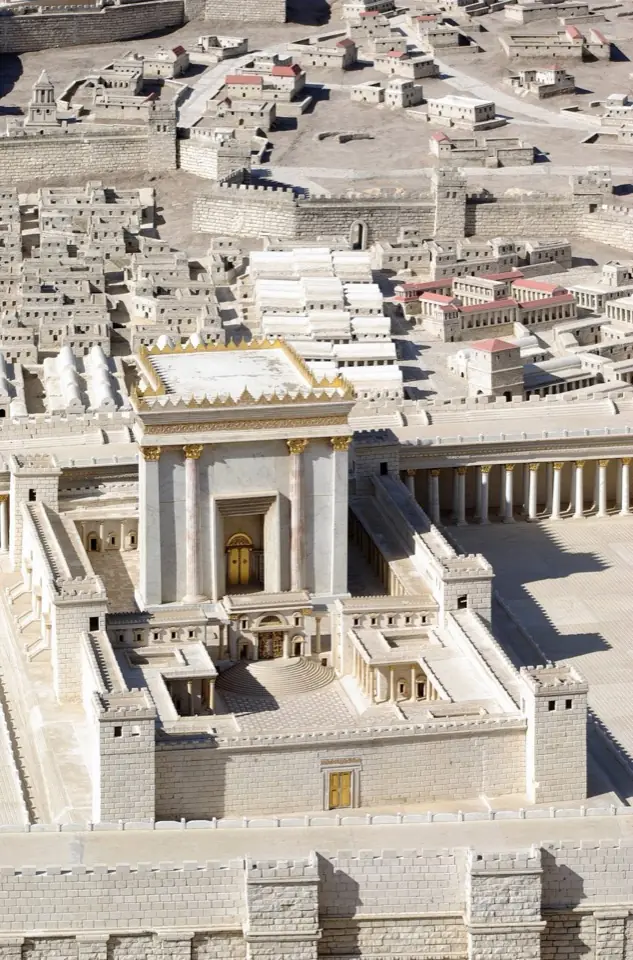
The Israel Museum’s 1:50 model reconstructs Jerusalem as it appeared in AD 66. At its centre is the Temple enlarged by Herod; the Sadducees’ power depended on this Temple. Source: Jerusalem Modell BW 3.JPG, Berthold Werner, public domain. See this exhibit in the Bible Museum

What did they believe?
The Sadducees' theological positions stood in sharp contrast to the Pharisees at nearly every point:
- They recognized only the Five Books of Moses (Genesis through Deuteronomy) as the supreme authority, rejecting the equal status of the Prophets and Writings
- They did not believe in the resurrection of the dead: they held that the Five Books of Moses contain no clear teaching about resurrection
- They did not believe in angels or the soul (Acts 23:8)
- They emphasized human free will: Josephus says they denied the role of fate and held that all good and evil flows from human choice
- They did not accept the Oral Tradition: the centuries of oral commentary accumulated by the Pharisees meant nothing to them
Their conflict with Jesus
The Sadducees appear in the Gospels relatively rarely, but each appearance is pivotal.
The most famous episode is when they confronted Jesus with a clever hypothetical: seven brothers each married the same woman in succession; whose wife would she be in the resurrection? (Matt 22:23–33)
On the surface this looks like a scholarly debate, but it was really a reductio ad absurdum attack on the doctrine of resurrection: "Look — resurrection leads to an absurd situation; therefore there is no resurrection."
Jesus answered simply and powerfully:
"You are mistaken, not knowing the Scriptures, nor the power of God. For in the resurrection they neither marry nor are given in marriage, but are like God's angels in heaven. But concerning the resurrection of the dead, haven't you read that which was spoken to you by God, saying, 'I am the God of Abraham, and the God of Isaac, and the God of Jacob?' God is not the God of the dead, but of the living." (Matt 22:29–32)
The response is masterful: Jesus did not appeal to the Prophets (which the Sadducees did not accept) but instead proved resurrection from the very Five Books of Moses they did accept (Exod 3:6). In the desert God told Moses, "I am" (present tense!) the God of Abraham — which means Abraham still lives before God.
Another crucial confrontation was the cleansing of the Temple (Matt 21:12–13). The money-changers and the sellers of sacrificial animals in the Temple were part of an economic network controlled by the Sadducees. When Jesus overturned the tables and cried, "You have made it a den of robbers," he struck directly at the Sadducees' core interests. This is why those who ultimately orchestrated Jesus' trial and crucifixion were primarily the high priest Caiaphas and the Sadducean power circle (Matt 26:3–4).
Their end
The Sadducees' entire existence depended on the Temple. When Roman armies destroyed the Jerusalem Temple in AD 70, the Sadducees as a movement vanished completely: no Temple meant no power base for the priestly aristocracy.
The Pharisees, by contrast, were rooted in the synagogue and in Torah teaching rather than the Temple, and so they survived its destruction — becoming the foundation of what we know today as Rabbinic Judaism.
The lesson of the Sadducees is this: a faith built entirely on an external institution collapses the moment the institution does. They placed their security in a Temple made of stone, yet rejected the one who said, "Destroy this temple, and in three days I will raise it up" (John 2:19).
V. The Zealots
Name meaning: From the Greek ζηλωτής (Zelotes), meaning "one who is zealous" Core conviction: Violently resist Roman rule; God alone is Israel's king; paying taxes to Caesar is an act of treason Appearances in the New Testament: One of Jesus' disciples was "Simon who was called the Zealot" (Luke 6:15; Acts 1:13)
Where did they come from?
The spiritual roots of the Zealots are ancient. In the Old Testament, Phinehas (Num 25:6–13) killed an Israelite caught in immorality with a pagan woman and was praised as the exemplar of "zeal" (קַנָּא, qanna) for God's honor. The Maccabean family, in their armed resistance to Antiochus IV, also saw themselves as heirs to Phinehas.
As an organized political movement, the Zealots are usually traced to AD 6. That year Rome deposed Archelaus and turned Judea into a directly governed province, ordering a census and tax registration.
A Galilean named Judas (called "Judas the Galilean" by Josephus) led an uprising, declaring that paying taxes to Caesar was an act of disloyalty to God, since God alone was Israel's true king. Rome crushed the revolt, but Judas's idea lived on like a smoldering ember.
What did they believe?
Theologically, the Zealots were actually quite close to the Pharisees: they believed in the Law, the resurrection, and the coming Messiah. Josephus says they agreed with the Pharisees on almost everything — with one crucial difference: they held that God alone must be called Master, and that dying for that conviction was entirely acceptable.
The difference lay in the chosen path:
- The Pharisees said: Keep the Law and wait for God to act
- The Sadducees said: Cooperate with Rome and maintain stability
- The Zealots said: Take up the sword and fight God's kingdom into existence
Within their movement there was an even more extreme wing: the Sicarii (from the Latin sica, a short dagger). These men would mingle in festival crowds and use daggers concealed beneath their cloaks to assassinate Jewish notables who collaborated with Rome — then vanish into the crowd. The "Egyptian" mentioned in Acts 21:38, who "led four thousand men of the Assassins out into the wilderness," was probably one of their leaders.
Jesus and the Zealots
One of Jesus' Twelve was "Simon who was called the Zealot" (Luke 6:15). This detail is striking: at the same table, Jesus seated a man who had once committed himself to armed revolution right alongside Matthew, who had collected taxes for Rome.
In the eyes of the world, these two men were natural enemies: one burning with hatred of Rome, one on Rome's payroll. Yet Jesus called them onto the same team — and this itself is a picture of the gospel: in Christ, people who seemed utterly irreconcilable can become brothers.
Jesus refused the Zealot path. When the crowd wanted to make him king by force, he withdrew to the mountain alone (John 6:15). When Peter drew his sword and cut off the high priest's servant's ear, Jesus said:
"Put your sword back into its place, for all those who take the sword will die by the sword." (Matt 26:52)
Before Pilate, Jesus declared openly:
"My Kingdom is not of this world. If my Kingdom were of this world, then my servants would fight, that I wouldn't be delivered to the Jews. But now my Kingdom is not from here." (John 18:36)
Their end
The Zealot path led to catastrophe. In AD 66 the Jews launched an all-out revolt against Rome, with the Zealots and Sicarii as its driving force. Four years later, the Roman general Titus marched into Jerusalem; the Temple was burned and the city was razed to the ground.
The last holdout of the Jewish War was Masada: 960 Sicarii fighters and their families held the fortress for three years, then in AD 73 — as the Roman siege ramp was nearly complete — chose death over surrender.
Jesus had already foretold it all:
"Jerusalem, Jerusalem, who kills the prophets, and stones those who are sent to her! How often I would have gathered your children together, even as a hen gathers her chicks under her wings, and you would not! Behold, your house is left to you desolate." (Matt 23:37–38)
The tragedy of the Zealots was this: they longed for the kingdom of God but pursued it by human means. They forgot that God's kingdom is not won by fighting — it was established when Christ was "struck down" on the cross. Violent revolution brings only greater destruction; only the cross of Christ brings true liberation.
VI. The Essenes
Name meaning: Uncertain; possibly related to "pious ones" or "healers" Core conviction: Jewish society is irreparably corrupt; one must withdraw from it entirely, form a pure community, and await God's final judgment Appearances in the New Testament: Zero — the New Testament never directly mentions the Essenes
Why introduce a faction the New Testament never mentions?
Because they help us understand what made Jesus unique.
When we see that contemporaries chose the path of "retreating to the wilderness to await the end," the significance of Jesus choosing to "walk into the crowds and proclaim the gospel" comes into sharp relief. What's more, the most important biblical archaeological discovery of the twentieth century — the Dead Sea Scrolls — was left behind by this very group.
Who were they?
The Essenes separated from mainstream Jewish society around the mid-second century BC. Both Josephus and Philo mention them, and their numbers were estimated at around four thousand.
The most well-known Essene community was at Qumran, on the northwest shore of the Dead Sea. In 1947, a Bedouin shepherd boy discovered the first batch of Dead Sea Scrolls in caves near Qumran. These documents, copied between the third century BC and the first century AD, contain portions of nearly every Old Testament book (with the exception of Esther). They are the oldest Hebrew biblical manuscripts ever found — over a thousand years older than the previously earliest known copies.

Caves near Qumran. From 1947 onwards, the Dead Sea Scrolls were discovered in caves in this area. Source: Qumran caves 1504 (509724995).jpg, James Emery, CC BY 2.0. See this exhibit in the Bible Museum

What did they believe?
- The Temple in Jerusalem had been defiled by illegitimate priests (they rejected the Hasmonean family's seizure of the high priesthood)
- The present age was ruled by the sons of darkness; they were the sons of light, who must remain absolutely pure
- Through strict communal life — shared property, daily ritual bathing, communal meals, copying of Scripture — they prepared for God's final judgment
- They expected two Messiahs: a priestly Messiah and a royal Messiah
How did they live?
Josephus describes the Essenes with admiration:
- All property was held in common; there was no private ownership
- They rose before dawn to pray, speaking no worldly word before sunrise
- Work, ritual bathing, white robes, communal meals — everything was highly ritualized
- Most did not marry; they kept no slaves
- Joining the community required a three-year probationary period, followed by an oath of secrecy
- Their Sabbath observance was even stricter than the Pharisees'
Contrasted with Jesus
Some scholars have speculated that Jesus or John the Baptist may have had connections to the Essenes, but the evidence is thin — and Jesus' way of life was the opposite of the Essenes' at every point:
| Essenes | Jesus |
|---|---|
| Withdrew from society; lived in the wilderness | Moved into towns; ate with sinners |
| Accepted only members who had passed rigorous tests of purity | Called tax collectors, prostitutes, lepers |
| Strict purity laws; avoided contact with the unclean | Actively touched lepers; spoke with Samaritan women |
| Awaited God's destruction of the sons of darkness | Said "God so loved the world" (John 3:16) |
| Hated those outside | Taught love for enemies |
The Essene community document Community Rule contains the line: "Love all the sons of light and hate all the sons of darkness." Jesus said instead: "But I tell you, love your enemies, bless those who curse you, do good to those who hate you, and pray for those who mistreat you and persecute you" (Matt 5:44).
The Essenes show us a genuine pursuit of holiness: they truly were dissatisfied with the religious corruption of their day, and they sincerely longed for purity. But their solution was escape — leave the world, build a wall, live only with "clean" people. Jesus took exactly the opposite path. He came not to quarantine the righteous but to walk into the midst of sinners and bring them home.
VII. Other Important Social Groups
Beyond the four organized religious-political factions above, there are several groups that appear frequently in the New Testament and deserve our attention.
1. The Scribes
Appearances in the New Testament: Around 60 times Greek: γραμματεύς (grammateus)
The scribes were not a separate religious faction but a professional role: expert copyists, interpreters, and teachers of the Law.
Already in the time of Ezra (Ezra 7:6 — "Ezra was a ready scribe in the law of Moses"), the scribes had become respected intellectual figures in Jewish society. By the time of Jesus most (though not all) scribes aligned with the Pharisee camp, which is why the Gospels so often mention "the scribes and Pharisees" in the same breath.
Their work included:
- Copying the Scriptures (ensuring the faithful transmission of the text)
- Interpreting the Law (issuing legal rulings on specific cases)
- Teaching the people (expounding the Law in synagogues and public settings)
- Serving on the Sanhedrin (providing expert legal opinion in judicial proceedings)
Jesus referred to them as those who "sat on Moses' seat" (Matt 23:2), acknowledging their teaching office. But he also rebuked many scribes sharply: seeking titles and honor, performing piety in front of widows, and turning the Law into a crushing burden on ordinary people (Matt 23:4–7; Mark 12:38–40).
Yet there were exceptions: Mark 12:28–34 records a scribe who sincerely asked Jesus which commandment was greatest, and when he heard "love God" and "love your neighbor," he responded with genuine agreement. Jesus told him: "You are not far from God's Kingdom."
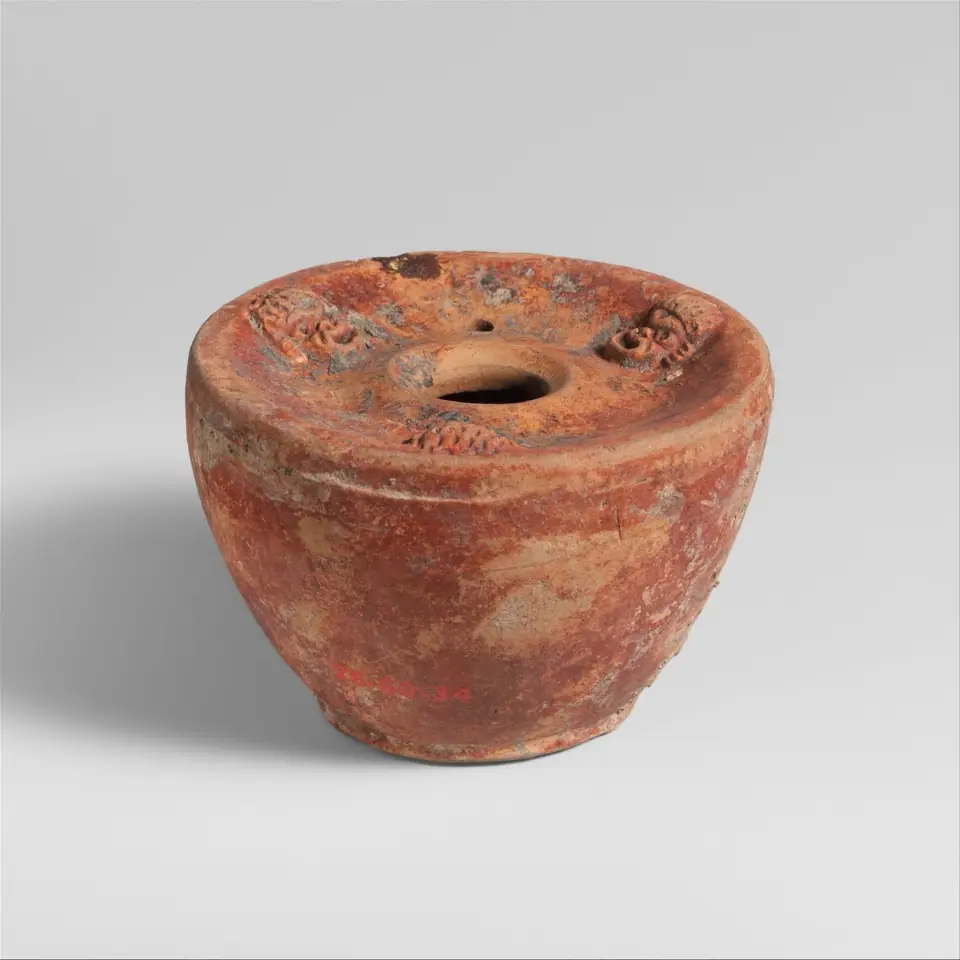
A clay inkwell from the first to second centuries AD, in the Metropolitan Museum of Art. This is the kind of writing equipment used to copy Scripture scrolls and prepare documents. Source: Metropolitan Museum of Art collection, The Metropolitan Museum of Art Open Access, CC0. See this exhibit in the Bible Museum
2. Tax Collectors
Appearances in the New Testament: Around 20 times Greek: τελώνης (telones)
Tax collectors were among the most despised groups in Jewish society.
Rome's tax system used tax farming: the right to collect taxes in a given region was auctioned to the highest bidder, who then hired locals to do the actual collecting. Jewish tax collectors were those local agents. Their fellow Jews hated them for multiple reasons:
- They worked for Rome, the occupying power — essentially plundering their own people on behalf of the enemy
- They routinely over-collected, pocketing the surplus
- Their work required constant contact with Gentiles and ritually unclean objects, making them ceremonially unclean
- The rabbis classified them with robbers and sinners, barring them from giving testimony in court
The Gospels consistently pair "tax collectors and sinners" — not as a careless expression, but as an accurate reflection of how society viewed them.
Jesus' attitude toward tax collectors overturned all conventions. He called the tax collector Matthew to be his disciple (Matt 9:9), ate meals with tax collectors (Matt 9:10–11), told the parable of the Pharisee and the tax collector praying in the Temple (Luke 18:9–14), and went to stay at the home of the chief tax collector Zacchaeus (Luke 19:1–10).
When the Pharisees complained, "This man welcomes sinners, and eats with them" (Luke 15:2), Jesus answered:
"Those who are healthy have no need for a physician, but those who are sick. I came not to call the righteous, but sinners to repentance." (Mark 2:17)
The story of the tax collectors is one of the most moving pictures of the gospel: God's grace comes precisely to those who "don't deserve it." The religious leaders of Jerusalem rejected Jesus; a tax collector in Jericho whom the whole town despised climbed a sycamore tree just to catch a glimpse of him — and that day, salvation came to Zacchaeus's house (Luke 19:9).
3. The Samaritans
Appearances in the New Testament: Around 10 times Key passages: John 4:1–42; Luke 10:25–37; Luke 17:11–19
The Samaritans were neither "Gentiles" nor "Jews" — they were a distinctive people in between.
Their origins trace back to 722 BC, when the Assyrians destroyed the northern kingdom of Israel. Assyria deported large numbers of Israelites and resettled the land with foreigners. The remaining Israelites intermarried with these settlers, forming the ancestors of the Samaritans (2 Kgs 17:24–41). Later, when Jews returning from Babylon sought to rebuild the Temple and the Samaritans asked to participate, they were turned away (Ezra 4:1–3). From that point, the two peoples never reconciled.
Their main disputes with the Jews:
- They accepted only the Five Books of Moses, rejecting the Prophets and Writings
- They believed God had designated Mount Gerizim — not Jerusalem's Mount Zion — as the proper place of worship (they had built their own temple there)
- Jews regarded them as a racially mixed and theologically deviant people
One line from John's Gospel captures a thousand years of bitterness: "For Jews have no dealings with Samaritans." (John 4:9)
Jesus broke every norm in his dealings with Samaritans:
- He initiated a conversation with a Samaritan woman (John 4): in Jewish eyes, this was a triple violation — speaking to a Samaritan, speaking alone with a woman, speaking with a woman who had a complicated marital history
- The Parable of the Good Samaritan (Luke 10:25–37): the hero of the story is not the priest, not the Levite, but a Samaritan. To a Jewish audience, this was almost offensive
- Healing ten lepers (Luke 17:11–19): of the ten who were cleansed, the only one who returned to give thanks was a Samaritan. Jesus marveled: "Weren't the ten cleansed? But where are the nine? Were there none found who returned to give glory to God, except this stranger?"
Jesus' final commission before his ascension explicitly included Samaria within the scope of the gospel:
"But you will receive power when the Holy Spirit has come upon you. You will be witnesses to me in Jerusalem, in all Judea and Samaria, and to the uttermost parts of the earth." (Acts 1:8)
Acts 8 records the historic moment when the gospel reached the Samaritans: a wall of a thousand years, torn down by Christ.
4. The Common People (Am Ha'aretz)
There is one more group — never named directly in the New Testament yet present on every page — the ordinary Jewish masses.
Rabbinic literature calls them עַם הָאָרֶץ (Am Ha'aretz, literally "people of the land"), a term used with some contempt for those who did not strictly observe the minutiae of the Law. One widely quoted Pharisaic saying held that "this crowd that doesn't know the law is accursed" — and John 7:49 records that Pharisees actually said something very close to this.
These common people made up the overwhelming majority of Jewish society: fishermen, farmers, shepherds, craftsmen. They believed in God, observed the Sabbath, kept the festivals, attended the synagogue — but had neither the time nor the resources to study and practice the Pharisees' elaborate purity regulations.
Jesus grew up among them, and it was primarily among them that he ministered. Matthew 9:36 contains one of the most moving portraits in the Gospels:
"But when he saw the multitudes, he was moved with compassion for them, because they were weary and scattered, as sheep without a shepherd."
Looked down on by the religious elite, oppressed by Rome, bled dry by tax collectors — these "people of the land" were the very people Jesus had in mind when he said, "Come to me, all you who labor and are heavily burdened, and I will give you rest" (Matt 11:28).
VIII. A Summary Table
| Faction / Group | Attitude to the Law | Attitude to Rome | View of Resurrection | Social Class | Jesus' Response |
|---|---|---|---|---|---|
| Pharisees | Law + oral tradition | Passive resistance; no cooperation | Believed | Middle-class laypeople | Affirmed the Law; rebuked hypocrisy |
| Sadducees | Only the Five Books of Moses | Active cooperation | Rejected | Priestly aristocracy | Refuted their errors |
| Zealots | Close to the Pharisees | Armed resistance | Believed | Radical popular movement | Rejected the path of violence |
| Essenes | Stricter than the Pharisees | Withdrew from society | Believed | Desert monastic community | (No direct interaction recorded) |
| Scribes | Professional interpreters | Varied by allegiance | Most believed | Educated class | Affirmed the office; rebuked pride |
| Tax Collectors | Regarded as lawbreakers | Worked for Rome | Case by case | Marginalized outcasts | Welcomed and called |
| Samaritans | Only the Five Books of Moses | Outside the Jewish system | Uncertain | Excluded by Jews | Actively crossed the dividing wall |
IX. Theological Reflection: Jesus Transcends Every Faction
Stepping back from this map, a striking picture emerges.
Every faction in Jesus' day was answering one question: What should God's people do while living under pagan rule? They gave four answers:
- The Pharisees said: Keep the Law; use holiness as a wall against corruption
- The Sadducees said: Cooperate with power; maintain the status quo
- The Zealots said: Take up the sword; fight God's kingdom into existence
- The Essenes said: Flee to the wilderness; wait for the end
Jesus chose none of these paths.
He did not pile more rules onto the Law as the Pharisees did; instead he pointed to its heart (Matt 22:37–40). He did not trade with power as the Sadducees did; instead he walked toward the cross. He did not launch a revolution as the Zealots did; instead he said, "My Kingdom is not of this world." He did not hide from the world as the Essenes did; instead he ate and walked among the most broken people he could find.
He opened a fifth way: the kingdom of God does not come through rule-keeping, institutional leverage, the sword, or monastic withdrawal — it comes through God himself becoming flesh, entering this broken world, and through the self-giving love of the cross, renewing all things from the inside out.
This is also why the disciples around Jesus' table could include both Simon the Zealot and Matthew the tax collector: in Christ, what matters is not which faction you belong to, but whether you follow the one who stands above them all.
Paul later put this truth in its most precise form:
"There is neither Jew nor Greek, there is neither slave nor free man, there is neither male nor female; for you are all one in Christ Jesus." (Gal 3:28)
X. For Us Today
Two thousand years later, the names of these factions have faded into history. But the mindsets they embodied have never truly disappeared from the church:
- The Pharisee mindset lives on: when we use religious performance to hide the brokenness in our real lives, substituting religious behavior for genuine love
- The Sadducee mindset lives on: when we compromise truth to maintain respectability, believing only in what we can see and touch
- The Zealot mindset lives on: when we turn faith into an ideological battle, treating everyone who disagrees with us as an enemy
- The Essene mindset lives on: when we retreat into a Christian bubble, cutting ourselves off from the world entirely, mistaking non-contact for holiness
Jesus' answer to all of these remains the same:
"A new commandment I give to you, that you love one another. Just as I have loved you, you also love one another. By this everyone will know that you are my disciples, if you have love for one another." (John 13:34–35)
Not obeying the Law to perfection, not running an efficient institution, not winning a revolution, not achieving perfect isolation — but loving one another.
This is the simplest path. It is also the hardest. But it is the only path that leads into the kingdom of God.
XI. A Few Verses Worth Memorizing
"By this everyone will know that you are my disciples, if you have love for one another." (John 13:35)
“the weightier matters of the law: justice, mercy, and faith” … “you ought to have done these” (Matt 23:23)
"You are not far from God's Kingdom." (Mark 12:34) — Jesus, to a sincere scribe
"You are all one in Christ Jesus." (Gal 3:28)
Further Reading:
- Josephus, The Jewish War, Book 2, Chapter 8 — a comparison of the Pharisees, Sadducees, and Essenes
- Josephus, Jewish Antiquities, Book 13, Chapter 5; Book 18, Chapter 1
- Sanders, E. P., Judaism: Practice and Belief, 63 BCE – 66 CE
- Wright, N. T., Jesus and the Victory of God — locating Jesus within his Jewish context
- Jeremias, J., Jerusalem in the Time of Jesus — social stratification and religious groups
💬 After reading this article, if you have thoughts or questions, feel free to ask Pastor Bond:
- "The Pharisees knew the Scriptures so well — how could they end up opposing Jesus?"
- "Could I be like them — understanding the teaching but missing Jesus himself?"
- "When people in the church hold different convictions, how do I avoid taking sides while still staying unified?"