The Nations of the Ancient Near East in Old Testament Times
— Israel's Neighbors, Rivals, and Empires
Written for every brother and sister who has ever been lost in too many Old Testament place names and tangled nation-state relationships. Once you get these nations straight, the Old Testament narrative reads like a sweeping epic — and the Director from start to finish is God.
I. Why Learn About Israel's Neighbors?
When reading the Old Testament, you have probably been bewildered by a parade of nation names:
Assyria arrives, then Babylon, then Egypt again; Moabites, Ammonites, Edomites, Philistines, Arameans, Canaanites… Who is who? Where are they? What is their relationship with Israel?
These names are not decorations. One of the central tensions in the Old Testament narrative is this: God chose a small people and placed them at the busiest crossroads of the ancient world.
Open a map and it becomes clear: the land of Israel sits at the convergence point of three great civilizational zones — Egypt to the south, Mesopotamia and Asia Minor to the north. Every army, every trade caravan, every wave of cultural influence moving from one continent to another had to pass through this narrow land bridge — and Israel sat squarely on it.
This meant Israel was destined never to simply "live quietly": every rising empire would pass its doorstep, and every great-power contest would inevitably touch it.
But it was precisely in this location that God chose to display His faithfulness: caught in the squeeze of competing powers, living in the shadow of empires, His people survived — by His promises.
II. Timeline at a Glance
Before introducing each nation individually, here is a simplified timeline to clarify the international landscape of the Old Testament:
| Period | Approximate Date | Dominant Power | Israel's Status |
|---|---|---|---|
| Patriarchal Age | c. 2000–1500 BC | Egyptian Middle/New Kingdom | Abraham's family sojourning in Canaan |
| Exodus and Conquest | c. 1446–1200 BC (traditional) | Egyptian New Kingdom (Ramesside dynasty) | Exodus from Egypt, entry into Canaan |
| Period of the Judges | c. 1200–1050 BC | No single hegemony ("power vacuum") | Repeated warfare with Canaanites and Philistines |
| United Kingdom | c. 1050–930 BC | No single hegemony | Saul, David, Solomon: Israel's golden age |
| Divided Kingdom | c. 930–722 BC | Assyrian Empire rising | Northern Kingdom (Samaria) + Southern Kingdom (Jerusalem) |
| Fall of the North | 722 BC | Assyria | Northern Kingdom destroyed; ten tribes scattered |
| Judah Alone | 722–586 BC | Assyria → Neo-Babylon | Southern Kingdom struggling to survive between Assyria and Babylon |
| Babylonian Exile | 586–539 BC | Neo-Babylon | Temple destroyed; people exiled to Babylon |
| Persian Return | 539–333 BC | Persian Empire | Cyrus decrees Jewish return; Temple rebuilt |
A key observation: the period of Israel's greatest strength (the David-Solomon dynasty) coincided precisely with an "imperial vacuum" in the ancient Near East: Egypt was declining, Assyria had not yet risen, Babylon was dormant. Once the empires returned to the stage, Israel fell into crisis again.
This was no coincidence: God gave His people a window of opportunity to establish their kingdom. But the people chose rebellion — Solomon's late-life idolatry, the successive covenant-breaking after the kingdom split — and ultimately forfeited that window.
III. Egypt — The Superpower of Love and Hate
Location: Southwest of Israel, in the Nile River valley Old Testament appearances: From Genesis to Ezekiel — throughout Key figure: Pharaoh (a title, not a personal name)
Four Layers of Israel's Relationship with Egypt
Throughout the Old Testament, Egypt plays at least four sharply different roles:
Layer One: Refuge. When famine struck, Abraham went down to Egypt (Gen. 12:10), and Jacob's whole family followed Joseph there (Gen. 46). Egypt's fertile Nile Delta provided food and safety. In the narrative logic of the Old Testament, Egypt is first and foremost a place of refuge.
Layer Two: Enslaver. After Joseph died, a new pharaoh "who didn't know Joseph" (Exod. 1:8) began brutalizing the Israelites. The first half of Exodus is the story of this four-hundred-year oppression. God struck Egypt with ten plagues, divided the waters of the Red Sea, and wrested His people from the grip of the world's most powerful empire — and this became the most foundational memory in Old Testament faith.
Layer Three: Temptation. In the wilderness the Israelites repeatedly cried, "We wish that we had died by Yahweh's hand in the land of Egypt, when we sat by the meat pots" (Exod. 16:3), longing for Egypt's food. The prophets later continually warned the people not to "go down to Egypt for help" (Isa. 31:1) or to replace trust in God with Egyptian military alliances. Egypt came to represent trusting in the world's power instead of God's protection.
Layer Four: Witness to God's sovereignty. The prophets also foretold that Egypt would ultimately come to know God. Isaiah declared, "In that day, Israel will be the third with Egypt and with Assyria, a blessing in the middle of the earth" (Isa. 19:24), and even said that God would call Egypt "my people" (Isa. 19:25).
Egypt shows us just how surprising God's grace can be: the nation that once enslaved Israel has a place in God's redemptive plan.
Egyptian Archaeology and the Old Testament
It is worth noting that Egypt has left the richest archaeological record of the ancient world. While the Exodus event has no direct corresponding record in Egyptian documents (pharaohs did not chronicle their defeats), some indirect evidence is striking:
- The Merneptah Stele (c. 1208 BC): the earliest known Egyptian document mentioning "Israel," confirming that a people called "Israel" already existed in Canaan at that time
- The Campaign of Shishak (Shoshenq I) (c. 925 BC): 1 Kings 14:25–26 records that the Egyptian pharaoh Shishak attacked Jerusalem; the reliefs at Karnak Temple also record this campaign
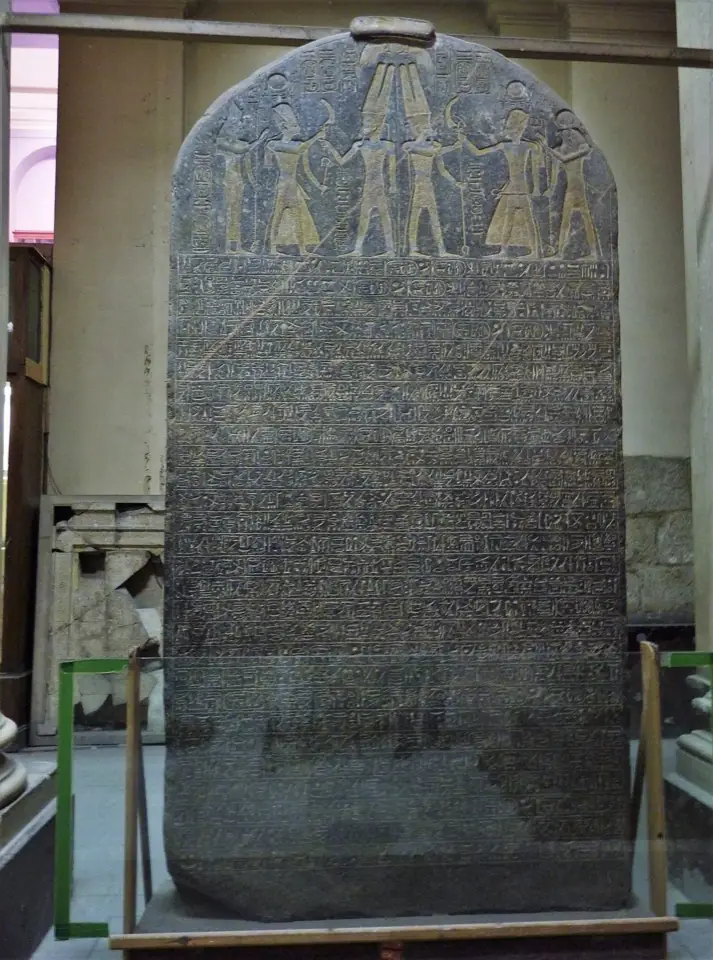
The Merneptah Stele, c. 1208 BC, in the Egyptian Museum in Cairo. Near the end, the inscription mentions “Israel”, the earliest appearance of this name in a document outside the Bible. Source: Merenptah stele.jpg, Alyssa Bivins, CC BY-SA 4.0. See this exhibit in the Bible Museum

IV. The Canaanites — Indigenous People of the "Promised Land"
Location: Throughout the land of Israel and surrounding areas Old Testament appearances: Most concentrated in Genesis through Judges Groups included: Hittites, Amorites, Jebusites, Perizzites, Hivites, Girgashites, and others
Who Were They?
In the Old Testament, "Canaanites" refers both to a specific people (descendants of Canaan, Gen. 10:15–19) and functions as a collective term for the various groups already living in the land before Israel's arrival.
When God said to Abraham, "I will give this land to your offspring" (Gen. 12:7), the Canaanites were already there. When Joshua led Israel into the Promised Land, they faced multiple city-states and tribal confederacies.
Canaanite Religion — Israel's Greatest Spiritual Threat
The greatest Canaanite influence on Israel was not military but religious.
The heart of Canaanite religion was Baal worship (בַּעַל, Baʿal, meaning "lord" or "master"). The Canaanites worshiped Baal as the god of storms and harvest, believing that sacrificing to him would guarantee rain and good crops. Alongside Baal worship came:
- Asherah worship: a fertility goddess
- Sacred prostitution: sexual acts as religious ritual
- Child sacrifice: burning infants to Molech (Lev. 18:21; 2 Kings 23:10)
These practices are strictly forbidden in the Old Testament. Yet after entering Canaan, generation after generation of Israelites were absorbed into Canaanite religion: the cyclical pattern of Judges (apostasy → oppression → crying out → deliverance → apostasy again) is essentially a recurring tug-of-war between Israel and Canaanite worship.
Even into the kingdom period, King Ahab married the Phoenician princess Jezebel and officially introduced Baal worship into Israel (1 Kings 16:31–33), triggering Elijah's dramatic showdown on Mount Carmel (1 Kings 18).
The Canaanite story reminds us: the most dangerous enemy is often not a distant empire but cultural assimilation close at hand. Israel's armies could defeat the Philistines in battle, but they could not resist the lure of Canaanite idols.
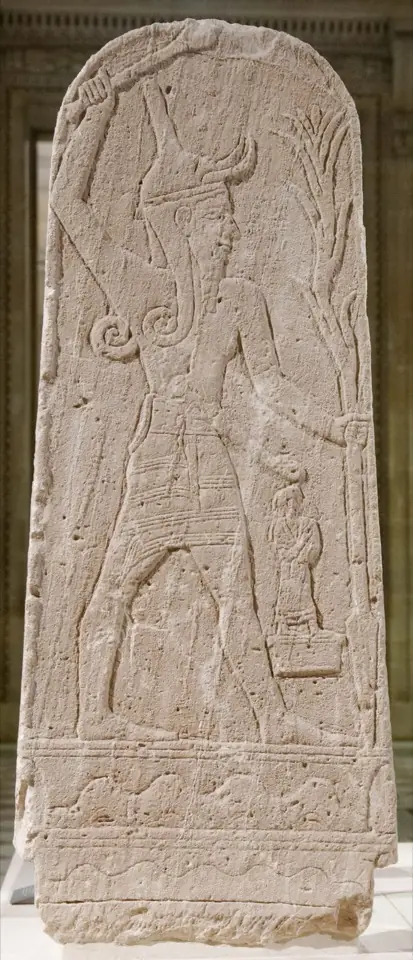
The Baal with Thunderbolt stele, excavated at Ugarit, c. fifteenth to thirteenth centuries BC, in the Louvre. The Canaanites worshipped Baal as the god of storms and rain. Here he raises a weapon and holds a spear symbolising lightning. Source: Baal thunderbolt Louvre AO15775.jpg, Jastrow, public domain. See this exhibit in the Bible Museum

V. The Philistines — Fierce Rivals from the Sea
Location: The southwestern coastal plain of Israel (roughly the Gaza region today) Old Testament appearances: From Judges through the Davidic monarchy Five major cities: Gaza, Ashkelon, Ashdod, Ekron, Gath
Where Did They Come From?
The Philistines were not native to the region. They were part of the "Sea Peoples" — migrants who arrived on the Canaanite coast around the 12th century BC, likely from the Aegean world (possibly Crete or refugees from the collapse of Mycenaean civilization). The prophet Amos confirms they came from "Caphtor" (Amos 9:7), identified as Crete.
They brought with them advanced ironworking technology: 1 Samuel 13:19–22 records that not a single blacksmith could be found anywhere in Israel, "for the Philistines had said, 'Lest the Hebrews make swords or spears.'" This technological monopoly gave the Philistines a lasting military advantage.
Conflict with Israel
The Philistines were Israel's most formidable external enemy during the period of the Judges and the early monarchy:
- The Story of Samson (Judg. 13–16): a microcosm of Israel's long entanglement with the Philistines — Samson uses supernatural strength to fight them and ultimately brings the enemy down with him in death
- The Capture of the Ark (1 Sam. 4–6): the Philistines defeated Israel in battle and even captured the ark of the covenant. But God displayed His sovereignty in the Philistine temple of Dagon: the Dagon idol fell before the ark and broke apart
- David and Goliath (1 Sam. 17): perhaps the most famous scene in the Old Testament — a young shepherd boy with a sling and five smooth stones brought down the Philistine champion giant
David ultimately broke the military threat of the Philistines for good. By the late monarchy period, the Philistines faded as an independent force and were eventually absorbed by Assyria and Babylon.
The name "Palestine" is, ironically, derived from "Philistine": after crushing the last Jewish revolt in AD 135, the Roman Empire deliberately renamed the region "Syria Palaestina" to erase the Jewish connection to the land — using Israel's old enemy to humiliate them.
VI. Three Close Neighbors — Moab, Edom, and Ammon
These three peoples share one striking feature: they were all blood relatives of Israel.
1. Edom — Descendants of Esau
Location: Southeast of Israel, the highlands south of the Dead Sea (Mount Seir) Ancestor: Esau, Jacob's twin brother (Gen. 25:30; 36:1) Key text: The entire book of Obadiah (a book devoted to Edom's judgment)
The enmity between Edom and Israel goes back to the womb: Jacob and Esau "struggled together" in Rebekah's belly (Gen. 25:22).
The Edomites repeatedly kicked Israel when it was down:
- When Israel was leaving Egypt, Edom refused them passage through its territory (Num. 20:14–21)
- When Jerusalem fell to Babylon, the Edomites not only refused to help but joined in the looting, attacking Jewish refugees fleeing the disaster
Psalm 137:7 captures one of the bitterest memories of the exiles:
"Remember, Yahweh, against the Edomites, the day of Jerusalem; who said, 'Raze it! Raze it, even to its foundation!'"
The entire book of Obadiah pronounces judgment on Edom: "As you have done, it will be done to you. Your deeds will return upon your own head." (Obad. 15)
Edom's story is the Old Testament's most vivid tragedy of brothers becoming enemies: the bitterness that began in Esau's heart endured for a thousand years and finally consumed an entire nation.
By New Testament times, Edom's descendants were the Herodian dynasty: the most famous "Edomite" in the New Testament is Herod the Great (see the Treasures column "Herod Is Not One Person").
2. Moab — Descendants of Lot's Older Daughter
Location: East of Israel, on the plateau east of the Dead Sea Ancestor: Born of Lot's older daughter through incest with her father (Gen. 19:37) Key figures: Balak (the Moabite king who hired Balaam to curse Israel); Ruth
Moab's relationship with Israel is more complex than Edom's.
On one side, Moabite king Balak hired the diviner Balaam to curse Israel (Num. 22–24). But when Balaam arrived, he found he could not curse the people God had blessed — his donkey had more spiritual perception than he did (Num. 22:28).
On the other side, one of the most moving declarations of faith in the entire Old Testament came from the mouth of a Moabite woman:
"Your people shall be my people, and your God my God." (Ruth 1:16)
Ruth, a Moabite widow, followed her mother-in-law Naomi back to Bethlehem, married Boaz, and became the great-grandmother of King David (Ruth 4:17) — and appears in the genealogy of Jesus Christ (Matt. 1:5).
A Moabite, excluded from the assembly by the law of Moses (Deut. 23:3), was grafted by God into the Messianic bloodline: this is what makes grace so breathtaking.
3. Ammon — Descendants of Lot's Younger Daughter
Location: Northeast of Israel, east of the Jordan River (today's capital Amman is the ancient Ammonite city of "Rabbah") Ancestor: Born of Lot's younger daughter through incest with her father (Gen. 19:38)
The Ammonites clashed with Israel multiple times:
- Judge Jephthah fought the Ammonites (Judg. 11)
- David defeated the Ammonites (2 Sam. 10–12): it was during this campaign that David remained in Jerusalem and committed his great sin of adultery with Bathsheba and the murder of Uriah
- In Solomon's old age, under the influence of his foreign wives, he worshiped the Ammonite god Molech/Milcom (1 Kings 11:5, 7): one of the hallmarks of Solomon's decline
The story of these three neighbors tells us: proximity in blood does not guarantee harmony in relationship. But God's grace can transcend every human barrier: He brought a Moabite woman into the Messianic genealogy.
VII. Aram — The Persistent Rival to the North
Location: North and northeast of Israel (modern Syria; capital: Damascus) Old Testament appearances: From the patriarchal age through the late monarchy Also known as: Syria (the translation used in the Septuagint)
Relatives — and Rivals
The Arameans and Israelites share family ties: Jacob's mother Rebekah was "the daughter of Bethuel the Aramean" (Gen. 25:20), and Jacob himself lived with his uncle Laban in Aram for twenty years, where he married Leah and Rachel.
By the monarchy period, the Aramean kingdom of Damascus became the most frequent opponent of the Northern Kingdom of Israel. Kings records multiple Israelite-Aramean wars:
- Ben-Hadad I and II (1 Kings 15:18–20; 20:1–34): repeatedly attacked Israel
- Hazael (2 Kings 8:7–15): prophesied by Elisha to become king of Aram and to inflict terrible suffering on Israel
- Naaman (2 Kings 5): the commander of the Aramean army, struck with leprosy, was healed by Elisha and declared, "Behold, now I know that there is no God in all the earth, but in Israel" — a foreign general became a witness to faith in God
Aram was ultimately absorbed by the Assyrian Empire in 732 BC, when Damascus was conquered.
VIII. Phoenicia — The Maritime Traders of Tyre and Sidon
Location: The northwest coast of Israel (modern Lebanon) Core cities: Tyre and Sidon Old Testament appearances: From the David-Solomon period onward
Merchants, Craftsmen, and Exporters of Idols
The Phoenicians were the finest sailors and traders of the ancient world: they invented the alphabet (which passed to the Greeks, then to the Romans, becoming the source of the Western alphabet today).
David and Solomon maintained close trade relations with Hiram king of Tyre. The cedar of Lebanon used in Solomon's Temple was supplied by Hiram (1 Kings 5:1–12), and Tyrian craftsmen also participated in the Temple's construction.
But Phoenicia also brought a deadly spiritual threat: the Northern Kingdom's King Ahab married Jezebel, daughter of the king of Sidon (1 Kings 16:31), and Jezebel introduced Phoenician Baal worship on a massive scale into Israel, killed Yahweh's prophets, and triggered a faith crisis across the entire Northern Kingdom.
The prophet Ezekiel composed a sweeping lament over Tyre's grandeur and fall (Ezek. 26–28), comparing Tyre's pride to the fall in the garden of Eden:
"You were in Eden, the garden of God… You were perfect in your ways from the day that you were created, until unrighteousness was found in you." (Ezek. 28:13, 15)
This passage is often read as simultaneously describing the king of Tyre and alluding to Satan's fall: a being of extraordinary gifts destroyed by pride.
IX. The Assyrian Empire — God's "Rod" of Wrath
Location: Northern Mesopotamia (northern Iraq today; capital Nineveh near modern Mosul) Era of dominance: c. 900–612 BC Key event: Destruction of the Northern Kingdom of Israel in 722 BC
The Terror Empire of the Ancient World
The Assyrian Empire was notorious for shocking cruelty throughout the ancient Near East. Their war strategy was systematic intimidation: Assyrian royal inscriptions and wall reliefs frankly recorded:
- Skinning prisoners alive, cutting off noses and ears
- Piling human heads into pyramids
- Forcibly deporting entire city populations to the opposite ends of the empire
This brutality was not uncontrolled violence but a calculated psychological weapon: terror was designed to break the will of opponents before Assyrian armies even arrived.
Collisions with Israel
The Assyrian threat to Israel escalated gradually from the 9th century BC:
- Shalmaneser III (c. 853 BC): fought a coalition including Israel at the Battle of Qarqar. King Ahab of Israel contributed 2,000 chariots to the battle (recorded in Assyrian inscriptions)
- Tiglath-Pileser III (745–727 BC): seized large portions of Northern Israel's territory and began the first wave of forced deportations (2 Kings 15:29)
- Shalmaneser V / Sargon II (722 BC): captured Samaria and destroyed the Northern Kingdom, scattering the Israelites throughout the empire and resettling foreigners in their place (2 Kings 17:1–24) — the historical background behind "the ten lost tribes" and the origin of the Samaritans
Against the Southern Kingdom, Assyrian king Sennacherib besieged Jerusalem in 701 BC (2 Kings 18–19). King Hezekiah prayed in desperation, and through the prophet Isaiah God sent a promise. That night:
"The angel of Yahweh went out and struck one hundred eighty-five thousand in the Assyrian camp." (2 Kings 19:35)
Sennacherib withdrew and returned home, where he was later assassinated by his own sons in his own temple.
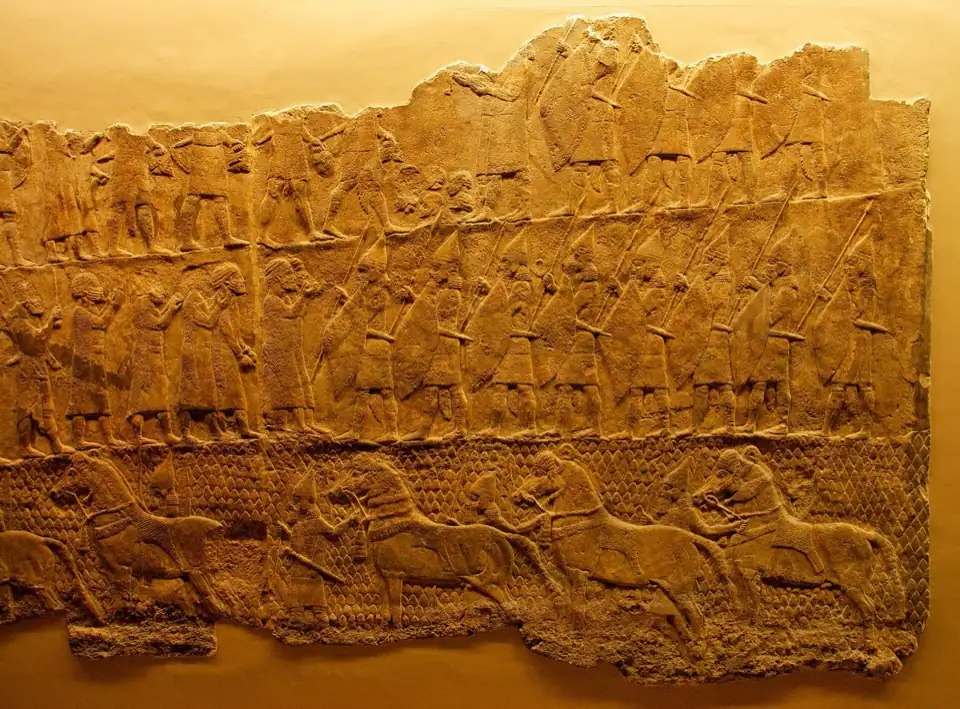
A relief of the siege of Lachish from the walls of Sennacherib’s palace, c. 700 BC, in the British Museum. It depicts the Assyrian assault on the fortified Judean city of Lachish: siege warfare, captives, and the people of Judah being marched into exile (see 2 Kings 18:14). Source: Lachish Relief, British Museum 1.jpg, Mike Peel, CC BY-SA 4.0. See this exhibit in the Bible Museum

How Does God View Assyria?
Isaiah offers a stunning perspective:
"Alas, Assyrian, the rod of my anger, the staff in whose hand is my indignation! I will send him against a godless nation, and against the people of my wrath will I give him a command to take the spoil and to take the prey. However, he doesn't mean so, neither does his heart think so; but it is in his heart to destroy, and to cut off not a few nations." (Isa. 10:5–7)
God calls Assyria the "ax" in His hand — used to discipline rebellious Israel. But Assyria did not know God and attributed its victories to its own power. So God immediately adds:
"Should an ax brag against him who chops with it? Should a saw exalt itself above him who uses it?" (Isa. 10:15)
The Assyrian Empire fell in 612 BC when the Babylonians and Medes united to destroy Nineveh. The entire book of Nahum prophesies Nineveh's ruin. The story of Jonah (God sending Jonah to preach in Nineveh) is also connected to Assyria: God even gave this brutal empire a chance to repent.
Assyria's fate reveals a profound truth: God can use unbelieving empires to accomplish His purposes, but those empires will still answer to God for their own cruelty.
X. Babylon — Nebuchadnezzar, God's "Servant"
Location: Southern Mesopotamia (south-central Iraq today) Era of dominance: Neo-Babylonian Empire, c. 626–539 BC Key event: Destruction of Jerusalem and Solomon's Temple in 586 BC
From the Hanging Gardens to the Burning Temple
Babylon's history stretches far back: as early as the 18th century BC, Hammurabi established his famous law code there. But the Babylon most relevant to the Old Testament is the Neo-Babylonian Empire (also called the Chaldean Empire), founded by Nabopolassar and reaching its peak under his son Nebuchadnezzar II.
Nebuchadnezzar was one of the greatest builders of the ancient world: the legendary "Hanging Gardens of Babylon" (one of the Seven Wonders of the Ancient World) are attributed to him. He rebuilt Babylon into the most magnificent city of his day, complete with the Ishtar Gate's brilliant blue-glazed brick walls and a great tower (possibly the prototype for the Tower of Babel in Genesis 11).
But for the Jewish people, he was the man who destroyed everything.
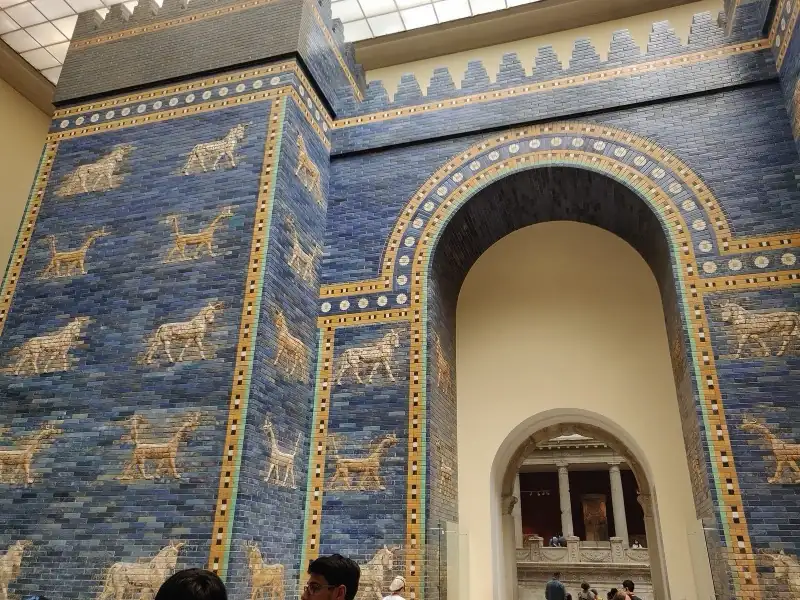
Babylon’s Ishtar Gate, built by Nebuchadnezzar around 575 BC and reconstructed from the original bricks in Berlin’s Pergamon Museum. The blue glazed bricks carry reliefs of dragons and wild bulls. Source: Ishtar Gate in the Pergamon Museum -.jpg, Kurt Kaiser, CC0. See this exhibit in the Bible Museum

Three Invasions, Final Destruction
Nebuchadnezzar's strikes against Judah came in three phases:
- 605 BC: First siege of Jerusalem; a group of young Jewish nobles was taken captive, including Daniel and his three friends (Dan. 1:1–6)
- 597 BC: Second siege; Judah's king Jehoiachin and the elite were taken captive — the prophet Ezekiel was among this group
- 586 BC: The final destruction. When Judah's last king Zedekiah rebelled, Nebuchadnezzar's army broke through Jerusalem, burned the Temple, tore down the city walls, and deported nearly the entire population (2 Kings 25)
This was the darkest moment in Old Testament history: God's eternal covenant with David seemed to have ended, God's dwelling place was reduced to ashes, and God's people were carried off to a foreign land.
The book of Lamentations is a dirge over this catastrophe:
"The Lord has become as an enemy. He has swallowed up Israel… The roads to Zion mourn, because no one comes to the solemn assembly. All her gates are desolate." (Lam. 2:5; 1:4)
How Does God View Babylon?
Just as with Assyria, God declared Babylon to be His instrument — but with an even more striking title:
"Behold, I will send and take all the families of the north, says Yahweh, and Nebuchadnezzar the king of Babylon, my servant, and will bring them against this land." (Jer. 25:9)
God called Nebuchadnezzar "my servant" — not because Nebuchadnezzar worshiped God (he worshiped Marduk) but because God can use anyone, any empire, to carry out His will.
But God also declared: after seventy years are accomplished, I will punish the king of Babylon and that nation. (Jer. 25:12)
The book of Daniel records what happened to Nebuchadnezzar afterward: struck by God for his pride, he lived like a wild animal in the fields for seven years, until he "lifted up his eyes to heaven" and acknowledged the sovereignty of the Most High (Dan. 4:34–37). This is one of the rare accounts of a Gentile king's repentance in the Old Testament.
The famous vision of the great statue in Daniel 2 (golden head, silver chest, bronze belly, iron legs, feet of iron and clay mixed) positions Babylon as the "head of gold," followed by Medo-Persia, Greece, and Rome — and finally a stone not cut by human hands smashes the statue and fills the whole earth: that stone is God's eternal kingdom.
Babylon's story is the deepest wound in the Old Testament — and the source of its greatest hope: God allowed the Temple to be destroyed not because He had failed, but because judgment must begin with the household of God (1 Pet. 4:17). But judgment is not the end: He had already prepared a return and a rebuilding.
XI. The Persian Empire — The Unlikely Rescuer
Location: The Iranian plateau Era of dominance: c. 550–330 BC Key event: Cyrus the Great conquers Babylon in 539 BC and decrees the Jewish return
Cyrus — God's "Shepherd" and "Anointed One"
In 539 BC, Persian king Cyrus (Cyrus the Great) entered Babylon virtually without a fight. Cyrus adopted a policy radically different from Assyria's and Babylon's: allowing conquered peoples to return home and resume their own religious worship.
The book of Ezra opens with the decree that shook the Jewish world:
"Now in the first year of Cyrus king of Persia, that Yahweh's word by Jeremiah's mouth might be accomplished, Yahweh stirred up the spirit of Cyrus king of Persia, so that he made a proclamation throughout all his kingdom, and also in writing, saying: ‘Cyrus king of Persia says, Yahweh, the God of heaven, has given me all the kingdoms of the earth; and he has commanded me to build him a house in Jerusalem, which is in Judah. Whoever there is among you of all his people, may his God be with him, and let him go up to Jerusalem, which is in Judah, and build the house of Yahweh, the God of Israel.'" (Ezra 1:1–3)
The Cyrus Cylinder, unearthed in 1879 (now in the British Museum), confirms this policy from the Persian side: Cyrus declared that he allowed various peoples to return to their own sanctuaries with their gods.
But the book of Isaiah contains an even more stunning prophecy — written at least 150 years before Cyrus was born:
"who says of Cyrus, 'He is my shepherd, and shall perform all my pleasure.'" (Isa. 44:28)
"Yahweh says to his anointed, to Cyrus… I have raised him up in righteousness, and I will make all his paths straight. He shall build my city, and he shall let my exiles go free, not for price nor reward." (Isa. 45:1, 13)
God called a foreign king who did not know Him "my shepherd" and "my anointed" (מָשִׁיחַ, mashiach — the same root as "Messiah"): this is unique in all the Old Testament.
Jewish Life Under Persian Rule
Under the protection of the Persian Empire, the Jewish people returned in three waves:
- Zerubbabel's return (c. 538 BC): laid the foundation of the rebuilt Temple (Ezra 3)
- Ezra's return (c. 458 BC): restored the teaching of the Law (Ezra 7–10)
- Nehemiah's return (c. 445 BC): rebuilt the walls of Jerusalem (Neh. 1–6)
The story of Esther also takes place in the Persian Empire: during the reign of King Ahasuerus (Xerxes I), the Jewish people faced near-annihilation but were saved by the courage of Queen Esther and God's hidden providence.
The Persian Empire is one of the most striking displays of God's sovereignty: He not only used enemies to discipline His people (Assyria, Babylon), but also used a stranger to rescue His people (Cyrus). The seventy years Jeremiah prophesied were fulfilled precisely: from the first deportation (605 BC) to Cyrus's decree of return (539 BC), or from the Temple's destruction (586 BC) to its completion (516 BC), is approximately seventy years in each case.
XII. A Summary Table
| Nation/Empire | Relationship with Israel | Role in the Old Testament | How God Used It |
|---|---|---|---|
| Egypt | Refuge → Enslaver → Temptation | The "antagonist" of the Exodus story | The crucible that forged Israel's national identity |
| Canaanites | Indigenous people of the land | Spiritual threat (idolatry) | A test of Israel's faithfulness |
| Philistines | Military rivals | Coastal competitors | Catalyzed Israel's transition from judges to monarchy |
| Edom | Esau's descendants; ancient enemies | Brothers who kicked them when down | A lesson on the judgment of betrayal |
| Moab | Lot's descendants | Enemy and ally by turns | Ruth entered the Messianic bloodline |
| Ammon | Lot's descendants | Temptation to idolatry | Exposed Solomon's decline in old age |
| Aram | Distant relatives; northern neighbors | Frequent wartime adversaries | Naaman became a witness of faith |
| Phoenicia | Trading partners | Cultural and religious exporters | Temple materials — and Jezebel |
| Assyria | Conquerors | God's "rod of wrath" | Judged the north, but was itself judged |
| Babylon | Destroyers | God's "servant" | Judged Judah, but paid the price after seventy years |
| Persia | Liberators | God's "shepherd" | Freed the exiles; rebuilt the Temple |
XIII. Theological Reflection: The Nations in God's Hands
Looking back at the rise and fall of these ten peoples and empires, one clear theme emerges: no nation lies outside the scope of God's sovereignty.
Daniel's vision of the great statue (Dan. 2) and the vision of four beasts (Dan. 7) display the succession of empires (Babylon, Persia, Greece, Rome each rising and passing away), and the ultimate conclusion is:
"In the days of those kings, the God of heaven will set up a kingdom which will never be destroyed, nor will its sovereignty be left to another people; but it will break in pieces and consume all these kingdoms, and it will stand forever." (Dan. 2:44)
God's use of the nations reveals several patterns:
1. Empires Are Tools in God's Hands
Whether or not they know God, empires can be used by Him:
- Assyria is "the rod of my anger" (Isa. 10:5)
- Nebuchadnezzar, king of Babylon, is “my servant” (Jer. 43:10)
- Cyrus is “my shepherd” (Isa. 44:28) and Yahweh’s “anointed” (Isa. 45:1)
2. The Tool Cannot Replace the Craftsman
Being used does not mean being approved. God used Assyria to discipline Israel, but Assyria itself fell because of its own pride and cruelty. An ax cannot boast against the one who swings it (Isa. 10:15).
3. A Small Nation with a Great Mission
Israel was never a great power by any geopolitical measure: squeezed between major powers, with almost no room for independent action. But God's plan was precisely to bring blessing to all nations through this small people:
"All of the families of the earth will be blessed through you." (Gen. 12:3)
Israel's calling was not to become an empire but to be a witness — testifying before the nations to the faithfulness of the one true God.
4. Grace Transcends National Boundaries
Although the Old Testament centers on Israel, God's grace was never confined to one people:
- The Moabite Ruth entered the Messianic genealogy
- The Aramean Naaman declared Israel's God to be the true God
- The entire city of Nineveh repented at Jonah's preaching
- The Persian king Cyrus was called God's shepherd
- Rahab (a Canaanite prostitute) was welcomed through faith (Josh. 2; Heb. 11:31)
Psalm 87 contains a breathtaking prophecy: God Himself lists the names of nations and declares them "born in Zion":
"I will record Rahab and Babylon among those who acknowledge me. Behold, Philistia, Tyre, and also Ethiopia: 'This one was born there.'" (Ps. 87:4)
This prophecy was fulfilled in the New Testament: in Christ, Jews and Gentiles are made one, and the dividing wall between the nations of the Old Testament has been torn down.
XIV. For Us Today
The international stage of the Old Testament has closed, but its message remains powerful for believers today:
First, God governs history. When we see the world in upheaval, great powers competing, and small nations suffering, remember: God was still sovereign when Assyria was at its most arrogant, He still had a plan when Babylon was at its most brutal, and He was still faithful when Israel was at its most desperate.
Second, God's people are always in the minority. Israel was never a great nation, and the church in many places is not the majority. But God's power does not depend on numbers: David brought down Goliath with five smooth stones, Gideon defeated the Midianite army with three hundred men (Judg. 7), because the battle is Yahweh's (1 Sam. 17:47).
Third, grace is always breaking down walls. The entanglements among the Old Testament nations spanned a thousand years, but God was always preparing a redemptive plan that crossed national boundaries. Paul declares in Ephesians the fulfillment of that plan:
"For he is our peace, who made both one, and broke down the middle wall of separation." (Eph. 2:14)
From Ruth to Naaman, from Rahab to Cyrus: God was signaling all along that His love will not stop at the border of any one people.
XV. A Few Verses Worth Memorizing
"Should an ax brag against him who chops with it?" (Isa. 10:15) (God's verdict on empire)
"Your people shall be my people, and your God my God." (Ruth 1:16) (A Moabite woman changed the Messianic genealogy)
"I have raised him up in righteousness… He shall build my city, and he shall let my exiles go free." (Isa. 45:13) (God can use anyone)
"In the days of those kings, the God of heaven will set up a kingdom which will never be destroyed." (Dan. 2:44) (All empires have an expiration date; only God's kingdom endures)
Further Reading:
- Josephus, Antiquities of the Jews, Books 1–11: a secondary account of Old Testament history
- Walton, John H. The IVP Bible Background Commentary: Old Testament (IVP)
- Kitchen, K. A. On the Reliability of the Old Testament
- Kuhrt, Amélie. The Ancient Near East, c. 3000–330 BC
- Pritchard, James B. Ancient Near Eastern Texts: English translations of original Assyrian, Babylonian, and Egyptian inscriptions
💬 After reading this article, if you have any thoughts or questions, feel free to ask Pastor Bond:
- "God governs the nations — so why did He still let Israel be plundered?"
- "What do the rise and fall of these ancient empires have to do with me today?"
- "I always get lost in all these nation names when reading the Old Testament — what can I do?"