Old Testament Sacrifices
Why Does God Require Blood?
For every believer who gave up halfway through Leviticus. Each detail of these intricate rituals tells Christ's story.
1. Sacrifice's Foundation: Sin Costs Life
The system rests on a solemn premise: “apart from shedding of blood there is no remission” (Hebrews 9:22).
God is showing humanity sin's seriousness, rather than bloodthirstiness. Sin's consequence is death (Genesis 2:17; Romans 6:23), beyond fines, lost marks or written apologies. Animal blood stands for human life because God does not want people to die, rather than delighting in slaughter.
Leviticus 17:11 establishes the theology: “For the life of the flesh is in the blood. I have given it to you on the altar to make atonement for your souls; for it is the blood that makes atonement by reason of the life.”
Seeds appear before Leviticus. God clothes Adam and Eve with skins, covering shame through an animal's death (Genesis 3:21). Abel offers firstborn animals and fat, receiving God's regard (Genesis 4:4). Noah sacrifices after the ark (Genesis 8:20). On Moriah, God provides a ram instead of Isaac (Genesis 22:13). Abraham names the place יְהוָה יִרְאֶה (Yahweh Yir'eh), Yahweh will provide.
Through Moses, these practices become the comprehensive system of Leviticus 1–7.
Israel was not alone in ancient Near Eastern sacrifice. Egypt, Babylon and Canaan had systems too. Israel's differed: no feeding hungry deities, manipulating divine will through magic or human sacrifice, rejected in Isaac's story. It was a gracious provision initiated by God, his appointed way for sinners to approach, rather than a human invention to win favour.
2. Five Principal Offerings
Leviticus' opening seven chapters describe five offerings addressing different matters and together forming a complete picture.
1. Burnt Offering: עֹלָה (olah), Ascending
Passage: Leviticus 1
This oldest, foundational offering burns entirely on the altar: bull, ram, goat, turtledove or young pigeon. Nothing is retained by worshipper or priest, with exceptions concerning birds and the hide; all belongs to God.
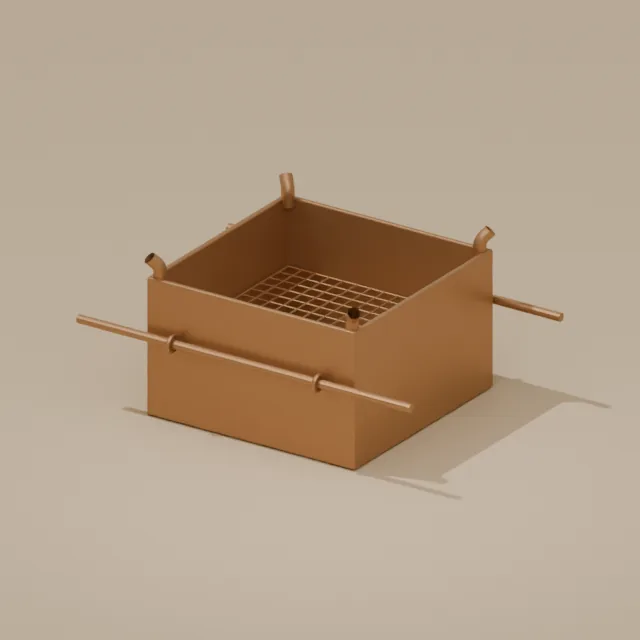
The bronze-covered altar has a horn at each corner and a bronze grating (Exodus 27:2, 4). Open the 3D Tabernacle →
The worshipper lays a hand upon the animal's head (Leviticus 1:4), pressing firmly rather than touching lightly, symbolising identification and transfer: my sin and life pass to this animal. The worshipper then personally slaughters it; the priest sprinkles blood around the altar.
Smoke ascends as the animal burns, giving the offering its name. It is “an offering made by fire, of a pleasant aroma to Yahweh” (Leviticus 1:9). God's pleasure concerns the worshipper's wholehearted devotion, rather than roasted meat's smell.
It expresses complete, unreserved dedication. Paul's living sacrifice uses this imagery (Romans 12:1).
2. Grain Offering: מִנְחָה (minchah), Gift
Passage: Leviticus 2
Among the five principal offerings, the grain offering centres on grain (Leviticus 5:11–13 also allows the poorest worshippers to present fine flour as a sin offering). It uses fine flour, oil and frankincense, as uncooked dough, baked cakes or griddle cakes. Leaven, symbolising sin, and honey are excluded; salt is required (Leviticus 2:13), symbolising covenant permanence: Leviticus 2:13 requires “the salt of the covenant of your God”, while Numbers 18:19 speaks of “a covenant of salt forever before Yahweh”.
Usually accompanying burnt or peace offerings, a small portion burns and the rest feeds priests (Leviticus 2:3).
It expresses gratitude and dedication of life's produce: flour and oil, the fruit of labour, acknowledge God's provision.
3. Peace or Fellowship Offering: שְׁלָמִים (shelamim)
Passage: Leviticus 3
Its name shares the root of שָׁלוֹם (shalom), peace. This alone allows the worshipper to eat the meat. Fat and inward parts burn, breast and right thigh go to priests, and remaining meat is shared by family and friends in the sanctuary precincts: a feast shared with God and others.
It celebrates reconciliation with God rather than making atonement, offered in thanksgiving, fulfilment of vows or freely.
It expresses peace with God and joy before him: feasting, sharing, thanks and fellowship. The Lord's Supper continues this picture in the New Testament: Christ's sacrifice reconciles us, then we share bread in remembrance.
4. Sin Offering: חַטָּאת (chattat)
Passage: Leviticus 4:1–5:13
Related to חֵטְא (chet), sin, this addresses unintentional wrongdoing through weakness, ignorance or negligence. Such sin still requires dealing with.
Its distinctive feature is blood's destination, differing according to the offender:
- High priest or congregation: sprinkled seven times before the sanctuary veil, placed on incense-altar horns and poured at the burnt-offering altar's base (Leviticus 4:5–7, 16–18). Greater seriousness brings blood closer to the Most Holy Place.
- Ruler: placed on burnt-offering altar horns (Leviticus 4:25).
- Ordinary person: likewise (Leviticus 4:30).
It expresses atonement and restored purity. Within the Old Testament framework, applying blood truly cleanses sanctuary and people from sin's pollution, beyond symbolism alone.
5. Guilt or Reparation Offering: אָשָׁם (asham)
Passage: Leviticus 5:14–6:7
Meaning guilt or reparation, this addresses misuse of sacred things and wrongs against others, including fraud, theft and false testimony. Sacrifice accompanies restitution, repayment plus one-fifth (Leviticus 6:5).
Confession to God cannot replace compensation to people. One cannot sacrifice while refusing to return stolen goods. The vertical and horizontal dimensions of faith belong together.
It expresses repair of wrongdoing against God and harm to people alike.
3. Essential Elements
Laying on Hands: Identification and Transfer
This declares the animal stands in my place. Its death and blood substitute for mine. On the Day of Atonement, the high priest confesses “all the iniquities of the children of Israel, and all their transgressions” over the goat for Azazel (Leviticus 16:21), transferring sin from people to the animal.
Blood: The Seat of Life
“For the life of the flesh is in the blood” (Leviticus 17:11). Representing life, blood is sacred. Israel's prohibition on eating blood reflects this seriousness (Leviticus 17:10–14).
Sprinkling on altars, applying to horns and sprinkling before the veil have distinct meanings, yet one central message: one life is given to atone for another.
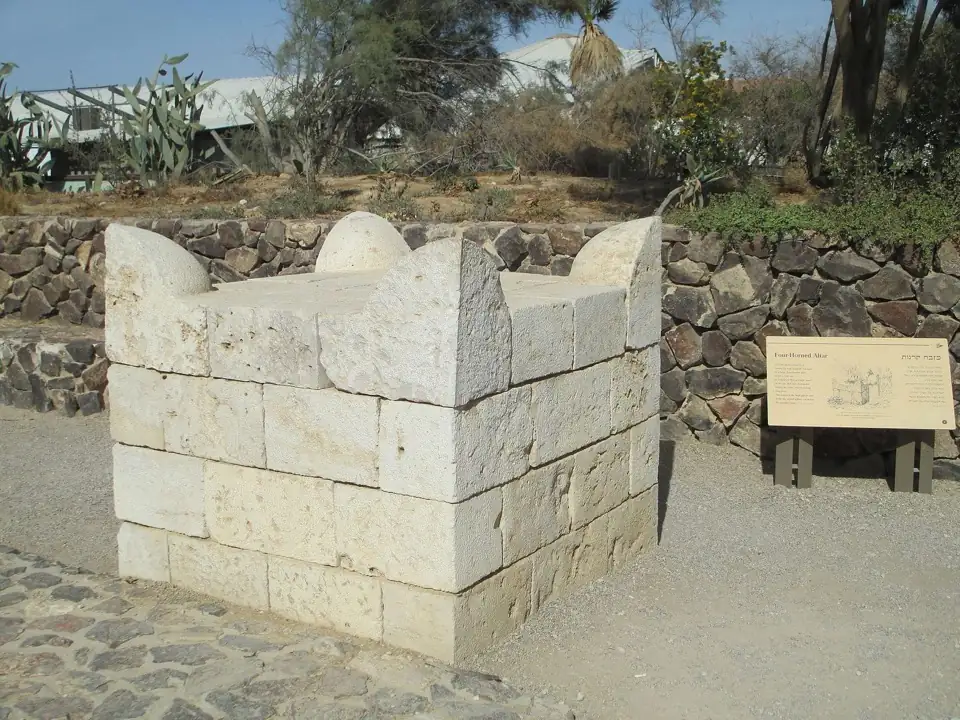
A replica at Beersheba. The eighth-century BC stones were found reused in walls; the reconstructed original is in the Israel Museum. This dismantled local altar illustrates horns upon which sin-offering blood was applied (Leviticus 4:25). Source: PikiWiki Israel 33677 An Altar in Tel Beer Sheva.JPG, Dr. Avishai Teicher, CC BY 2.5. View this exhibit in the Bible Museum

Fire: God's Acceptance
Fire consumes the offering and smoke rises. It signifies holiness and acceptance. Heavenly fire at Aaron's first sacrifice (Leviticus 9:24) and Carmel (1 Kings 18:38) visibly declares God's acceptance.
Without Defect: Perfection Required
Animals must be “without defect” (Leviticus 1:3), without blindness, lameness or scars. Inferior gifts dishonour God. Malachi asks, “When you offer the blind for sacrifice, isn’t that evil? And when you offer the lame and sick, isn’t that evil? Present it now to your governor! Will he be pleased with you?” (Malachi 1:8).
This points to Christ: Peter describes our redemption “with precious blood, as of a lamb without blemish or spot, the blood of Christ” (1 Peter 1:19). Only a perfect sacrifice accomplishes perfect atonement.
4. The System's Limits
An inherent limitation is constant repetition.
Morning and evening burnt offerings, doubled Sabbaths, additional new-moon and festival sacrifices, and the annual Day of Atonement all repeat. This itself signals that animal blood cannot finally resolve the problem.
Hebrews says, “For the law, having a shadow of the good to come, not the very image of the things, can never with the same sacrifices year by year, which they offer continually, make perfect those who draw near. Or else wouldn’t they have ceased to be offered, because the worshipers, having been once cleansed, would have had no more consciousness of sins?” (Hebrews 10:1–2).
Bull and goat blood cannot remove sin (Hebrews 10:4). The system points beyond itself to its fulfilment.
Yet it teaches two essential concepts. Propitiation addresses God's righteous anger at sin, satisfying justice and turning away wrath. Expiation addresses sin's pollution of people and sanctuary, cleansing its stain. Christ accomplishes both: “whom God sent to be an atoning sacrifice through faith in his blood” (Romans 3:25).
Another overlooked detail concerns the twice-daily תָּמִיד (tamid), continual offering: morning and twilight (Exodus 29:38–42; this passage itself does not specify three in the afternoon). Jesus died around three o'clock (Mark 15:34–37), at the evening sacrifice. As priests slaughtered the day's lamb, the true Lamb was offered outside the city at Calvary. The correspondence reflects God's precise arrangement, rather than coincidence.
5. From Shadow to Substance: Christ's Final Sacrifice
The New Testament repeatedly connects sacrifice with Christ's death:
- John declares, “Behold, the Lamb of God, who takes away the sin of the world!” (John 1:29).
- Paul says Christ “died for our sins” (1 Corinthians 15:3) and identifies him as the Passover lamb: “For indeed Christ, our Passover, has been sacrificed in our place” (1 Corinthians 5:7).
- Hebrews says, “nor yet through the blood of goats and calves, but through his own blood, entered in once for all into the Holy Place, having obtained eternal redemption” (Hebrews 9:12).
- Peter describes redemption “with precious blood, as of a lamb without blemish or spot, the blood of Christ” (1 Peter 1:19).
All five offerings find fulfilment in him:
| Old Testament offering | Fulfilment in Christ |
|---|---|
| Burnt offering: total dedication | Christ wholly obeys the Father and offers himself (Hebrews 10:5–7). |
| Grain offering: sinless life | His sinless life is the perfect unleavened offering (Hebrews 4:15). |
| Peace offering: reconciliation's feast | He reconciles us to God; Communion is the new covenant fellowship meal (Romans 5:1; 1 Corinthians 11:23–26). |
| Sin offering: atonement | He becomes sin for us, bearing its consequences (2 Corinthians 5:21). |
| Guilt offering: repayment | He repays all our debts to God (Colossians 2:13–14). |
Hebrews concludes: “Every priest indeed stands day by day serving and offering often the same sacrifices, which can never take away sins, but he, when he had offered one sacrifice for sins forever, sat down on the right hand of God… For by one offering he has perfected forever those who are being sanctified” (Hebrews 10:11–14).
Priests stand, their work unfinished. Christ sits, his work complete.
Conclusion: No More Animal Sacrifices Needed
Believers need no longer bring a lamb to an altar.
Sin has not become trivial; the final sacrifice has been offered. Blood remains necessary, yet the most precious blood has been shed. The system fulfilled its mission, teaching for fifteen hundred years:
Sin costs life. Forgiveness requires substitution. God himself provides the Lamb.
Abraham's words on Moriah received their final answer two thousand years later at Calvary: Yahweh will provide.
He has.