Coins, Weights and Measures in the Bible
How heavy was a talent?
For every brother or sister whose eyes automatically skip over “thirty shekels” and “ten thousand talents”. When the numbers acquire weight, the parables acquire power.
1. Why understand biblical weights and measures?
Jesus tells a parable about a servant owing his master ten thousand talents (Matthew 18:24). Without knowing the size of a talent, the number remains a string of symbols. But a talent was about six thousand denarii, and a denarius was an ordinary labourer's daily wage. Ten thousand talents therefore amounted to sixty million days' wages, requiring about 160,000 years of work without spending anything on food or drink.
Jesus was not casually choosing a large number. He was saying: you can never repay your debt to God by your own efforts. When the numbers carry real weight, grace becomes truly astonishing.
2. Units of weight
The most basic economic units in biblical times were weights, because the earliest money consisted of weighed metal.
Gerah (גֵּרָה, gerah): the smallest weight, about 0.6 grams. Twenty gerahs equalled one shekel (Exodus 30:13).
Shekel (שֶׁקֶל, sheqel): Scripture's most common unit of weight and money, about 11.4 grams. The Hebrew word originally means “weighing”. When Abraham bought the cave of Machpelah to bury Sarah, he weighed out four hundred shekels of silver to Ephron, according to the merchants' standard (Genesis 23:16). Notice that the silver was weighed, rather than counted: standardised minted coins did not yet exist.
Mina (מָנֶה, maneh; Greek μνᾶ, mna): fifty shekels, about 570 grams. In the parable of Luke 19, a master gives each of ten servants one mina and tells them to trade with it. A mina represented around three to four months' income for an ordinary worker: substantial, but still an ordinary amount. The test concerned everyday faithfulness.
Talent (כִּכָּר, kikkar; Greek τάλαντον, talanton): the largest unit, sixty minas or three thousand shekels, around 34 kilograms. Solomon's annual gold income was 666 talents (1 Kings 10:14), about 22.6 tonnes: astonishing wealth in the ancient world. In Matthew 25's parable of the talents, the master gives servants five talents, two talents and one talent respectively. Even the servant receiving one talent holds 34 kilograms of silver, around twenty years' wages for an ordinary worker.
3. The arrival of minted coins
Israelites initially traded with weighed metal, without minted coins. Coinage brought a small revolution.
The earliest coins appeared in the seventh century BC in Lydia, in Asia Minor, now western Turkey. They were made from a naturally occurring gold-silver alloy. During the Persian Empire, the daric, a Persian gold coin containing about 8.4 grams of pure gold, became a standard for international trade. The darics mentioned in Ezra and Nehemiah are these coins (Ezra 8:27).
Money in New Testament times
By New Testament times, several currencies circulated simultaneously in Palestine.
Denarius (δηνάριον, dēnarion; Latin denarius): a Roman silver coin containing about 3.9 grams of silver, the standard daily wage of an ordinary worker (Matthew 20:2, the vineyard parable). It is the New Testament's most common monetary unit. When the Pharisees’ disciples and the Herodians asked Jesus whether paying tax to Caesar was permissible, he asked them to show him the tax coin. They produced a denarius bearing Caesar’s image and inscription (Matthew 22:17–21).
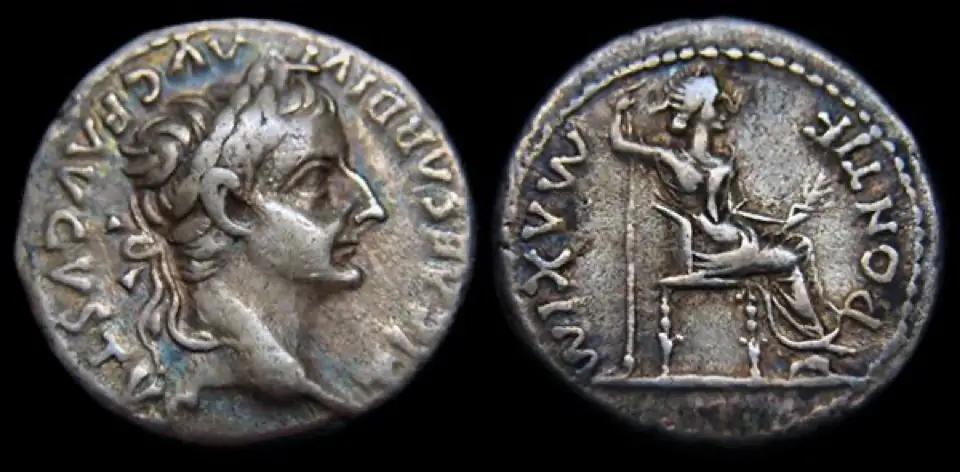
A silver denarius minted during Tiberius' reign, AD 14–37, with the emperor's portrait on the obverse. When Jesus asked, “Whose is this image and inscription?” (Mark 12:16), the coin shown to him was probably of this type. Source: Emperor Tiberius Denarius - Tribute Penny.jpg, DrusMAX, CC BY-SA 3.0. See this exhibit in the Bible Museum

Assarion (ἀσσάριον, assarion): a Roman bronze coin worth about one sixteenth of a denarius. When Jesus says two sparrows are sold for an assarion (Matthew 10:29), this is the coin meant. A tiny sum buys tiny birds, yet God cares even for these small lives.
Lepton (λεπτόν, lepton): a Jewish bronze coin, the smallest circulating denomination, worth about one 128th of a denarius. The poor widow in Mark 12:42 places two small coins in the offering chest, almost the smallest possible gift, yet Jesus says she gave more than everyone else.
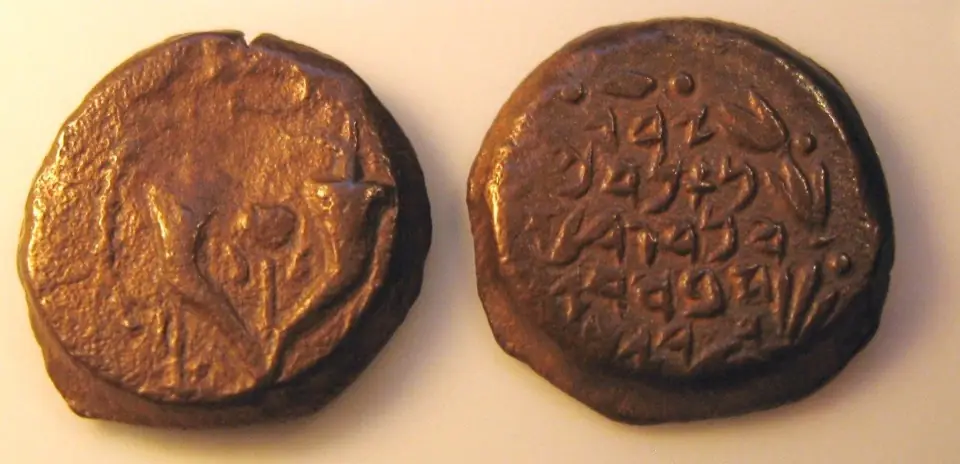
A bronze prutah minted during Alexander Jannaeus' reign, about 103–76 BC, worth roughly two lepta. The poor widow's “two small brass coins” (Mark 12:42) belonged to this general class of tiny bronze currency. Source: Alexander Jannaeus coin.JPG, Atzmonit, CC BY-SA 4.0. See this exhibit in the Bible Museum

Half-shekel or temple tax (didrachma): each Jewish male over twenty paid half a shekel annually for maintaining the temple (Exodus 30:13–16). In Matthew 17:24–27, tax collectors ask Peter whether Jesus pays it. Jesus tells Peter to catch a fish and find a coin in its mouth: a stater (στατήρ, statēr), worth one shekel, exactly enough for both men's tax.
A famous price in Scripture
Thirty pieces of silver: the price for which Judas betrays Jesus (Matthew 26:15). Many scholars understand this as thirty Tyrian shekels, each containing around 14 grams of silver. The amount echoes Zechariah 11:12–13. Under Old Testament law, thirty shekels compensated the owner when a slave was gored to death by an ox (Exodus 21:32). The Son of God was valued at the price of a slave.
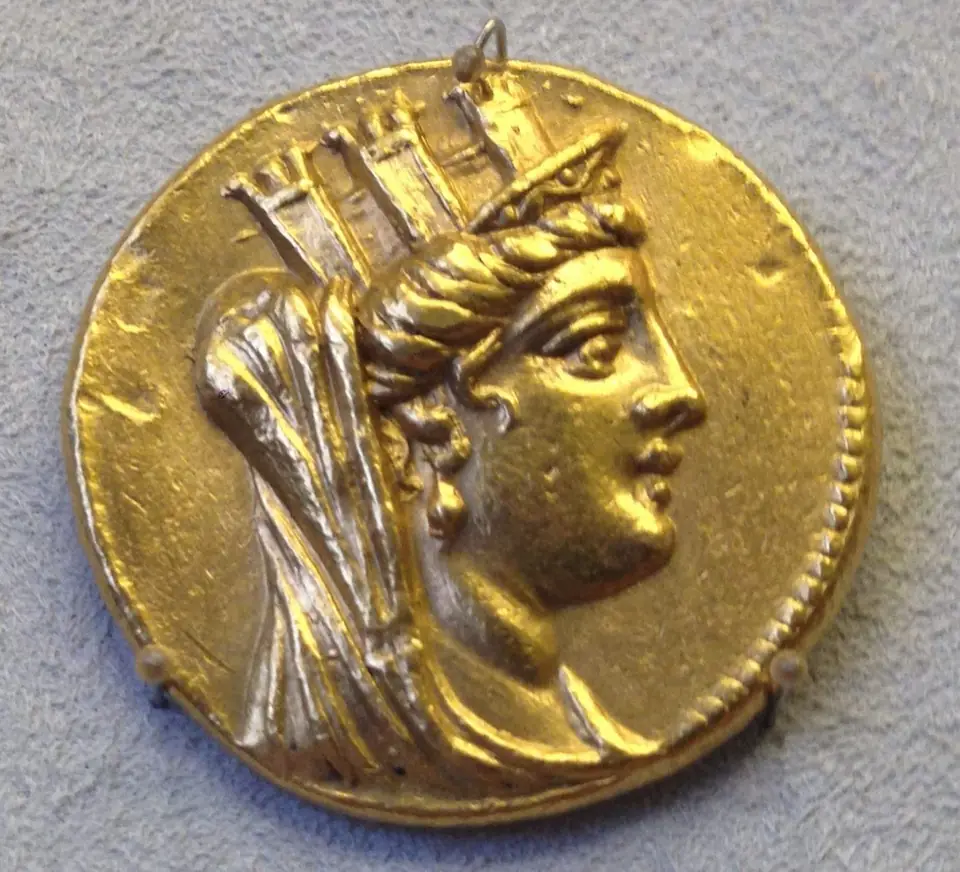
A silver double shekel minted in Tyre, 104–103 BC, held in Berlin's Bode Museum. Tyrian coins had a high silver content and continued circulating in Palestine in New Testament times. Source: Tyre-DoubleShekel 104-103BCE BodeMuseumBerlin RomanDecker…, RomanDeckert, CC BY-SA 4.0. See this exhibit in the Bible Museum

4. Length and distance
Cubit (אַמָּה, ammah): the distance from elbow to middle fingertip, about 44.5 centimetres for the ordinary cubit. Temple construction often used a long cubit of around 51.8 centimetres. Noah's ark measured three hundred cubits long, fifty wide and thirty high (Genesis 6:15), approximately 133 × 22 × 13 metres using the ordinary cubit. Jesus asks, “Which of you by being anxious, can add one moment to his lifespan?” (Matthew 6:27). The CUV's main text gives the lifespan reading, with an alternative margin reading of adding a cubit to one's stature. Following that image of length, if we cannot add even so little, what is worry accomplishing?
Span (זֶרֶת, zeret): the spread from thumb tip to little fingertip, about half a cubit or 22 centimetres. Goliath stood six cubits and a span (1 Samuel 17:4), around 2.9 metres.
Sabbath day's journey: about two thousand cubits, or 900 metres, the maximum distance rabbis permitted on the Sabbath. The Mount of Olives lay about a Sabbath day's journey from Jerusalem (Acts 1:12).
Mile (μίλιον, milion): a Roman mile, around 1,480 metres. Jesus says, “Whoever compels you to go one mile, go with him two” (Matthew 5:41). Roman law allowed soldiers to require civilians to carry baggage for one Roman mile. Jesus tells us to go an extra mile willingly.
5. Units of capacity
Bath (בַּת, bat): a liquid measure of about 22 litres. In Luke 16:6, the parable of the dishonest manager, a debtor owes one hundred baths of oil, around 2,200 litres of olive oil: a substantial transaction.
Seah (סְאָה, se'ah): a dry measure of about 7.3 litres. Jesus compares the kingdom of heaven to yeast a woman hides in three measures of flour (Matthew 13:33). These are three seahs, around 22 litres, enough flour for bread feeding more than a hundred people. This is a banquet's quantity, rather than a household portion. When the kingdom's yeast works, its scale exceeds your imagination.
Hin (הִין, hin): about 3.7 litres, often used for prescribed quantities of wine and oil in temple offerings.
Homer (חֹמֶר, homer): the largest dry measure, around 220 litres, equal to ten ephahs. In Ezekiel, God rebukes Israel's merchants and requires just balances, a just ephah and a just bath (Ezekiel 45:10). Fair measures accord with God's will.
6. God cares about honest scales
Scripture repeatedly makes this point: God cares deeply about fairness in weights and measures.
“You shall not have in your bag diverse weights, one heavy and one light. You shall not have in your house diverse measures, one large and one small. You shall have a perfect and just weight. You shall have a perfect and just measure.” (Deuteronomy 25:13–15)
“A false balance is an abomination to Yahweh, but accurate weights are his delight.” (Proverbs 11:1)
The prophets' rebuke
Ancient merchants cheated simply: buying with a heavy weight and selling with a light one. Both were labelled a shekel, but weighed differently. Amos angrily exposes merchants making the ephah small and the shekel large (Amos 8:5). Micah asks, “Shall I tolerate dishonest scales, and a bag of deceitful weights?” (Micah 6:11).
God cares about honest scales because every transaction concerns justice. Economic activity is no secular compartment separate from faith. How you use your scales in the market reveals whether your heart fears God.
Conclusion: God's heart behind the figures
Next time you read Jesus' parables, pause to convert the figures.
The servant owing ten thousand talents owed 160,000 years' wages. On what grounds was he forgiven? The poor widow gave two tiny coins, less than the price of half a sparrow. Why did Jesus say she gave more than everyone else? The servant entrusted with one talent buried twenty years' wages. What exactly frightened him?
When the numbers acquire weight, you discover that Jesus' parables speak about grace, faith and God's heart, beyond the money itself.