Archaeology and the Bible
This article is translated and adapted from the feature article "Archaeology and the Bible" in the ESV® Study Bible (Crossway, 2008); copyright belongs to the original publisher. It is provided for study purposes only. If the original publisher has any concerns about this translation, please contact us.
Archaeology and the Reliability of the Old Testament
Defining Archaeology
Archaeology may be defined as the systematic study of the material remains left behind by human activity in the past. Its subject matter includes written documents and everyday objects—most of which have survived only in broken or decayed form. As the archaeologist Stuart Piggott memorably put it, archaeology is "the science of rubbish." Archaeologists do indeed spend a great deal of time and energy sifting through long-forgotten ancient refuse: broken pottery, collapsed buildings, and fragmentary texts.
The Purpose and Goals of Archaeology
The goal of archaeology is to discover, document, observe, and preserve buried ancient remains, and thereby help reconstruct what life was like for people in the past. In practice, archaeology is only one of several disciplines that contribute to our understanding of ancient societies. Paleography and epigraphy (the study of ancient writing systems and inscriptions), history, linguistics, numismatics (the study of ancient coins), and literary studies all contribute to recovering the ancient world. What archaeology can illuminate is only part of the picture—far from the whole. Take the site of Megiddo as an example: it has been extensively excavated since the late nineteenth century, yet only a small portion of the entire site has been uncovered. The information archaeology provides for reconstructing ancient life at Megiddo is fragmentary and incomplete. No single discipline can yield a full historical picture on its own.
The archaeological enterprise in the biblical lands has had a complex history. In the mid-nineteenth century, Western pioneers on horseback traversed Palestine with compasses in hand, attempting to identify and map ancient sites from the biblical period—this was the beginning of archaeology in the region. Actual excavation did not begin until the late nineteenth century, and unfortunately much of the early work amounted to little more than treasure hunting. The goal was often to recover as many valuable artifacts as possible in the shortest time. Early excavators did not hesitate to use gunpowder to blast open pyramids or burial chambers. In Egypt, those hunting for mummies walked over piles of discarded coffins to reach their prize. Things are very different today. Modern excavation is systematic, scientific, and multidisciplinary.
Most archaeological research in the biblical lands focuses on sites that were continuously occupied for hundreds or even thousands of years. The occupation layers at Megiddo span from the Neolithic period (around 5000 BC) to the Persian period (fifth to fourth centuries BC). Such settlements are called tells (from Arabic; cf. Hebrew tel, meaning "ruin" or "mound"—Josh. 8:28; Josh. 11:13; Jer. 30:18; Jer. 49:2)—artificially formed mound-shaped accumulations of debris. The earliest settlers chose a location based on three considerations: defensibility, a reliable water supply, and access to food. When a settlement was destroyed for whatever reason, later builders typically constructed a new settlement directly on top of the ruins. With each successive occupation, the mound grew higher and thus became even more strategically valuable. A tell is therefore like a layered cake, with each stratum laid down in chronological order, the most recent period at the top. The archaeologist's task is to work through the tell in reverse order, layer by layer, reconstructing the history and culture of the people who lived there—in other words, uncovering the story buried within the mound.
The remains uncovered during excavation fall into three main categories: pottery, architectural remains, and small finds. Of these, pottery is especially important to archaeology because it is both durable and variable. Because pottery survives well, it is found in every stratum of a site, and each stratum has its own distinctive pottery styles. By comparing pottery from different sites, archaeologists can establish relative chronologies and sequences.
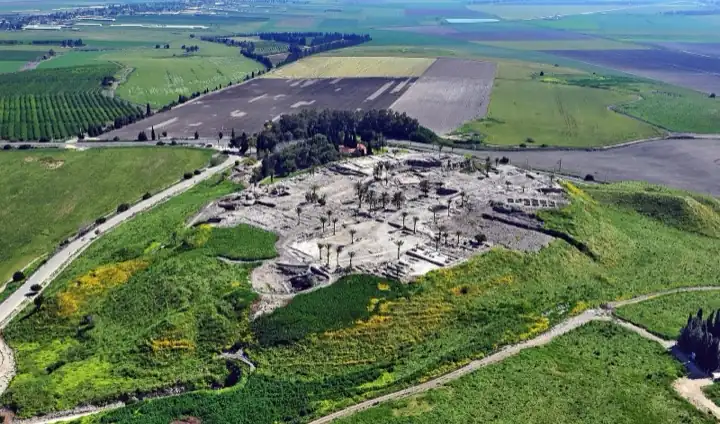
An aerial view of Megiddo. The mound rising from the plain is a “tell”: more than twenty layers of ruined ancient cities piled one upon another. Source: תל מגידו.JPG, AVRAM GRAICER, CC BY-SA 3.0. See this site in the Bible Museum

The Relationship Between Archaeology and Biblical Studies
In the archaeology of the biblical lands, one of the most contested questions concerns the motivation behind excavation. What is the relationship between biblical studies and the science of archaeology? What role does scientific method play? Is there still a place for "biblical archaeology" today?
Historically, the archaeology of Palestine has been a distinctive contribution of biblical scholars. Many of the pioneering archaeologists of the nineteenth century were trained in and motivated by biblical studies. Edward Robinson (1794–1863), often regarded as the father of scientific topography and archaeology in Palestine, was originally trained in Hebrew and Old Testament studies. The earliest systematic excavators of Palestine—W. F. Albright, N. Glueck, and G. E. Wright—were all biblical scholars. In the latter half of the twentieth century, however, there were strong calls from the academic community to separate biblical studies from archaeological research entirely. The argument was that the connection between the two was largely artificial, and that it was time for archaeology to establish itself as an independent scientific discipline. Yet the two fields naturally work hand in hand, since each serves as a source of knowledge and discovery for the other.
Today, a proper balance is needed between Palestinian archaeology and biblical studies. While some have attempted to use archaeological findings to deconstruct ancient history and the settings of ancient life, a more appropriate goal is reconstruction: drawing on biblical studies, archaeology, and other disciplines in an integrated way to understand how people lived in the biblical lands during the biblical period. One primary purpose of archaeology is to illuminate the historical context and material environment in which the biblical story took place. In this sense, archaeology provides a living backdrop for the biblical text. When textual evidence and archaeological evidence converge, archaeology can serve as a powerful corroborating tool.
The invasion of Israel and Judah by the Egyptian pharaoh Shishak is a model example of how archaeology illuminates Scripture. This campaign, which took place in the late tenth century BC, is recorded in 1 Kings 14:25–26: "In the fifth year of King Rehoboam, Shishak king of Egypt came up against Jerusalem. He took away the treasures of Yahweh's house, and the treasures of the king's house." Evidence outside the Bible confirms that this invasion occurred and provides information beyond what the biblical text records. At the Temple of Amun in Karnak, Shoshenq I (the biblical Shishak) built the Bubastite Portal, which bears a relief depicting his campaign into Palestine. The relief lists the names of numerous towns that were attacked or destroyed along his route of march.
One conclusion that can be drawn from the Bubastite Portal relief is that Shishak's invasion of Palestine was far broader than an attack on Jerusalem alone—it targeted both the kingdoms of Israel and Judah. Another significant detail is that Jerusalem does not appear on the relief. Why? The most likely explanation is that Jerusalem was never actually captured. King Rehoboam of Judah avoided the fall of Jerusalem by paying a heavy tribute to the Egyptians (as recorded in 1 Kings 14:25–26). In this case, it is actually the biblical evidence that illuminates the archaeological find.
Archaeology provides further confirmation of this invasion. Among the towns listed on Shishak's relief as having been attacked or destroyed is Megiddo. At Megiddo, excavators uncovered a stele (an inscribed stone pillar) bearing two of Shishak's standard royal titles. Such steles were commonly erected by pharaohs to declare a region as a vassal territory. A destruction layer at Megiddo has also been associated with Shishak's campaign. The site of Ta'anach provides additional evidence: it is covered by a massive destruction layer, and the pottery sealed beneath it belongs to the same type as that found in the Megiddo destruction layer. Ta'anach also appears on the Bubastite Portal as one of the cities Shishak conquered. The connection between the destruction layers at Ta'anach and Megiddo and Shishak's late-tenth-century campaign is genuinely compelling.
In this case, archaeology supplements both the Hebrew and Egyptian written records of Shishak's invasion of Israel and Judah. When these different lines of evidence are brought together, a fuller historical picture emerges. This kind of convergence is not unique: the biblical authors place events such as the invasions of Sennacherib and Nebuchadnezzar within their proper chronological and historical frameworks (cf. 2 Kings 18:13; 19:16; 24:1–10; 1 Chron. 6:15; 2 Chron. 32:1–22). These events are confirmed and enriched by contemporary ancient Near Eastern documents—the Sennacherib Prism details the former campaign, and the Lachish Letters record the latter. Excavations at sites throughout Judah have also revealed destruction layers reflecting the devastation of both campaigns.
So, after decades of archaeological research, what verdict does archaeology render on the historical reliability of the Old Testament? The answer is straightforward: time and again, archaeology has supported and confirmed the biblical record, and the notes throughout this study Bible cite many such examples.
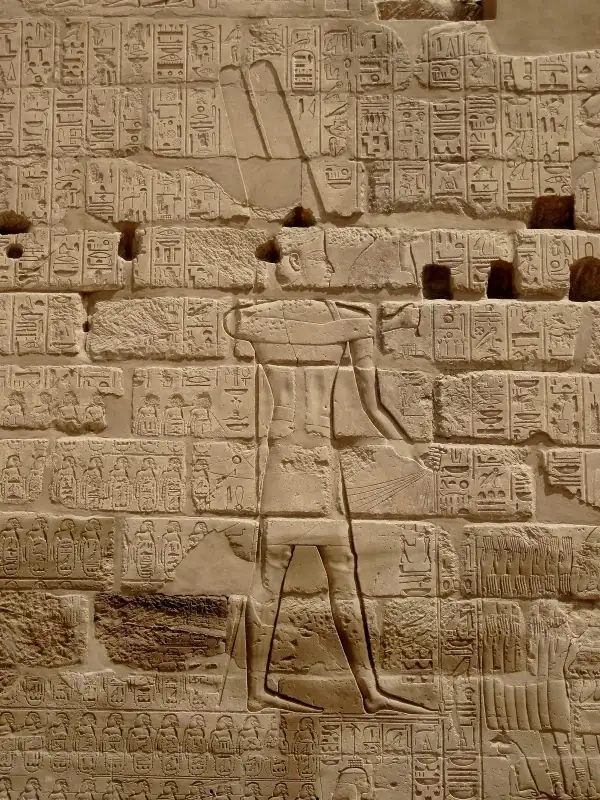
Shishak’s (Shoshenq I’s) campaign relief on the wall of the Temple of Amun at Karnak. The rows of oval name rings topped by human heads each represent a conquered city. Megiddo and Taanach are both on the list. Source: Karnak Tempel 19.jpg, Olaf Tausch, CC BY 3.0. See this exhibit in the Bible Museum

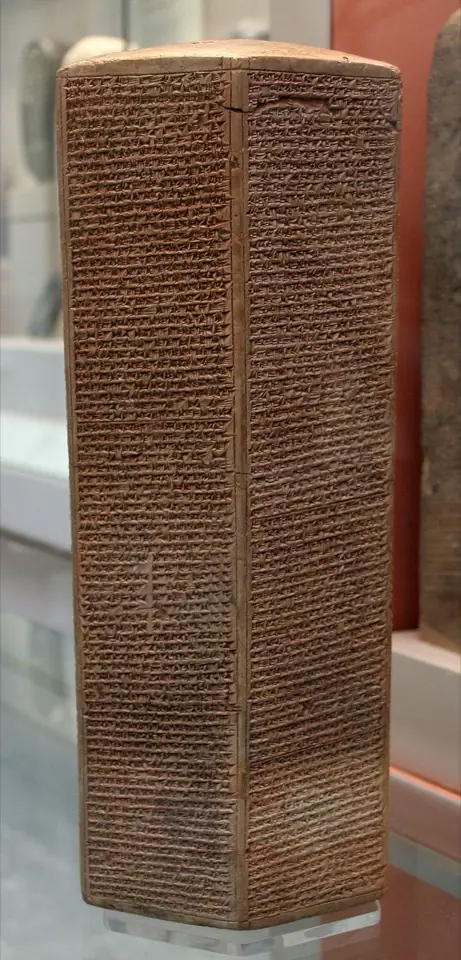
Sennacherib’s Prism, also known as the Taylor Prism, 691 BC, in the British Museum. Its cuneiform account of Sennacherib’s campaign against Judah says he confined Hezekiah in Jerusalem “like a bird in a cage”, but does not claim to have captured the city (see 2 Kings 18–19). Source: Taylor Prism-1.jpg, David Castor, public domain. See this exhibit in the Bible Museum

Archaeology and the Reliability of the New Testament
Christians often hope that archaeology will corroborate the biblical record—and it does. Yet archaeology's greater value lies in something else: it enables twenty-first-century readers to make tangible contact with the culture in which Jesus and the apostles lived and ministered.
Archaeological Method
Today's archaeology stands at the intersection of the natural sciences and the humanities. The era of the amateur treasure hunter with a shovel is long past. Modern archaeology requires rigorous procedures, meticulous recording methods, and a wide range of scientific techniques. Yet once all the data has been gathered, the most fascinating work is interpreting the evidence.
Excavations of New Testament cities frequently uncover large structures—monuments, tombs, and various types of buildings (residential, public, or commercial). These are certainly impressive, but smaller finds are often equally (or even more) illuminating. Small finds include inscriptions, coins, papyrus documents, small figurines, and everyday objects such as pottery, glassware, furniture, and fragments of clothing. Visual art—mosaics, frescoes (paintings on wet plaster), relief friezes (carved decorative panels), and statues—can reveal much about ancient life, from clothing to social and religious customs.
Excavations proceed layer by layer within clearly marked grid squares, so that the relative chronological sequence of each square can be established. Each square is documented in writing, drawings, and photographs. While sophisticated dating methods such as radiocarbon dating are available, the basic technique for stratigraphic dating still relies primarily on pottery (including form and fabric) or datable coins and inscriptions. Building types can be identified by their architectural style, though this may be less precise than the exact dates provided by coins and inscriptions. Most dating methods require a degree of interpretive judgment. It is worth noting that many of the buildings and objects uncovered in a city may date to periods before or after the New Testament era; while these still shed light on the culture of the apostolic period, care should be taken when drawing direct connections to the New Testament text.
Since fully excavating a large site can take decades, our knowledge of most ancient sites remains limited. Jerusalem, Rome, Ephesus, and Corinth, for example, have each been under excavation for more than a century, yet significant work remains to be done at every one of them. One should therefore be cautious about "arguments from silence"—concluding that something did not exist simply because it has not yet been found. It is also worth noting that past excavations have tended to focus on the grand structures of the wealthy, while smaller domestic dwellings (often built from less durable materials) may be underrepresented in the archaeological record.
Interpreting Archaeological Finds
When scholars disagree about a particular find, the disagreement usually occurs at the level of interpretation. One of the first interpretive tasks facing an excavator is "site identification"—determining the ancient name of a known archaeological site. Identifying a location requires weighing modern local tradition, ancient written sources, and the actual finds from the site (especially inscriptions and coins). Sometimes a biblical place name is difficult to locate on the ground, or more than one possible location exists. Cana (John 2:1) and Bethany beyond the Jordan (John 1:28), for instance, each have more than one candidate site. Fortunately, the locations of most New Testament towns have been identified with reasonable confidence.
Specific structures within a town also require identification. Theaters and stadiums are easy to recognize, and bathhouses have distinctive identifying features (such as specialized heating systems), but understanding the function of other buildings can be quite complex. The architectural form of a temple is usually recognizable, but determining which deity was worshiped there is often difficult (the great temple at Corinth, for example, has been attributed by different scholars to Apollo and to Athena). What was the purpose of a particular public building? Which set of shops at Corinth served as the meat market? In some cases, ancient literary sources can help (such as Pausanias's Description of Greece, essentially a second-century travel guide), but more often the interpretation requires careful argument from specific features.
Even ancient inscriptions can raise questions. Which of the surviving inscriptions mentioning Sergius Paulus relates to the proconsul of Cyprus mentioned in Acts 13:7? How should we interpret the phrase "place of the Jews and God-fearers" in a Greek inscription from Miletus (cf. note on Acts 20:17)? Sometimes a name appears—such as "Caiaphas" inscribed on an ornately decorated ossuary (a Jewish bone-reburial box)—and scholars are inclined to connect it with the New Testament figure (cf. John 18:24). In other cases, media reports rush to link ancient discoveries with New Testament personalities, which is premature. Many names mentioned in the New Testament were extremely common at the time—Jewish names such as Jesus, Joseph, Mary, James, and Matthew. It is therefore reasonable to be skeptical when someone claims to have found the bones of Jesus Christ in a Jerusalem ossuary inscribed "Jesus son of Joseph," since hundreds of people in antiquity would have borne that name.
Archaeology employs scientific methods, but archaeological interpretation also requires expertise and considerable wisdom. For those who want to engage seriously with archaeology, the best advice is probably this: read reliable scholarly sources, and do not place too much weight on sensational new discoveries first reported in the popular media.
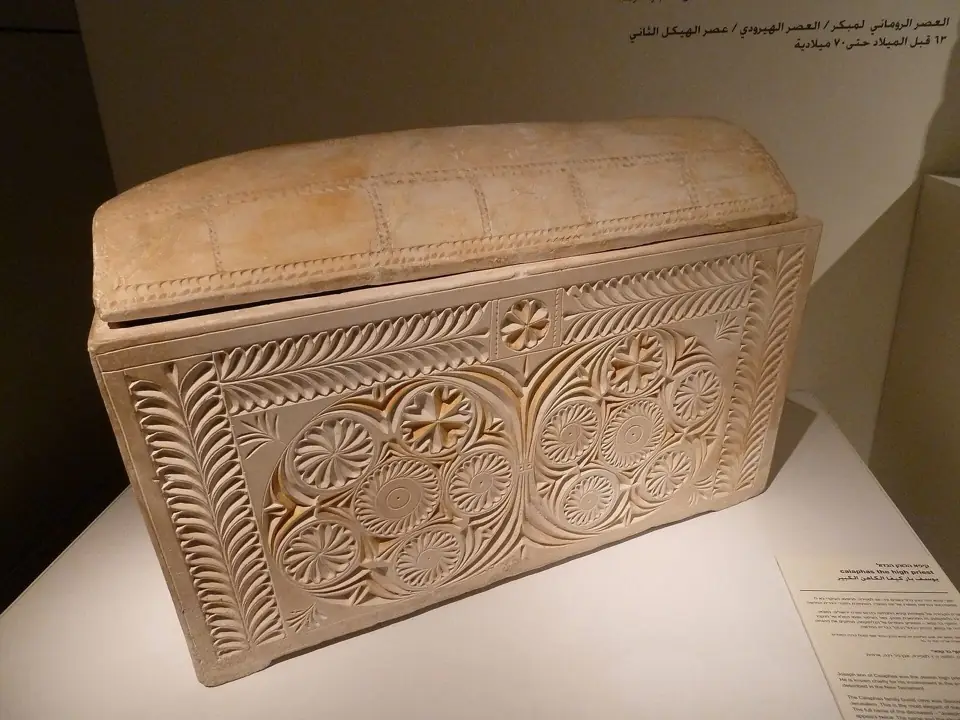
An ossuary excavated in the southern outskirts of Jerusalem in 1990, with “Joseph bar Caiaphas” inscribed on its side, now in the Israel Museum. Most scholars associate it with the family of Caiaphas, the high priest who questioned Jesus. Source: Ossuary of the high priest Joseph Caiaphas P1180839.JPG, deror_avi, CC BY-SA 3.0. See this exhibit in the Bible Museum

Archaeology and the Historical Reliability of the New Testament
Many historical details in the New Testament find confirmation in the archaeological record. Indeed, one of the most striking results of archaeological research into the New Testament period is the powerful corroboration it provides for the historical accuracy of the New Testament documents. The Gospel of John, for example, displays a remarkably accurate knowledge of Palestinian geography. John's descriptions of ancient Samaria have been confirmed archaeologically, including the account of Samaritan worship on Mount Gerizim (John 4:20) and the location of Jacob's Well (John 4:6). Regarding Jerusalem, John's precise descriptions of the Pool of Bethesda (John 5:2) and Solomon's Colonnade (John 10:22–23) have both been verified by archaeological discoveries. A 2005 excavation also helped confirm John's account of the Pool of Siloam (John 9:7).
The book of Acts has likewise been shown to present an accurate picture of the ancient world's geography. Nearly every town mentioned in Acts has been identified, and many of the cities have been excavated. The account of Paul's sea voyage and shipwreck on his way to Rome is one of the most detailed and academically valuable travel narratives in ancient literature (Acts 27). Luke, the author of Acts, even uses the precise official titles of specific governors—titles confirmed by inscriptions that mention the proconsul Gallio (Acts 18:12), the Asiarchs of Ephesus (Acts 19:30–31), and the politarchs of Thessalonica (Acts 17:1, 6).
Many more examples of New Testament historical details confirmed by the archaeological record could be cited. Inscriptions mention New Testament figures such as Pontius Pilate (Luke 23:1) and Herod the Great (Matt. 2:1). At Capernaum, the remains of a synagogue have been found beneath a later ancient structure (Mark 1:21). Nails used in crucifixion—consistent with John's account (John 20:25)—have been recovered. The cities addressed in Revelation 2–3 frequently display historical characteristics that align closely with the details in those letters.
Archaeology also periodically brings scholars new manuscript discoveries. Thanks to the work of archaeologists, thousands of Greek New Testament manuscripts are now known, along with many more manuscripts of early New Testament translations. Some of these manuscripts date very close to the apostolic era, making the New Testament the best-attested work in all of ancient literature in terms of manuscript evidence (see the article "The Reliability of the New Testament Manuscripts" in this study Bible).
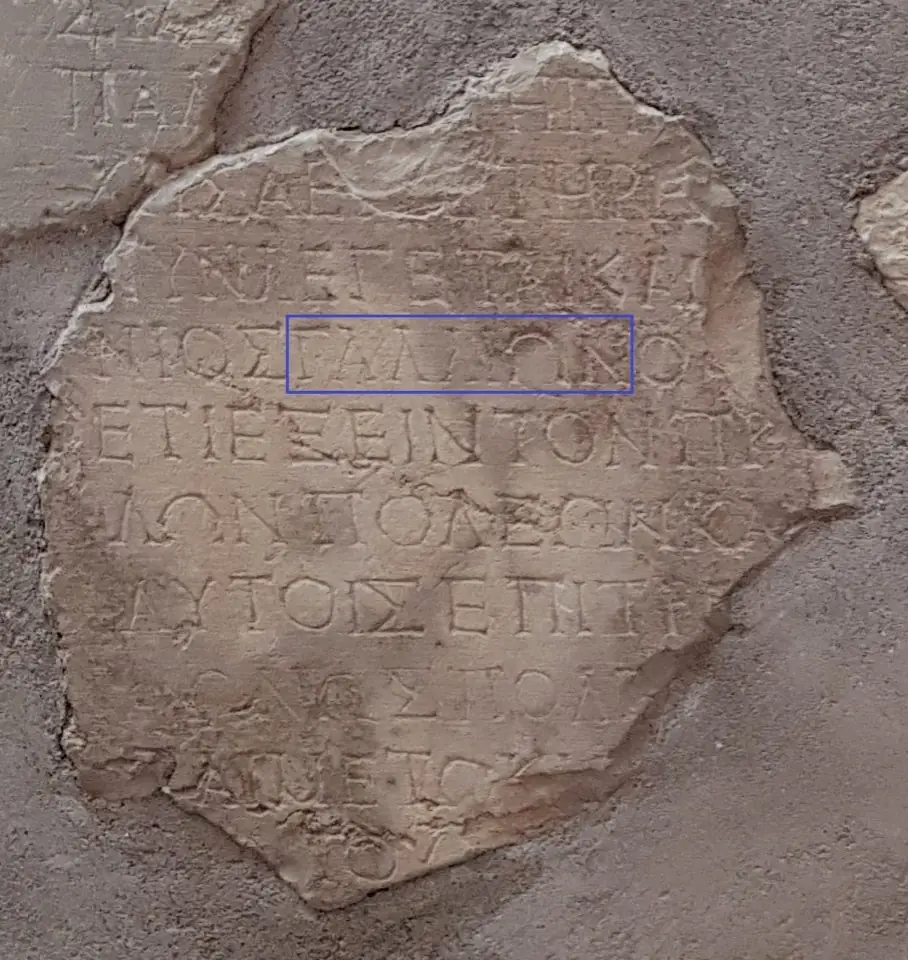
Fragments of the Gallio Inscription from Delphi, in the Delphi Archaeological Museum. This letter of Emperor Claudius mentions “Gallio, proconsul of Achaia”. Scholars use it to date Gallio’s tenure to around AD 51–52, providing a chronological anchor for Paul’s time in Corinth (Acts 18:12). Source: Delphes Gallion.jpg, Gérard, CC BY-SA 4.0. See this exhibit in the Bible Museum

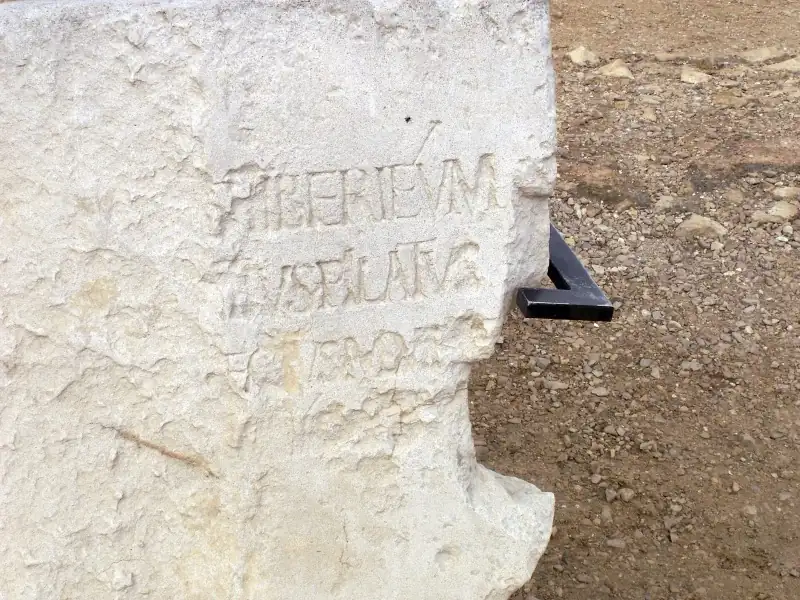
A replica of the Pilate Stone displayed at Caesarea. The original was excavated there in 1961 and is now held in the Israel Museum. The Latin inscription includes “Pontius Pilate” and “prefect of Judea”. Source: Pilate Inscription.JPG, Marion Doss, CC BY-SA 2.0. See this exhibit in the Bible Museum

Archaeology and the Cultural Background of the New Testament
We can appreciate the New Testament more fully by gaining a deeper understanding of the world in which its human authors and original audiences lived. Biblical interpretation begins with understanding what a passage meant in its original context before applying it to contemporary life. Those original meanings were addressed to people within specific cultures; the better we understand those cultures, the more accurately we can read the New Testament. Archaeology contributes to that cultural understanding. In fact, while archaeological finds occasionally corroborate the historical claims of the New Testament, their more consistent contribution is a steady stream of rich insight into ancient culture. Archaeology also reminds us that the events of the New Testament took place in real time and space, in actual history.
If we could walk with Paul through the magnificent Roman cities of his day, we would encounter familiar features at every turn—features that can now be reimagined through recent archaeological excavation. Shops and markets reveal the general prosperity of urban life. Public buildings display Roman power and also show how Rome frequently governed through local authorities. Theaters and odeons (buildings for musical performances and recitations) testify to a vibrant artistic life, as do the many mosaics, frescoes, and sculptures. Stadiums and statues of athletic heroes celebrate sporting achievement. Bathhouses, gymnasia, and public latrines reflect the culture's emphasis on hygiene and the training of youth. And all of this—drama, art, athletics, and public life—was deeply intertwined with pagan religious worship. What would perhaps strike modern readers most forcefully is the sheer density of pagan religious installations visible at every corner of the city, from small roadside shrines to magnificent temples.
Inscriptions bearing Jewish symbols, names, and synagogue information vividly illustrate the wide distribution of the Jewish Diaspora (Jews living outside Palestine) throughout Mesopotamia and the Mediterranean world. Numerous synagogue sites have been discovered both inside and outside Palestine. Jewish religious objects, inscriptions, and other finds increasingly illuminate the complex interactions between Jews and Gentiles in the Galilee region. Throughout Judea, Samaria, and Galilee, architectural remains from the time of Jesus continue to come to light.
Every aspect of daily life can be examined through material evidence—from the most ordinary clay pot to the grand townhouses of the elite (whether in Jerusalem, Pompeii, or Ephesus). Early Christians converted some of these houses into meeting places for the church (1 Cor. 16:19). Clothing and personal appearance are depicted in works of art and occasionally preserved as physical objects (such as two-thousand-year-old sandals from the Judean desert). Pottery, glassware, furniture, and other objects help us understand how people lived day to day. Animal bones, ancient seeds, and farming tools shed light on agricultural practices. Coins display the images of rulers and the symbols they valued.
Ancient burials reflect attitudes toward death. The Roman world practiced a variety of burial customs—from cremation to shallow burial, from family cave tombs to grand mausoleums. Some Jewish family tombs did indeed use rolling stones as door closures (cf. Mark 15:46). Jewish families reused burial niches in their tombs, and in the Jerusalem area they sometimes collected bones in ossuaries for secondary burial. The deceased were often buried with objects considered precious or thought to be needed in the afterlife—grave goods that are frequently among the best-preserved small finds in any excavation. Modern osteologists analyze recovered skeletal remains to study the age, sex, general health, and cause of death of the deceased.
Papyrus documents (such as those from Oxyrhynchus or Tebtunis) preserve ancient letters and legal documents that were never transmitted through the traditional literary manuscript tradition. They offer a "behind-the-scenes" glimpse into the lives of ordinary people. Other recovered texts give us access to literary works previously unknown. Of particular importance are the post-New Testament Gnostic writings discovered at Nag Hammadi, and the extensive collection of Jewish manuscripts found at Qumran, Masada, Nahal Hever, and Murabbaat.
Much more could be said about how archaeology has enriched our understanding of the culture of the New Testament era. But what has been said here should be sufficient to show that, beyond its important contribution to confirming the historical reliability of the New Testament, archaeology offers something even more profound: an invitation to enter the world in which Jesus and his followers actually lived.
💬 After reading this article, if you have any thoughts or questions, you are welcome to ask Pastor Bond:
- "Can archaeology really prove the Bible is true?"
- "What if archaeology and the Bible seem to contradict each other?"
- "A friend told me the Bible is just mythology—how should I respond?"