A Complete Guide to the Jewish Feasts
— The Gospel God Wrote on the Calendar
Written for every brother and sister who skips past "Passover" and "Feast of Tabernacles" while reading the Bible. These feasts are not outdated rituals — they are a course curriculum written by God's own hand.
I. Why Should We Understand the Jewish Feasts?
At the opening of Leviticus 23, God says to Moses: “The set feasts of Yahweh, which you shall proclaim to be holy convocations” (Lev. 23:2)
Not “Israel’s feasts”, not “the Jewish feasts”: they are Yahweh’s feasts. God regards these days as appointments with His people. Each feast is a lesson, inviting generation after generation to participate with their whole being, so they would remember what God had done, what He was doing, and what He was yet to do.
The Jewish calendar takes the month of Nisan (approximately March–April) as the first month of the religious year. Over the course of a year there are seven major feasts (Leviticus 23), plus two that were established later in Israel's history. Three of them — Passover, Pentecost, and the Feast of Tabernacles — are the three great pilgrimage festivals, which required every Israelite male to go up to Jerusalem each year (Deut. 16:16).
Let us walk through them in calendar order.
II. The Spring Feasts: An Overture of Redemption
The four spring feasts are packed tightly into just fifty days, and each one points to a key moment in Christ's redemptive work.
1. Passover (פֶּסַח, Pesach)
Date: The 14th of Nisan (approximately March–April)
This is Israel's national "birthday." Exodus 12 records that before God struck down the firstborn of Egypt with the tenth plague, He commanded every Israelite household to slaughter a lamb without blemish and spread its blood on the doorposts and the lintel. When the angel of death saw the blood, he passed over (pasach) that house — and that is where the name comes from.
That night, the Israelites were to eat roasted lamb, unleavened bread, and bitter herbs (Ex. 12:8). The lamb was to be roasted whole, with no bone broken (Ex. 12:46). John's Gospel deliberately notes that Jesus' legs were not broken on the cross — "for these things happened that the Scripture would be fulfilled" (John 19:36). They were to eat with their belts fastened, sandals on, and staff in hand, ready to leave at any moment (Ex. 12:11) — because this was not a leisurely dinner but a signal to depart.
Paul says it plainly: "For our Passover has been sacrificed in our place: Christ." (1 Cor. 5:7) Jesus was crucified at Passover. He is the spotless Lamb; His blood is spread on the doorposts of our lives, so that the judgment of sin passes over us and we are saved.
2. Feast of Unleavened Bread (חַג הַמַּצּוֹת, Chag HaMatzot)
Date: The 15th–21st of Nisan (seven days beginning the day after Passover)
Immediately following Passover comes seven days of Unleavened Bread. Every Israelite household was to remove all leaven from the home and eat only unleavened bread (מַצָּה, matzah). In Scripture, "leaven" frequently represents the pervasive spread of sin — a little leaven leavens the whole lump (Gal. 5:9).
The Feast of Unleavened Bread called for a whole-family "deep clean": the father would take a candle and search every corner of the house by night, rooting out any hidden leaven to burn it. The picture is vivid — sin is exactly like this: if you do not actively search for it and deal with it, it sits quietly in some corner and goes on spreading.
Paul uses this to urge believers: "Purge out the old yeast, that you may be a new lump, even as you are unleavened." (1 Cor. 5:7) Christ the Passover Lamb has died for us; what follows is our serious reckoning with the sin in our lives — removing the leaven.
3. Feast of Firstfruits (יוֹם הַבִּכּוּרִים, Yom HaBikkurim)
Date: The day after the Sabbath during the Feast of Unleavened Bread
This feast is often overlooked, but its significance is profound. The Israelites were to bring the first ripened sheaf of barley to the priest, who would wave it before God — a "wave offering" (Lev. 23:10–11). Presenting the first of the harvest to God was an act of faith in the whole harvest: the first sheaf has ripened, so the rest will surely follow.
Paul writes: "But now Christ has been raised from the dead. He became the first fruits of those who are asleep." (1 Cor. 15:20) Jesus was crucified at Passover and rose on the third day — which fell on the Feast of Firstfruits. He is the first to rise from the dead never to die again, and His resurrection guarantees that all who trust in Him will one day rise as well. It is like the Wright brothers' first successful flight, which opened an entirely new era of aviation — before that moment, human flight existed only in myth and legend!
4. Pentecost / Feast of Weeks (שָׁבוּעוֹת, Shavuot)
Date: The fiftieth day after Firstfruits (approximately May–June)
Counting seven complete Sabbaths from Firstfruits and adding one day gives the fiftieth day (Lev. 23:15–16) — hence "Pentecost" (meaning "fiftieth"). Because seven weeks were counted, it is also called the "Feast of Weeks." By this time the wheat was ripe, and the Israelites were to offer two loaves of bread made from the new grain — leavened loaves (Lev. 23:17). Notably, this is the only feast that specified a leavened offering.
In Jewish tradition, Shavuot also commemorates God giving the Law on Mount Sinai, roughly fifty days after the Exodus. The Word of God came down on this day.
Acts 2 records that on the very day of Pentecost, the Holy Spirit came upon the disciples, filling them so that they spoke in various languages. Peter stood and preached, and three thousand people repented and were baptized. This was no coincidence: on the day the Law had been written on stone tablets, the Holy Spirit now wrote God's law on human hearts (Jer. 31:33; Ezek. 36:26–27). And those two leavened loaves perhaps foreshadowed the gospel going to both Jews and Gentiles — two groups of sinful people, both brought before God.
III. The Autumn Feasts: Judgment and Completion
The four spring feasts were each fulfilled with precision at Christ's first coming. The three autumn feasts cluster in the seventh month of the Jewish calendar (Tishri, approximately September–October), and many scholars believe they point toward Christ's second coming and the completion of all things.
5. Feast of Trumpets (יוֹם תְּרוּעָה, Yom Teruah)
Date: The 1st of Tishri (the Jewish civil New Year)
Leviticus 23:24 commands that on this day trumpets shall be blown as a memorial — it is a holy convocation. The sound of the שׁוֹפָר (shofar, a ram's horn) echoing across the land was a summons, calling the people to wake from their ordinary routines.
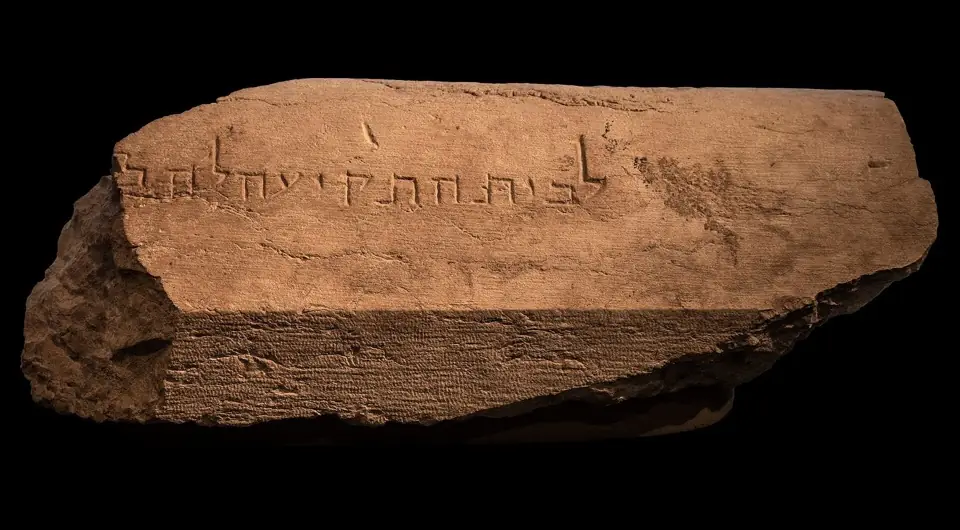
This stone fell from the southwestern corner of Jerusalem’s Temple and bears a Hebrew inscription, “to the place of trumpeting”. It is held in the Israel Museum. According to Josephus, priests sounded the trumpet there to announce the beginning and end of the Sabbath. Source: Trumpeting place Zeigarnik.jpg, Andrey Zeigarnik, CC BY-SA 2.0. See this exhibit in the Bible Museum

The Feast of Trumpets later became the Jewish New Year (Rosh Hashanah, "head of the year"), opening a ten-day period known as the "Days of Awe" — from the Feast of Trumpets to the Day of Atonement. These ten days are set apart for self-examination and repentance, and the trumpet blast is a wake-up call: the day of judgment is coming — are you ready?
Paul writes: "in a moment, in the twinkling of an eye, at the last trumpet. For the trumpet will sound, and the dead will be raised incorruptible, and we will be changed." (1 Cor. 15:52) 1 Thessalonians 4:16 likewise says that when the Lord returns there will be "the trumpet call of God." The sound of the trumpet and the Lord's return are tightly bound together throughout Scripture.
6. Day of Atonement (יוֹם כִּפּוּר, Yom Kippur)
Date: The 10th of Tishri
This is the most holy and solemn day of the Jewish calendar. The entire nation fasted; no work of any kind was to be done (Lev. 23:27–32). The high priest, dressed in white linen, entered the Most Holy Place to make atonement for the whole nation — we covered this ceremony in detail in our earlier article on the Tabernacle and Temple.
The central message of the Day of Atonement is: sin must be dealt with. It cannot be pretended away or quietly glossed over. God is holy, and the wages of sin is death. But the Day of Atonement also declares this: God Himself provides the way of atonement. It is not humanity that invents a solution — God established the system and prepared the sacrifice.
Hebrews 9:28 says: "so Christ also, having been offered once to bear the sins of many, will appear a second time, not to deal with sin, but to save those who are eagerly waiting for him." The first coming: He bore our sin. The second coming: sin is no longer the issue — because it has been completely and finally dealt with.
7. Feast of Tabernacles (סֻכּוֹת, Sukkot)
Date: The 15th–21st of Tishri (five days after the Day of Atonement, lasting seven days)
The Feast of Tabernacles is the most joyful holiday on the Jewish calendar. Israelite families built temporary shelters (סֻכָּה, sukkah) and lived in them for seven days, commemorating their ancestors' forty years of dwelling in tents in the wilderness (Lev. 23:42–43). The roof was made of tree branches, deliberately left open enough that you could look up through the gaps and see the stars. This design itself is a lesson: our dwelling in this world is temporary; what truly covers us is not a roof but the presence of God.
The Feast of Tabernacles includes two important ceremonies that connect directly to the New Testament:
The Water-Pouring Ceremony (Simchat Beit HaShoevah): Each day of the feast, priests drew water from the Pool of Siloam and poured it out beside the altar, while the people recited Isaiah 12:3 in unison: "Therefore with joy you will draw water from the wells of salvation." It was the most exuberant celebration of the entire year. Then, on the last and greatest day of the feast, Jesus stood and cried out, "If anyone is thirsty, let him come to me and drink!" (John 7:37) In the midst of all Israel's most festive water-pouring ceremony, He declared: I am the source of living water.
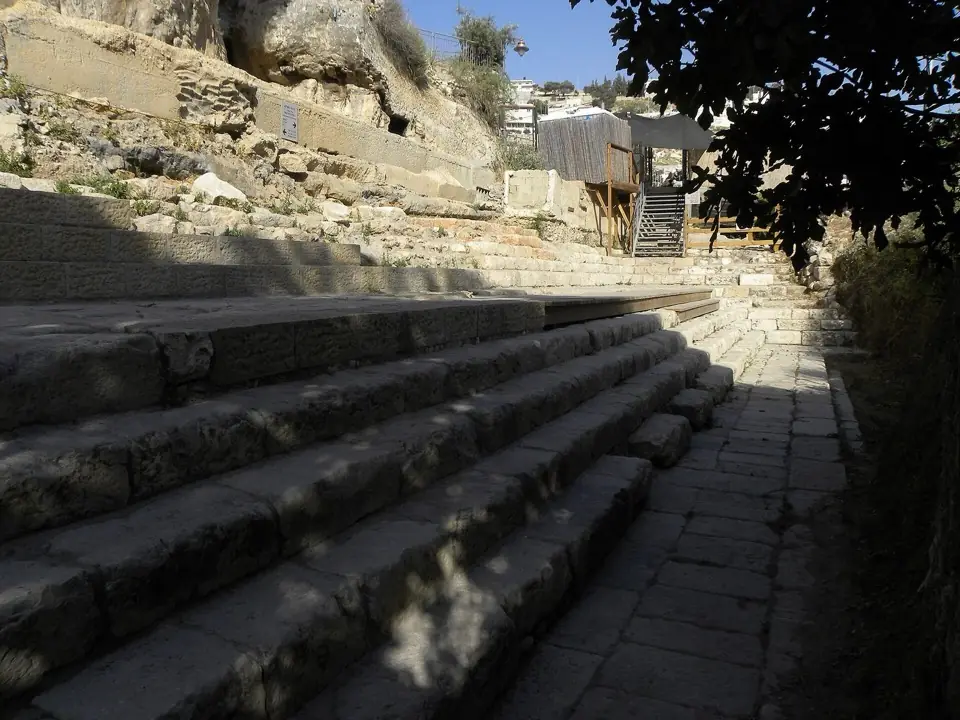
The ruins of Jerusalem’s Pool of Siloam, where broad stone steps from the Second Temple period were excavated in 2004. Water for the Feast of Tabernacles’ water-pouring ceremony was drawn here. Source: Pool of Siloam (3734427511).jpg, Ian Scott, CC BY-SA 2.0. See this exhibit in the Bible Museum

The Lamp-Lighting Ceremony: Enormous golden lampstands were erected in the temple courts, flooding all Jerusalem with light. It was in this very setting that Jesus declared, "I am the light of the world." (John 8:12) Amid the blazing brilliance of the illuminated temple, He announced: I am the true Light.
The Feast of Tabernacles also carries an eschatological dimension. The prophet Zechariah foretells that in the last days, all nations will come up to Jerusalem to celebrate the Feast of Tabernacles (Zech. 14:16). Revelation 7:9–17 paints a picture of people from every tribe and nation celebrating before God's throne — "God will wipe away every tear from their eyes" — and many scholars see this as the ultimate fulfillment of Sukkot: God dwelling with humanity forever, with no more temporary shelters, because God's tabernacle is permanently among His people.
IV. Two Later-Added Feasts
The following two feasts do not appear in the original list of Leviticus 23; they arose later in Israel's history. Yet both appear in the New Testament.
Purim (פּוּרִים, Purim)
Date: The 14th–15th of Adar (approximately February–March)
Purim originates in the book of Esther. Haman, a high official of the Persian Empire, plotted to exterminate all Jews. He cast lots (פּוּר, pur — meaning "lot") to select the date for the massacre. But God reversed the situation through Esther and Mordecai; the enemy's scheme became the very occasion for Israel's deliverance.
Purim is the most festive and jubilant holiday on the Jewish calendar: the scroll of Esther (מְגִלָּה, megillah) is read aloud, and every time Haman's name is mentioned the crowd stamps its feet and twirls noisemakers in loud disapproval; people exchange gifts of food, give to the poor, and hold great feasts of celebration.
Although the name of God does not appear anywhere in the book of Esther, the entire story proclaims one thing: even when God seems invisible, He is still sovereign over history and is watching over His people.
Hanukkah / Festival of Lights (חֲנֻכָּה, Hanukkah)
Date: Beginning the 25th of Kislev, lasting eight days (approximately November–December)
In 167 BC, the Seleucid Greek king Antiochus IV Epiphanes erected an altar to Zeus in the Temple, sacrificed a pig on it, and attempted to force the Jewish people to abandon their faith. The Jewish priest Mattathias and his sons — collectively known as the Maccabees — led a revolt, and after three years of hard fighting they recaptured the Temple in 164 BC, cleansed it, and rededicated it.
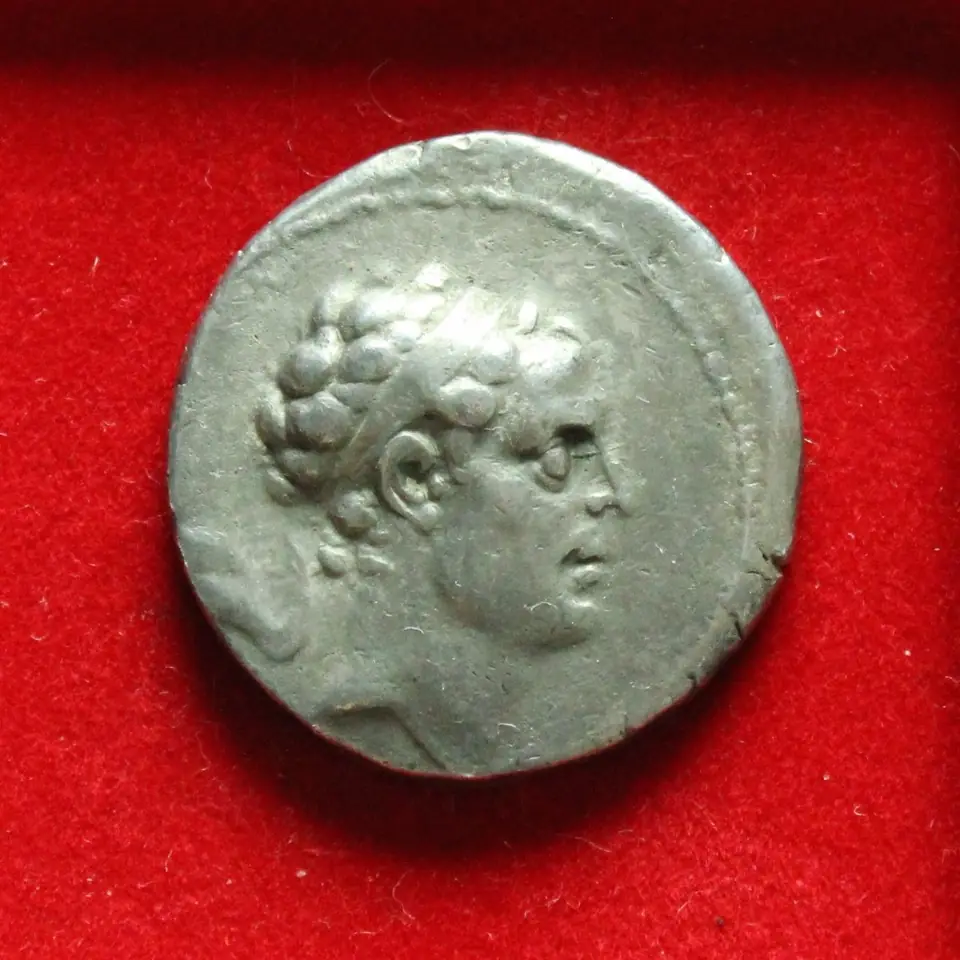
A silver coin minted during Antiochus IV’s reign (175–164 BC), with his diademed portrait on the obverse. Source: Antiochos IV Epiphanes tetradrachm.jpg, Samu0450, CC BY-SA 4.0. See this exhibit in the Bible Museum

According to Jewish tradition, when they entered the Temple they found only a small flask of undefiled oil — barely enough to keep the golden menorah burning for one day. Yet a miracle occurred: the oil burned for eight full days, until new consecrated oil could be prepared. This is why Hanukkah is called the "Festival of Lights," and why Jewish families light one additional candle each night across the eight days, using a nine-branched lamp (the חֲנֻכִּיָּה, hanukkiah).
John 10:22–23 records that Jesus came to the Temple during the Festival of Dedication and walked in Solomon's Colonnade. The people crowded around Him and asked whether He was the Christ. Jesus answered, "I and the Father are one." (John 10:30) On the very festival commemorating the Temple's rededication, the true Temple — the Son of God — was standing right in front of them.
V. The Sabbath — The Foundation of All the Feasts
Before listing all the feasts in Leviticus 23, God mentions one first: the Sabbath (שַׁבָּת, Shabbat). "Six days shall work be done; but on the seventh day is a Sabbath of solemn rest, a holy convocation." (Lev. 23:3)
The Sabbath is more than a "day off." It is the rhythm God built into creation from the very beginning (Gen. 2:2–3): six days of work, and on the seventh day you stop — not because you are tired, but to declare: the ultimate meaning of this world is not found in productivity or output, but in being with God.
In an age that measures human worth by KPIs and deadlines, the Sabbath's message is especially powerful: you do not need to justify your value by working without stopping. Your worth rests in the hands of the One who created you — and He says: rest, and be with me.
Jesus said, "The Sabbath was made for man, not man for the Sabbath." (Mark 2:27) The Sabbath is a gift God gave to people, not a legal code designed to bind them. The Pharisees turned it into a checklist of thirty-nine prohibited activities; Jesus restored it to what it was always meant to be: a rest of grace, an appointment with God.
VI. The Feasts as a Whole — A Blueprint of the Gospel
When we lay the seven major feasts side by side, a breathtaking picture emerges:
| Feast | Central Event | Fulfillment in Christ |
|---|---|---|
| Passover | The blood of the lamb saves Israel | Christ crucified at Passover (1 Cor. 5:7) |
| Feast of Unleavened Bread | Remove all leaven | Christ's sinless life; believers remove the old leaven (1 Cor. 5:8) |
| Feast of Firstfruits | Offer the first of the harvest | Christ rises on Firstfruits as the firstfruits of the dead (1 Cor. 15:20) |
| Pentecost | Giving of the Law / wheat harvest | The Holy Spirit descends at Pentecost; three thousand come to faith (Acts 2:1–41) |
| Feast of Trumpets | The trumpet blast as a wake-up call | The last trumpet; the Lord returns (1 Cor. 15:52) |
| Day of Atonement | The high priest enters the Most Holy Place to atone | Christ offered once, securing eternal atonement (Heb. 9:12) |
| Feast of Tabernacles | Living in shelters, remembering wilderness grace | God's tabernacle with humanity, dwelling together forever (Rev. 21:3) |
The first four feasts were fulfilled with pinpoint precision at Christ's first coming — the right dates, the right details, the right sequence. The last three have yet to be completely fulfilled. If God completed the first half with that degree of precision, we have every reason to trust that the second half will be accomplished in exactly the same way.
Conclusion: We Are Keeping the Feasts
Perhaps you have never lit a Sabbath candle or built a Sukkot shelter. But if you trust in Christ, you have been "keeping the feasts" all along:
When you receive Christ who died for you — that is your Passover. When you commit to dealing with the sin in your life — that is your Feast of Unleavened Bread. When you hold fast to the promise of resurrection — that is your Firstfruits. When you receive the indwelling Holy Spirit — that is your Pentecost. When you are awakened in your daily walk with God — that is your Feast of Trumpets. When you know that your sin has been forgiven — that is your Day of Atonement. When you long to dwell with the Lord forever — that is your Feast of Tabernacles.
Through these feasts, God tells us: salvation is not an abstract doctrine — it is an unfolding story, with time, place, blood, tears, shouts of joy, and seasons of waiting. And you are right in the middle of that story.
💬 After reading this article, if you have any thoughts or questions, you are welcome to ask Pastor Bond:
- "How could the Jewish feasts foreshadow Christ — is this just coincidence?"
- "What is the connection between the Passover lamb and Jesus?"
- "Do New Testament believers still need to observe the Old Testament feasts?"