Park Chung-hee's Men: Reflecting on Korean-Style Christianity in Contemporary China
By Ren Xiaopeng · Originally published by the WeChat public account Ideas and History · 21 May 2026
Republication note: Reproduced with permission. Formatting has been adapted for Articles, and a few clearly factual formulations corrected. The central arguments remain the original author's.
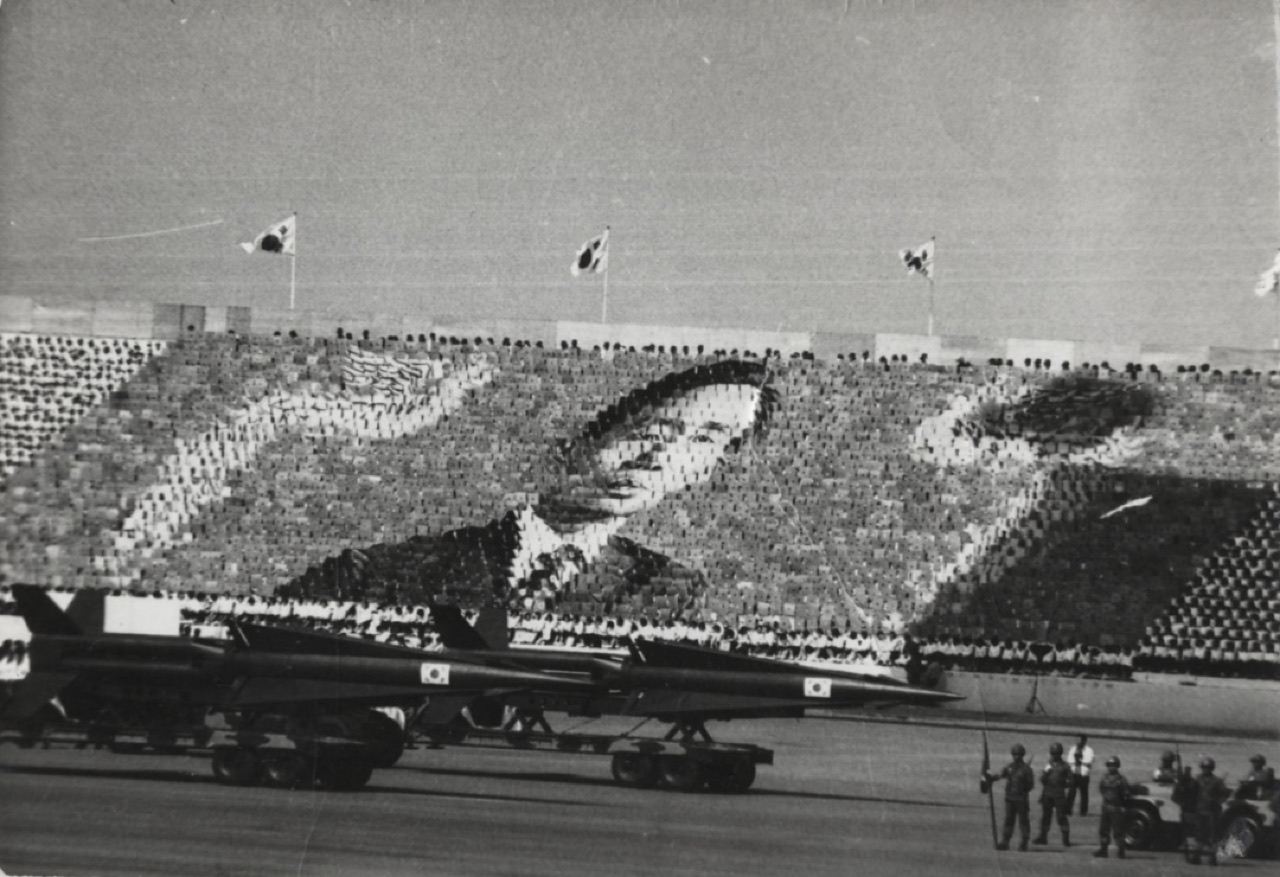
A giant portrait of Park Chung-hee at a South Korean military parade, 1973.
1. Two True Stories
Let me begin with two experiences at Calvin Theological Seminary. Several years ago, while studying there, I took a course called Paul's Missionary Journeys. A New Testament professor led students to western Turkey to explore early Christian history on site. The demanding two-week itinerary, with early starts and late returns, covered several centuries of Christian experience. Among us was an unmarried Korean woman in her thirties. Though classmates, we had scarcely interacted.
Beside Ephesus' ruins, under fierce summer sunlight, our exhausted group sought shelter beneath trees. We began chatting. Suddenly she confided, “You are the first man who has approached me for conversation since I enrolled.” The unexpected remark produced an awkward moment. Keeping my composure, I tentatively asked whether she spoke with the many Korean men at the seminary.
Her face fell and she burst into tears. In hesitant English, she explained that Korean male students generally believed women should not study theology. They regarded her studies as crossing a boundary, looked down on her and even refused to speak with her. Limited spoken English and this implicit gender exclusion had made her seminary years long and lonely.
The second story concerns Zion, a cheerful Korean classmate in his thirties, a pastor from Seoul's outskirts whose company I enjoyed. He had served a church of more than two hundred under a senior pastor in his sixties. Asked about workload, he smiled: “Sometimes there is plenty, sometimes less. The problem is that you must always appear extremely busy. You can never daydream or chat in the office. The instant the senior pastor enters, you must become visibly occupied.” I joked about performing this on a day without work. He answered seriously, “There is a way: close your eyes and pretend you are praying.”
Korean Christianity is a major presence in the global church. These isolated stories are not intended to reduce it to a stereotype, but to introduce deeper questions:
- How did its intense competitive overwork and authoritarian culture develop?
- How did contemporary Chinese churches inherit this stream of religious culture?
- How did spiritually labelled pressure and discipline attach themselves to faith and shape some urban Chinese churches?
2. Hope amid Suffering
The establishment of China–South Korea diplomatic relations in 1992 opened opportunities for Korean missionaries in China. Korean Christianity became a new major influence after Britain and America. The Korean Peninsula occupies a distinctive place in modern global mission.
Since the Ming and Qing periods, Confucian culture deeply shaped the peninsula. Chinese characters and civil-service examinations sustained Beijing's status as a civilisational centre, with systematic adoption of Confucian culture as a guide. Many surviving Korean classics remain written in Chinese characters; Korean history is scarcely intelligible without China.
Yet from the seventeenth century, enlightened Joseon scholars encountered Catholicism through diplomatic missions to Beijing. Studying theology with Western missionaries in China, they introduced the faith alongside Western scientific, calendrical and cultural books.
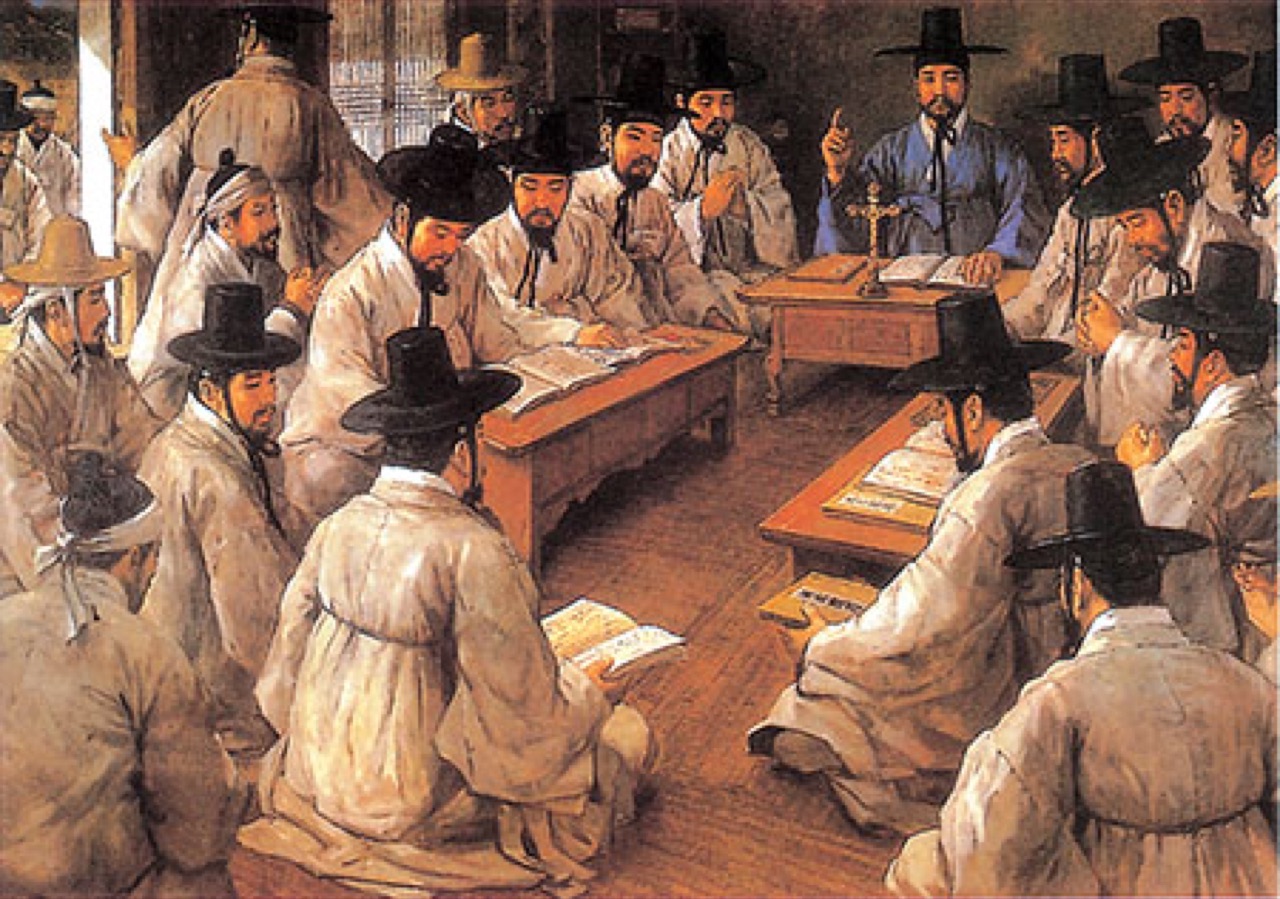
A mural at Myeongdong Cathedral showing Joseon scholars studying the Catholic catechism.
Before the peninsula opened in the later nineteenth century, Catholicism faced prolonged persecution. In 1866, the French fleet mounted an armed expedition following the killing of French missionaries. Yanghwajin, now Jeoldusan, subsequently became an important execution site where many Catholics died. The Byeongin persecution continued until the Daewongun lost power in 1873; historical sources differ on the death toll. In the 1880s, gradual opening allowed Western missionaries to enter through medicine and education.
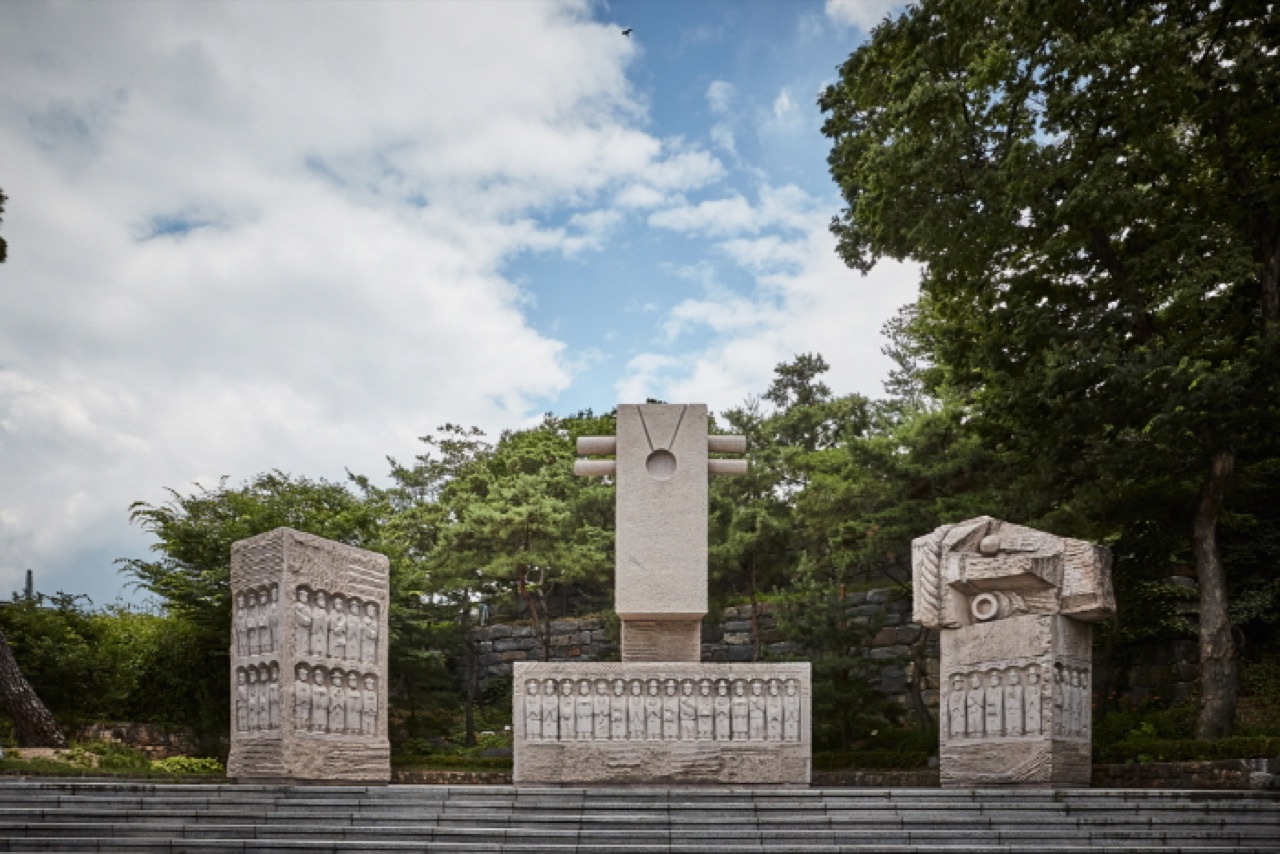
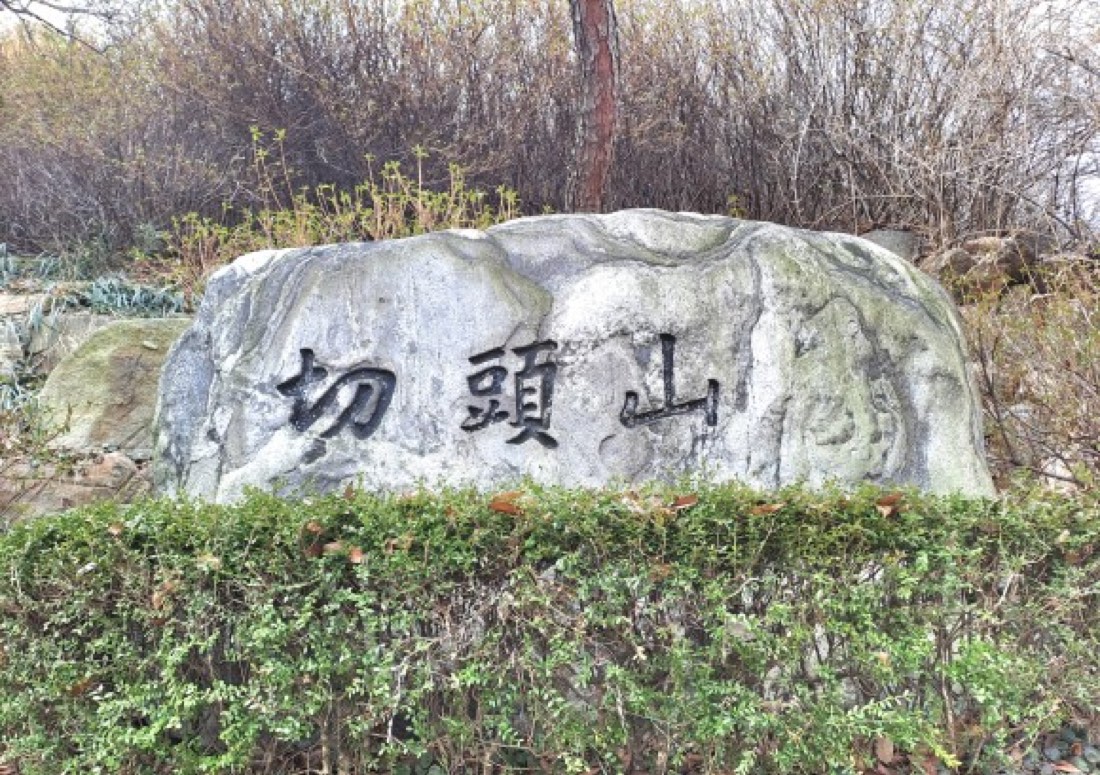
Jeoldusan Martyrs' Shrine beside the Han River today.
After Qing defeat in the First Sino-Japanese War, the peninsula became vulnerable to Japanese aggression. Japan progressively established control from 1895 and formally annexed Korea in 1910, beginning thirty-five years of colonial rule. Christianity became a spiritual resource for resistance and independence. In 1909, patriot An Jung-geun assassinated Japanese Privy Council president Itō Hirobumi at Harbin station, then was arrested and sentenced to death. Less widely known is his devout Catholicism and his expressed wish before death to work for Korean independence even in heaven. During the March First independence movement of 1919, sixteen of the thirty-three national representatives signing the declaration were Christians, nearly half, while Christians constituted only 1.5% of the peninsula's population. Later Japanese enforcement of Shinto worship compelled Koreans to bow before the emperor's sacred presence; many Christians refused. Christianity became intertwined with national identity and survival.
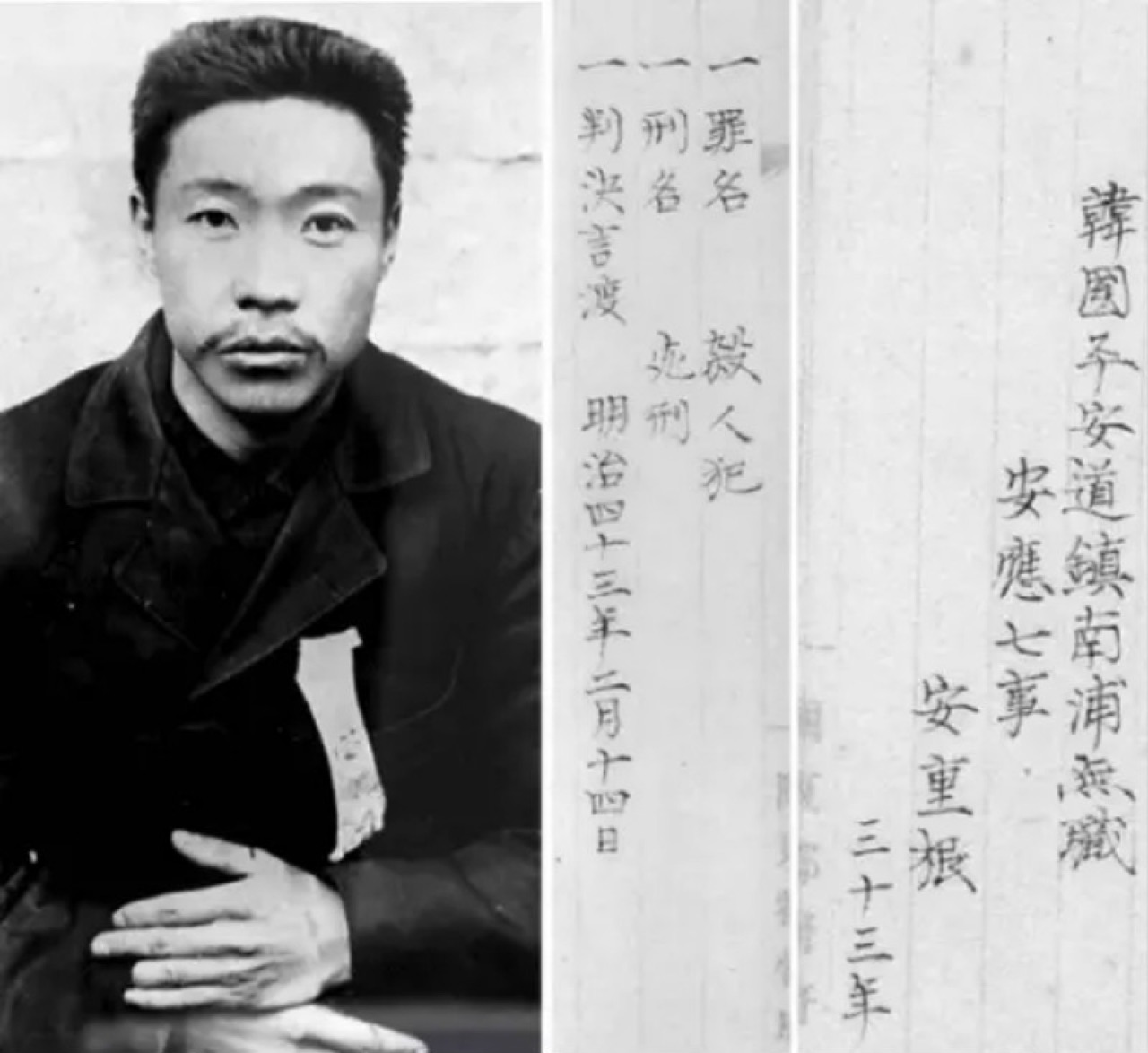
An Jung-geun.
After Japan's surrender in 1945, Soviet and American forces administered north and south across the thirty-eighth parallel. This temporary military division led directly to the peninsula's later separation. War erupted in 1950 as northern forces crossed the line and the less equipped, trained and armed South Korean army retreated. The subsequent American landing at Incheon and Chinese People's Volunteers' intervention are familiar. Amid suffering and despair, Korean Christianity experienced historic revival. Extreme suffering can awaken longing for God, a pain difficult for those untouched by war to comprehend. Visiting Seoul's War Memorial years ago, I was struck by its reconstruction of the war and Korea's tragic modern experience.
After the armistice, devastated South Korea began rebuilding. President Syngman Rhee was a Methodist Christian and the first Korean to earn a doctorate at an American university, Princeton in 1910. His regime fell in the April Revolution of 1960. The following year, Park Chung-hee's May 16 coup overthrew the Second Republic and seized effective power.
A former officer under Japanese rule, Park adopted a strategy of state leadership, economic priority and military control for an impoverished country. Over eighteen years, society became a vast national barracks. Corporate overtime, absolute obedience and unconditional individual sacrifice for collective interests reached their fullest expression. Facing northern threats, his government strengthened conscription established in 1949. Military service became both legal obligation and male coming-of-age rite. Militarisation penetrated every aspect of society. Working over sixty hours weekly became ordinary for Korean men. This intensive culture of sacrifice produced global conglomerates such as Daewoo and Samsung, with per-capita income rising from $82 in 1961 to $1,644 in 1979. After Park's assassination that year, military rulers Chun Doo-hwan and Roh Tae-woo inherited authoritarianism and brutally suppressed democratic movements, including Gwangju. Mass protest before the 1988 Seoul Olympics finally opened gradual democratisation, leading in 1993 to Kim Young-sam, the first civilian president after more than thirty years of military rule.
3. How Did Park Shape Korean Christianity?
Park Chung-hee was undoubtedly the deepest formative influence on South Korea's post-war modernisation.
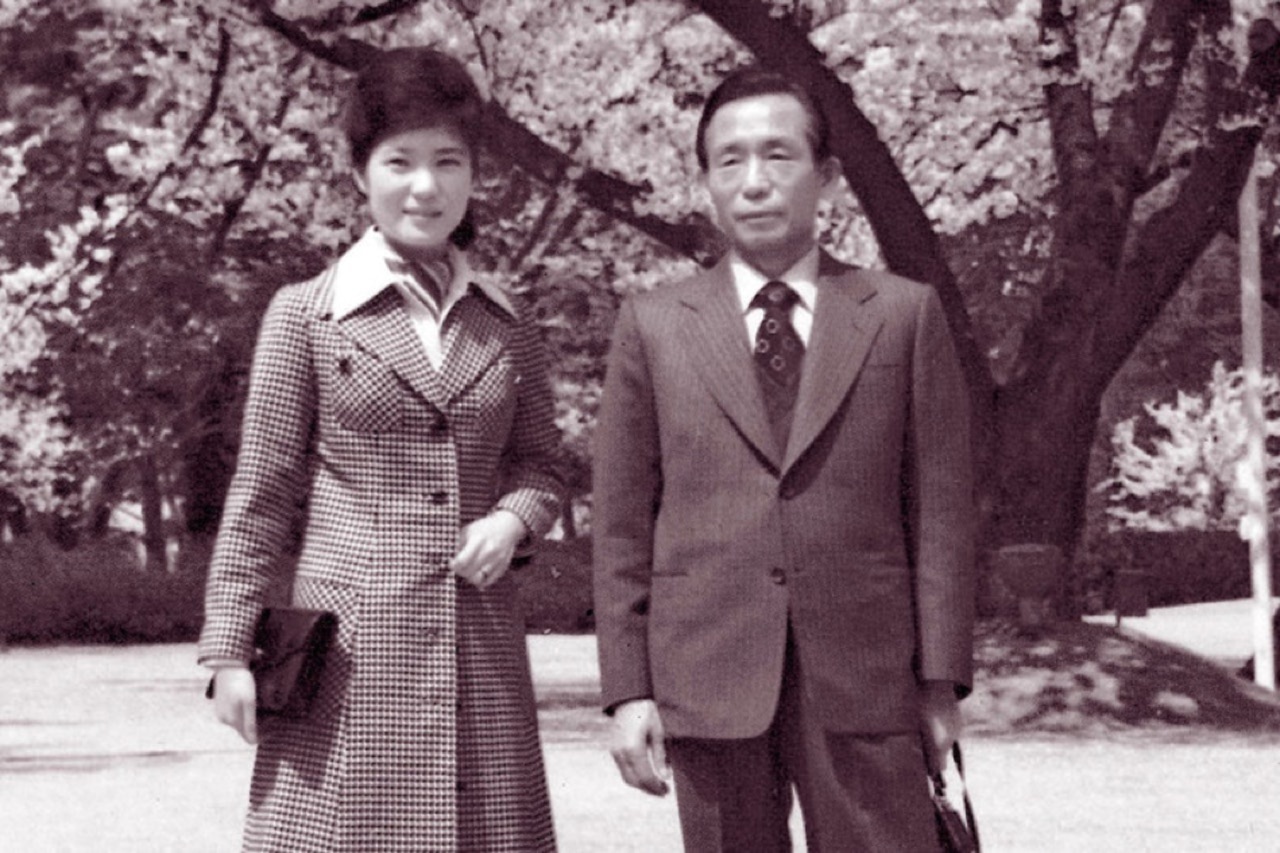
Park Chung-hee and Park Geun-hye.
Though assassinated in 1979, his institutions, developmental logic and authoritarian culture remain embedded in society's deep structures.
Park had no clear early religious affiliation and leaned politically towards Buddhism later. Yet under his dictatorship, Christianity grew explosively, hailed as a miracle of twentieth-century Asian Christian history. Including Catholics, Christians constituted around 6% in 1960 and 22% by 1980, concentrated among urban elites and the middle class.
Rapid industrialisation and urbanisation in the 1960s and 1970s brought many migrants into cities, where churches offered fellowship and belonging. Economic growth also stirred desires for wealth, success and social mobility. Combined with faith, this produced distinctively Korean success theology. Yoido Full Gospel Church, founded by Pastor David Yonggi Cho and once the world's largest single congregation, emerged from this marriage of developmentalism and charismatic Christianity.
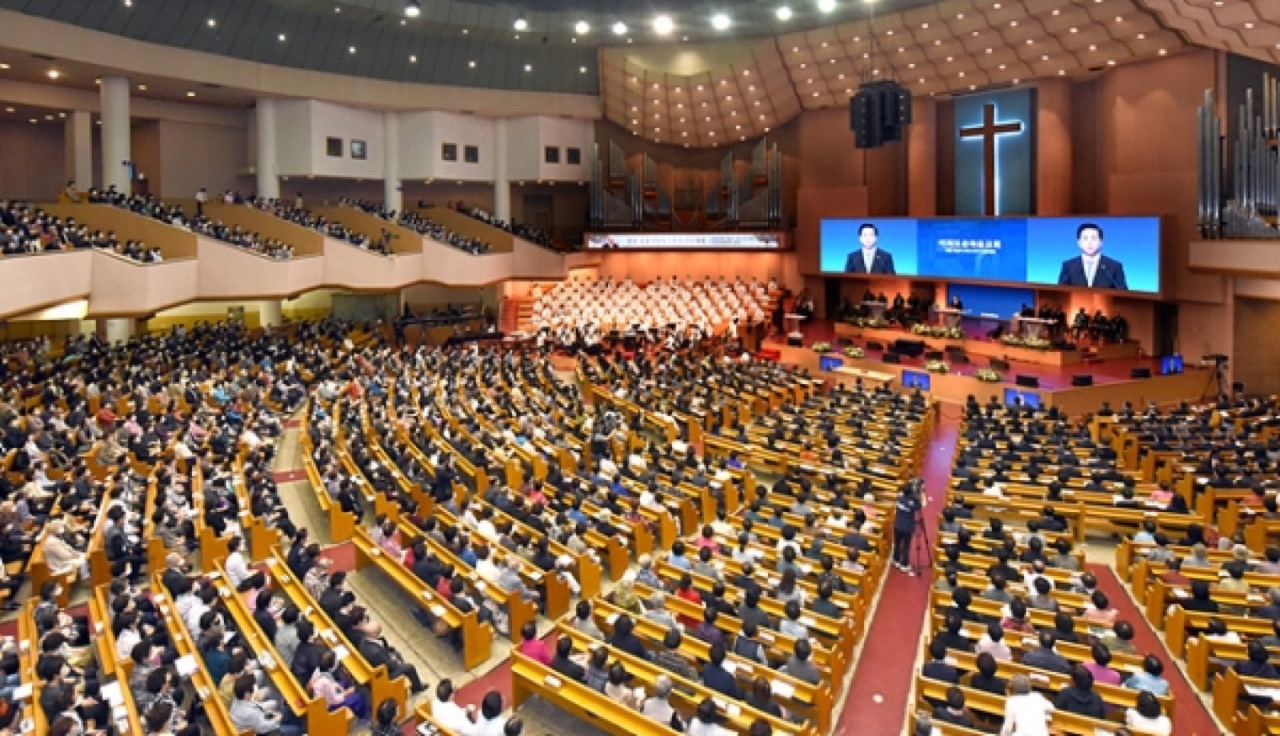
Yoido Full Gospel Church, Seoul.
Presbyterianism, Korean Protestantism's backbone, divided decisively in 1959 under Cold War and internal political pressures into TongHap, meaning integration, and HapDong, meaning union. The former was relatively open theologically, centred on Seoul's Presbyterian University and Theological Seminary, PUTS; the latter more conservative, centred on Chongshin University. Roots of division reached back to Japanese rule; the Cold War and theological influences such as Karl Barth brought the split to a head.
Under Park, absolute anti-communism helped legitimise military dictatorship, and the political climate indirectly nourished conservative Christianity's rapid growth into Korea's largest religious conservative bloc. More open Christians, with ecumenical international outlooks and moderate reformism, became deeply involved in elite education, medicine and later democratisation. North American Reformed seminaries still receive many students from both traditions. Brief theological conversation often reveals background: TongHap students tend towards openness and dialogue, while HapDong students show stronger conservatism and missionary zeal. Methodist, Baptist and Pentecostal churches also expanded between the 1960s and 1980s, together forming Korean Christianity's foundation.
The Miracle on the Han River was also a reshaping of social psychology through state machinery. Militarism and obedience culture left exhausted fathers emotionally silent and absent. Silence, sternness, volatility and deep anxiety marked that generation's male personality. Competitive workplaces required men to act as shields carrying whole families' upward mobility, weakening emotional communication. Women's standing was diminished; they were expected patiently to obey husbands and raise children. These gender and power structures became particularly deep-rooted among those born between the 1940s and 1970s.
Although authoritarian culture is receding among younger Koreans, Park-era legacies still dominate conservative church establishments. Religious history shows a recurring pattern: during rapid change, older values find refuge within conservative religion. As society advances, conservative churches' ideas may systematically lag behind. Attachment to old cultural habits is then presented as uncompromising defence of orthodoxy and traditional values.
As a historian of Christianity, I must point out that in most cases this defence protects remnants of patriarchal culture rather than biblical truth. Core assumptions often harden in youth. When social change undermines their legitimacy, those who have risen into social or ecclesial authority instinctively use biblical language to sacralise inherited authoritarianism, patriarchy and competitive overwork. This helps explain some Korean missionaries in China and Chinese urban leaders shaped by them.
4. Exporting Park-Style Christianity and Its Cultural Mismatch
Within this history, Cold War ideology, secular authoritarianism, self-sacrificing labour at the expense of home and career, and doctrinaire conservative theology fused into highly disciplined missionary mobilisation, church planting and pastoral practice. I call this Park Chung-hee Christianity, or Park-style Christianity.
Religious passion and ideological discipline became two sides of one coin. Such communities can release military strength briefly, yet lack a healthy internal ecology and collapse rapidly when circumstances change. The same factor enables success and failure. This model fitted Korea's authoritarian institutions, industrialisation and popular anxiety. Exported as a missionary package, however, its barracks culture inevitably produces severe cultural mismatch.
Park-era military management shaped conservative overseas mission. Some missionaries consequently lacked basic respect for local culture and personal dignity, mechanically importing home-country authoritarian traits. Readers familiar with this model may recognise these scenes:
Men must wear suits and women knee-length skirts for Sunday worship, with dress given spiritual significance. Harsh workplace overtime reappears in church: home at eleven, back for dawn prayer at five. Full-time workers receive low pay labelled suffering for the Lord, with complaints and personal rights forbidden. A buy-one-get-one-free pastor's-wife culture leaves wives little personal space. Senior male clergy deliberate while middle-aged and older women serve tea nearby.
These are remnants of military authoritarianism and male dominance, contrary to Jesus' humility, gentleness and love. A thick spiritual covering conceals them. Language of conservatism, devotion, faith and total surrender becomes a clean glove for disciplining individuals. Authoritarian governance is packaged as biblical submission and self-denial. Eventually, commitment to Christ gives way to maintaining a religious community through disciplinary control.
At extremes, unreflective culture can create international political catastrophe. The 2007 South Korean hostage crisis in Afghanistan is a painful example. Saemmul Church, from an extremely conservative background, ignored repeated South Korean Foreign Ministry warnings and sent twenty-three young short-term missionaries on tourist visas into war-torn Afghanistan. Lacking geopolitical knowledge and risk assessment, they carried near-colonial spiritual pride, naively comparing entry into Taliban-controlled territory with Israel entering Canaan. Taliban fighters abducted all of them and killed the pastor leading them and another man. Government negotiations secured the remaining twenty-one's release in stages. Overseas mission requires self-denial, but when spiritual superiority governs it, this model has already followed the Taliban in its underlying mentality.
5. Why Has China Encountered Mainly This Model?
Does this mean all Korean Christianity is narrow, shallow and prejudiced?
Certainly not. Korean Christianity has a broad theological spectrum. Park-style Christianity is one especially vocal, highly conservative stream, never the whole picture. Academic conferences have introduced me to internationally minded, moderate and rational Korean scholars. Christian institutions such as Yonsei and Ewha Womans universities display international outlooks, civic consciousness and public concern. Even Handong Global University, with conservative Presbyterian roots, shows academic seriousness and cultural openness far removed from narrow Park-style Christianity.
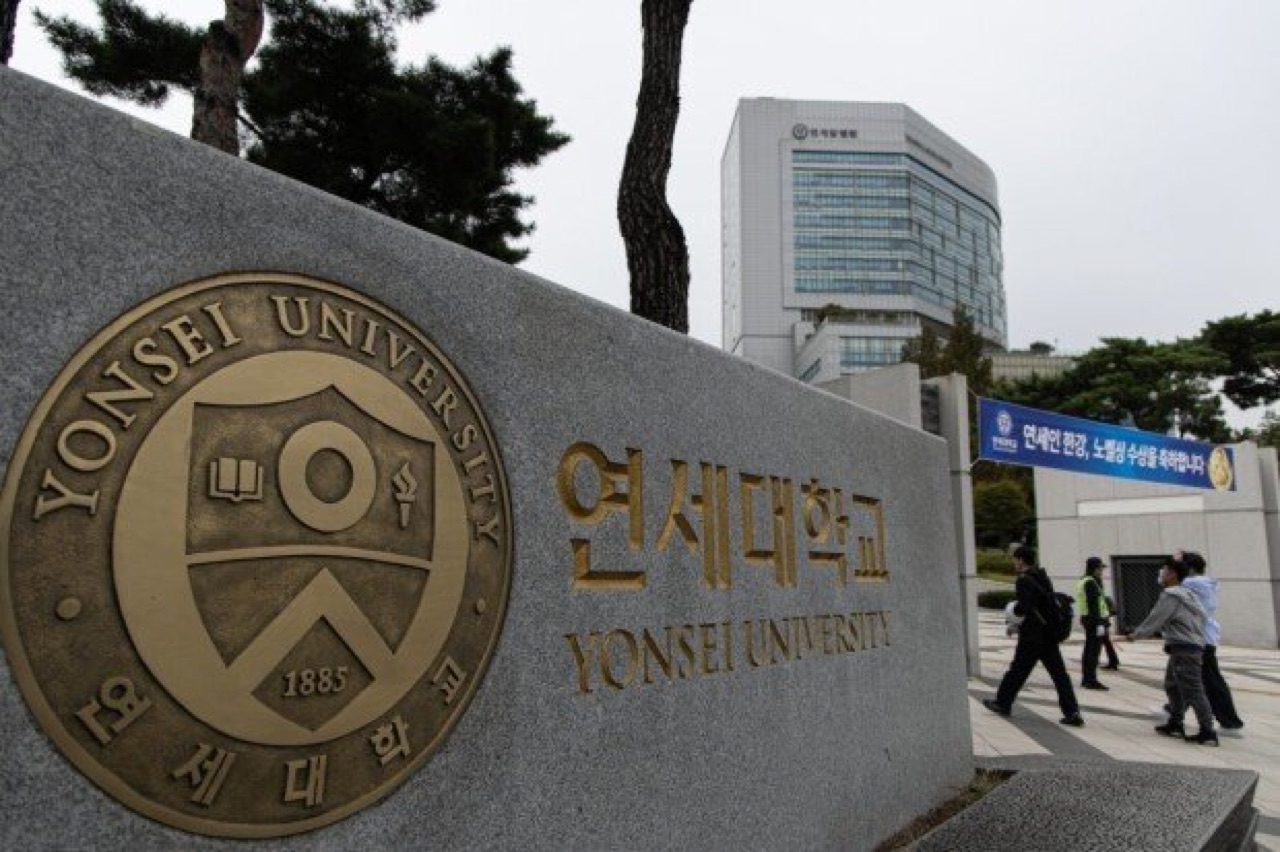
Yonsei University's gate. Its emblem represents freedom and truth, drawn from the same verse as Yenching University's motto, Freedom through Truth.
Why, then, has thirty years of religious interaction brought Chinese churches almost exclusively this most conservative, authoritarian, sometimes narrow stream? Where have the open and rational communities gone?
Selective importation requires looking back at Korean divisions and differing mission strategies. Conservative and moderate ecumenical churches have considerable tensions. More open denominations often combine mission with medicine, education and social care, establishing long-term public service. Conservatives prefer direct soul-winning, reducing mission to growth in believers and congregations.
The relative merits of these strategies invite different judgments. Under strict ideological and religious regulation, however, they face radically different conditions. Transnational mission through schools and hospitals encounters administrative barriers, limiting moderate approaches. Conservative gospel-first mission instead relies on personal networks without public institutions, sustained by a relentless missionary imperative. This proves resilient. Environmental selection consequently brings many reproductions of Park-style Christianity into China. Conservative churches achieve visible results quickly; more open denominations' missions yield direct results less readily in the short term. Thus Cold War and authoritarian religious patterns from Korea's 1960s–1980s deeply shaped many independent Chinese urban churches after the 1990s.
Social psychology reveals striking parallels between China's post-1990 transition and Park-era Korea: rapid economic development, fragmented individuals amid urbanisation, anxiety as traditions recede and longing for certainty. An authoritarian model offering absolute black-and-white answers and strong cohesion readily attracts ordinary people. In cities such as Beijing and Shanghai, with rootlessness and competitive pressure, people need refuge, order and affirmation beyond secular success. Though theologically crude and forceful in practice, Park-style Christianity integrates individuals powerfully through dense spiritual schedules binding them to church institutions. This is the social soil behind its influence over recent decades.
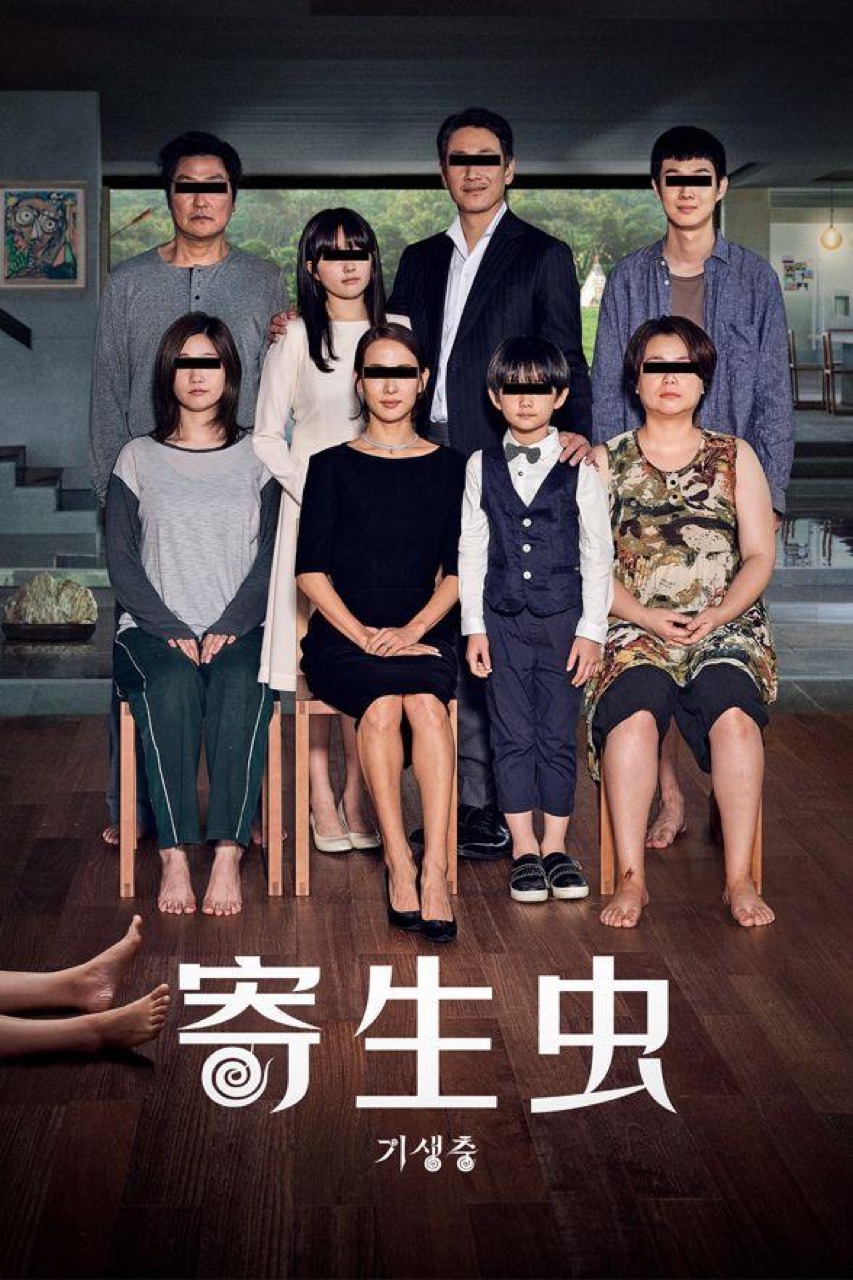
The Oscar-winning 2019 film Parasite depicts individual insecurity in modern urban life.
Modern criticism may rightly confront male chauvinism, disregard for women's dignity and hostility towards science and culture. Yet for some men facing identity crisis amid change, absolute male leadership satisfies an imagined classical paternal role. For some women frightened by marital instability and high divorce rates, teachings of absolute female submission and dependence offer hidden security in retreat to traditional order. The model's alienation from, even hostility to, mainstream secular society and its anti-intellectualism also provide theological compensation for people under competitive pressure by devaluing the secular world.
Without modern reflexivity, such Christianity ultimately becomes an increasingly closed community of competitive pressure. It must carefully protect its boundaries through a comprehensive yet fragile ideology and doctrinaire theology. With a stable external society, apparent spiritual prosperity may persist. But theological disagreements, social change, political pressure, economic downturn or pandemic can suddenly expose catastrophic fragility.
At root, this is a theological imagination assembled from an earlier era's remnants to escape modernity's wounds. Individual religious enthusiasm remains real and moving; the tragedy is that a theology lacking intellectual depth, reflection and public vision cannot adequately guide believers through modern complexity.
Park-style Christianity once participated in Korea's great transformation. In China today, it often becomes a theological retreat into self-enclosure for some urban churches facing contemporary difficulty. History teaches that copying another country's trauma and theological imagination cannot establish living faith rooted in one's own land. Genuine faith must root itself in Christ and biblical truth while honestly responding to present life, wounds and hope.
End.